 Save
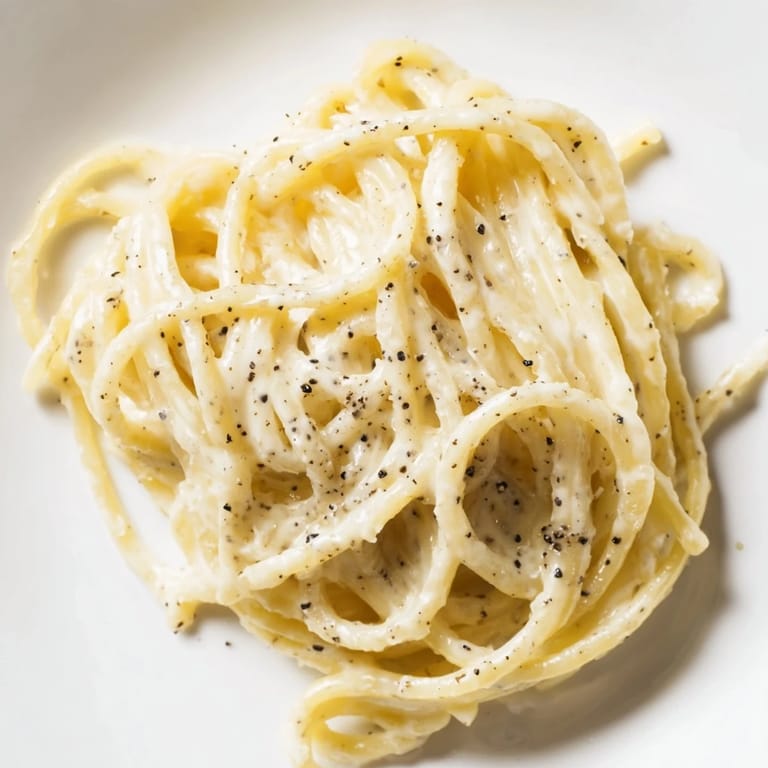
Save My downstairs neighbor Marco used to crack his window every Sunday around noon, and the smell of toasted black pepper would drift up into my kitchen. I finally knocked on his door one evening with a bottle of wine, and he taught me this dish in twenty minutes, standing over his tiny stove, muttering in Italian every time I stirred too slowly. He insisted the cheese had to rain into the pan, not clump, and made me start over twice until I got it right. I've made it at least fifty times since then, and I still hear his voice every time I reach for the pepper. It's become my go-to meal when I want something that feels like a hug but takes less effort than deciding what to watch on TV.
I made this for my sister the night before her wedding, when she was too anxious to eat anything heavy. She sat at my counter in her sweatpants, twirling spaghetti and finally laughing about the florist mix-up. We didn't talk about the ceremony or the guests or any of the stress. We just ate in comfortable silence, and she scraped her bowl clean with a piece of bread she found in my freezer. She still texts me every few months asking if I remember that night, and I always know exactly which one she means.
Ingredients
- Spaghetti (400 g): The long strands hold onto the sauce better than shorter shapes, and cooking it just until al dente means it finishes perfectly when tossed in the pan.
- Pecorino Romano cheese (120 g, finely grated): This is the soul of the dish, sharp and salty and slightly funky in the best way; buy a wedge and grate it yourself because the pre-grated stuff has coatings that make it clump.
- Freshly cracked black pepper (2 tsp, plus extra): Toasting it in the dry pan wakes up oils you didn't know were there, turning it from a background note into the main melody.
- Salt: For the pasta water, which should taste like the ocean; this is your only chance to season the noodles from the inside out.
Tired of Takeout? 🥡
Get 10 meals you can make faster than delivery arrives. Seriously.
One email. No spam. Unsubscribe anytime.
Instructions
- Boil the Pasta:
- Bring a large pot of heavily salted water to a rolling boil, drop in the spaghetti, and set a timer for two minutes less than the package says. Before you drain it, scoop out at least a cup of that cloudy, starchy water because that's what turns grated cheese into silk.
- Toast the Pepper:
- While the pasta bubbles away, put your skillet over low heat and add the black pepper, shaking the pan gently until it smells like a spice market and starts to make you sneeze a little. Don't walk away or it'll burn and turn bitter.
- Build the Base:
- Pour about half a cup of the hot pasta water into the skillet with the toasted pepper and let it simmer for a moment, swirling to combine. This creates a peppery broth that'll coat every strand.
- Toss the Spaghetti:
- Use tongs to transfer the drained spaghetti straight into the skillet, tossing it around in the pepper water until every piece is slick and glistening. The residual heat and moisture are your friends here.
- Add the Cheese:
- Turn the heat to the lowest setting, then start sprinkling the Pecorino in small handfuls, tossing constantly and quickly like you're trying to win a race. Add splashes of reserved pasta water whenever it looks dry or the cheese starts clumping, and keep moving the pan until the sauce looks creamy and clings to the noodles.
- Serve Hot:
- Divide the spaghetti into bowls immediately, finishing each with a generous grating of extra cheese and a few turns of the pepper mill. It waits for no one, so eat it while it's still steaming.
 Save
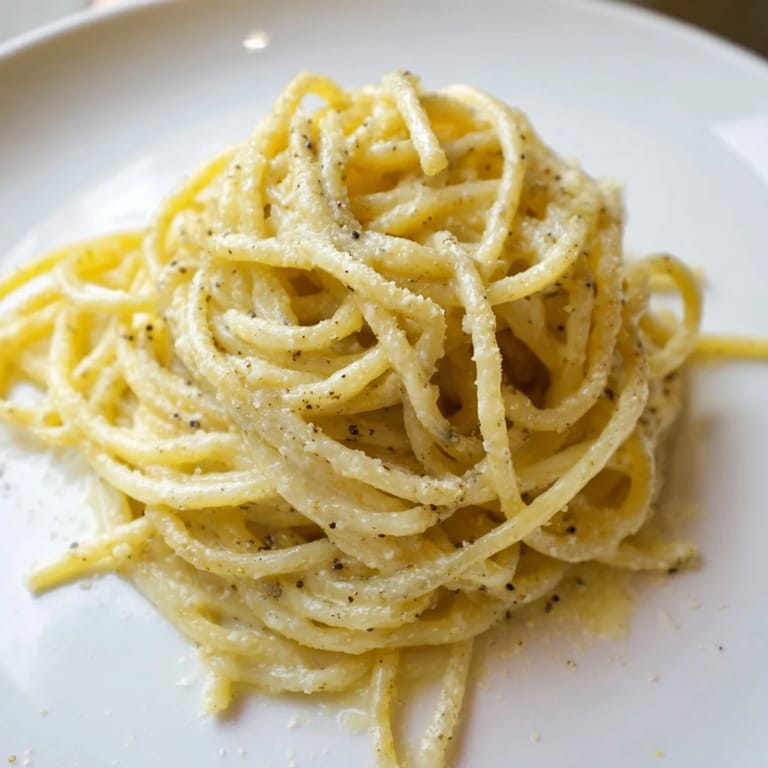
Save One winter evening, my friend showed up at my door after a breakup, eyes red and makeup smudged, and I didn't know what to say. I just put water on to boil and started grating cheese, and we stood side by side in my tiny kitchen, not really talking, just cooking. She took her first bite and said it tasted like comfort, and I realized that's exactly what it was. Food doesn't fix anything, but it can hold space for you while you figure things out.
Choosing Your Cheese
Pecorino Romano is sharper and saltier than Parmigiano Reggiano, with a bite that stands up to the pepper instead of hiding behind it. I've tried this with Parmesan when I've run out, and it's still delicious, but it's a gentler, mellower version of itself. If you want the real Roman experience, find a good Italian deli or specialty shop and ask them to cut you a wedge from the wheel. The difference between freshly grated and the stuff in the green can is the difference between a song played live and a recording through a phone speaker.
What to Serve Alongside
This dish is rich enough to be the whole meal, but sometimes I'll put out a simple arugula salad dressed with lemon juice and olive oil to cut through the richness. A crusty loaf of bread for mopping up any sauce left in the bowl is non-negotiable in my house. If you're feeling fancy, pour a chilled Vermentino or Pinot Grigio; the acidity and crispness balance the salty, peppery pasta like they were designed for each other.
Storing and Reheating
Honestly, this is not a dish that loves leftovers; the sauce tightens up and loses its magic in the fridge. If you do have extra, store it in an airtight container and reheat it gently in a skillet with a splash of water or milk, stirring constantly to bring the sauce back to life. I've learned to just make what I'll eat in one sitting, because even the best reheating trick can't fully resurrect that first-bite creaminess.
- Add a tiny pat of butter when reheating to help the sauce come together again.
- Never microwave it, or you'll end up with rubbery noodles and separated cheese.
- If you must make it ahead, cook the pasta and keep it and the cheese separate until you're ready to toss everything together.
 Save
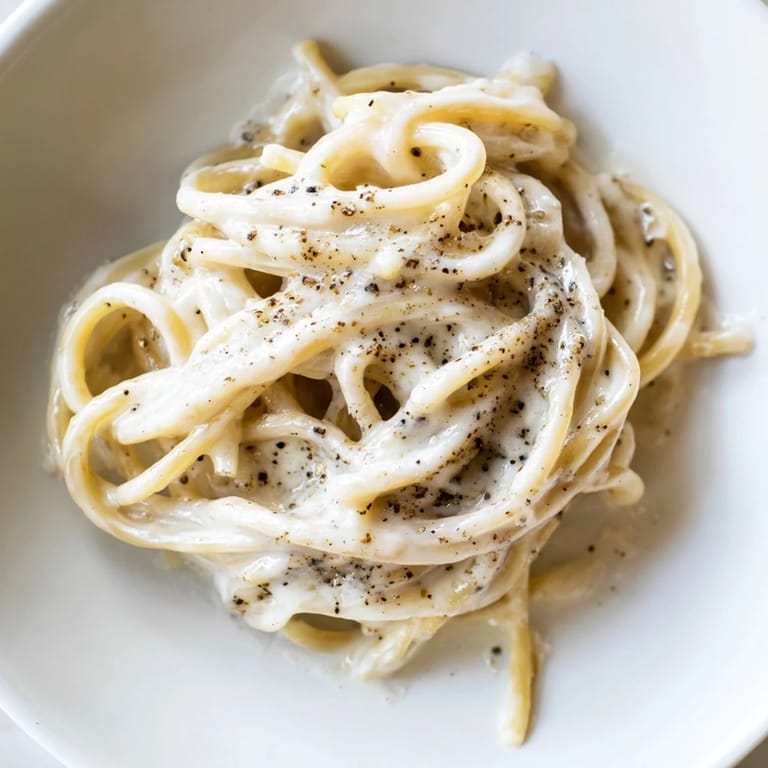
Save This recipe taught me that the best food doesn't need to be complicated, just made with attention and a little bit of love. I hope it becomes one of those dishes you make without thinking, the kind that feels like home no matter where you are.
Recipe Guide
- → How do I prevent the cheese from clumping?
Work quickly and continuously while adding the grated Pecorino Romano to the hot pasta water. Stir vigorously and add the cheese gradually in small batches rather than all at once. The reserved pasta water's starch helps emulsify the cheese into a smooth sauce.
- → Why is it important to use freshly grated cheese?
Freshly grated Pecorino Romano melts more smoothly and evenly than pre-grated varieties, which often contain anti-caking agents. This ensures you achieve the authentic creamy texture that defines this Roman classic.
- → Can I substitute Pecorino Romano with another cheese?
Yes, Parmigiano Reggiano works well as a substitute, though it will produce a milder, less salty flavor. Pecorino Romano is saltier and delivers the traditional sharp, peppery profile of the authentic dish.
- → What does 'al dente' mean and why is it important?
Al dente means 'to the tooth' and refers to pasta cooked until it's tender yet still slightly firm when bitten. This texture prevents the pasta from becoming mushy and ensures it better absorbs the sauce while maintaining its integrity.
- → How much pasta water should I reserve?
Reserve approximately 1 cup of the starchy pasta cooking water before draining. This starch is essential for emulsifying the cheese and pepper into a silky sauce. You'll likely use about half during cooking, with extra on hand to adjust consistency.
- → Can I make this dish for more or fewer servings?
Yes, scale the ingredients proportionally. The standard ratio is roughly 100g spaghetti, 30g Pecorino Romano, and ½ teaspoon black pepper per serving. Maintain these proportions to achieve the correct flavor and sauce consistency.