 Save
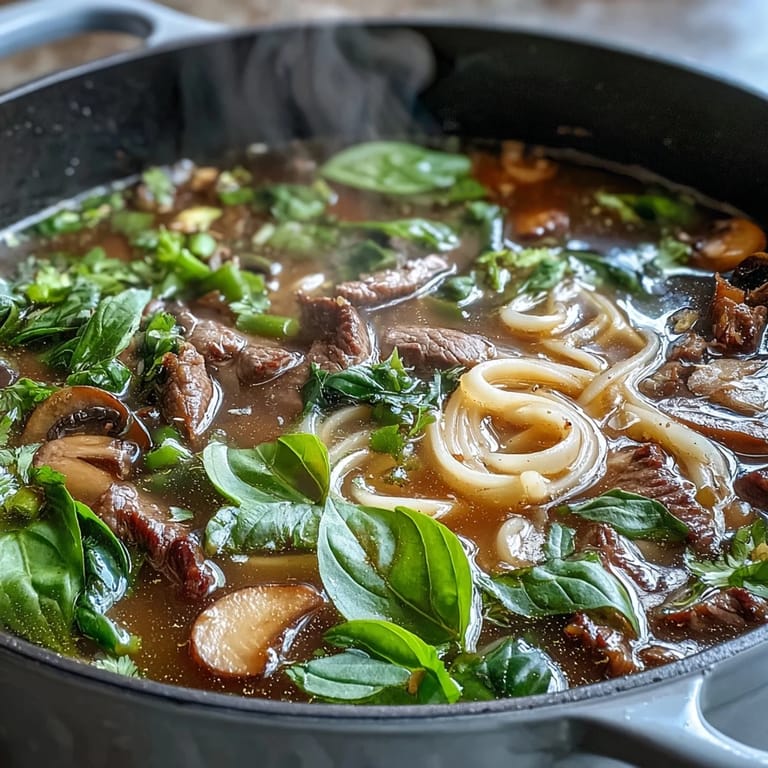
Save The first time I encountered a hot pot at a friend's dinner party, I watched the table transform into something magical—everyone gathered around a bubbling cauldron, cooking their own bites, laughing between dips into tangy sauces. That night, I realized this wasn't just a meal; it was theater, conversation, and comfort all simmering together. Years later, when I finally built the courage to recreate it at home, I discovered that the real magic wasn't in perfect technique—it was in that collective moment when everyone stops talking long enough to watch their beef cook for exactly three seconds in the fragrant broth. This Asian Hot Pot Noodle Feast became my answer to those evenings when I wanted to feed people something that felt both exotic and deeply welcoming.
I'll never forget cooking this for my partner's family during a particularly cold November evening—everyone was skeptical about the whole table-cooking concept until that first spoonful of broth hit their bowls. My mother-in-law, who usually stays quiet at dinners, became the broth sommelier, critiquing everyone's cooking times and insisting the ginger slices were the secret. By the end of the night, she was already asking when we'd do it again, and that's when I knew this recipe had earned its permanent place in our rotation.
Ingredients
- Low-sodium beef broth (8 cups): The foundation of everything—it needs to be good quality because you can taste every single note once the aromatics infuse it.
- Fresh ginger (4 slices) and garlic (4 cloves): Smash these hard with the side of your knife; the damage releases oils that perfume the entire broth in ways mincing never could.
- Lemongrass (2 stalks) and star anise (3 pods): These are the flavor architects—lemongrass brings that bright, citrusy whisper while star anise adds warmth and a subtle licorice note that somehow makes sense in the broth.
- Soy sauce and fish sauce (2 tablespoons and 1 tablespoon): This is umami working overtime; don't skip the fish sauce even if it smells intense in the jar—it dissolves into the background and makes everything taste like it belongs.
- Beef sirloin (400g), sliced thin across the grain: Freezing for an hour transforms this from impossible to slice into paper-thin ribbons; buy the best sirloin you can afford because those few seconds in the broth show off its quality.
- Dried rice noodles (300g): Medium width works best—thin enough to cook through in seconds but sturdy enough to hold up to the broth without turning to paste.
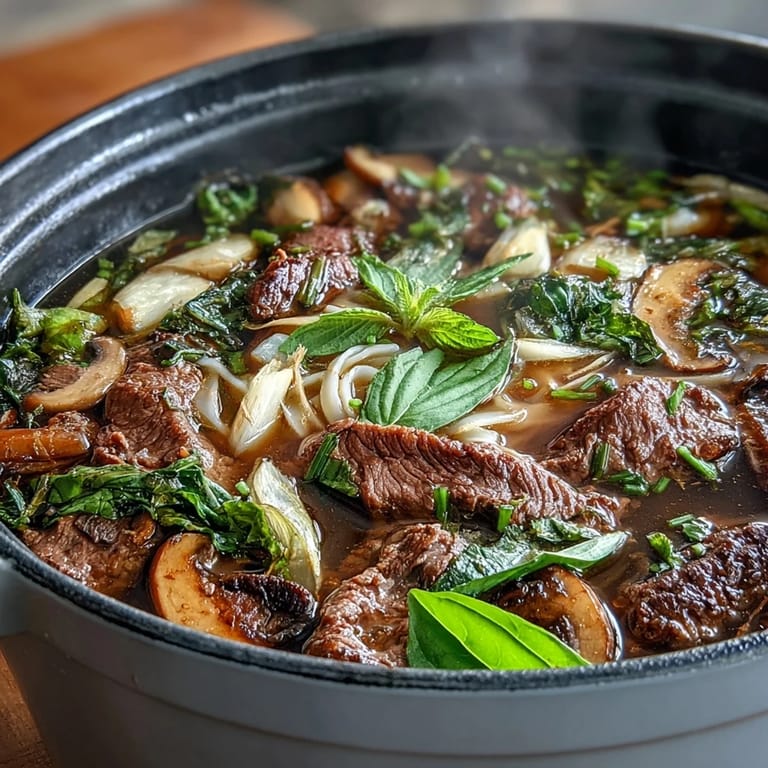
- Baby bok choy, shiitake mushrooms, Napa cabbage, carrots, and bean sprouts: Each vegetable brings different textures and sweetness levels; slice everything before guests arrive because you won't have time to chop once the broth is bubbling.
- Fresh cilantro and Thai basil: Add these only at the very end—they're delicate and their brightness gets lost if they sit in hot broth too long.
- Lime wedges: Acid is your friend here; a squeeze transforms a good bowl into something that tastes alive.
Tired of Takeout? 🥡
Get 10 meals you can make faster than delivery arrives. Seriously.
One email. No spam. Unsubscribe anytime.
Instructions
- Build Your Broth Foundation:
- In a large pot, combine your beef broth and water, then add the ginger, garlic, lemongrass, and star anise. You want to hear it come to a full, vigorous boil before backing off the heat—that first aggressive moment is when the aromatics really start giving themselves to the liquid. Once it's boiling, reduce to a simmer and let it bubble gently uncovered for 20 to 25 minutes, occasionally catching a whiff and noticing how the fragrance deepens and becomes more layered.
- Season and Strain:
- While that's simmering, whisk in your soy sauce, fish sauce, sugar, and sliced chili if you want some heat. After your time is up, grab a fine-mesh strainer and pour everything through, pressing gently on the solids to coax out every last drop of flavor—you're making concentrated essence here. Return the strained broth to a gentle simmer and let it wait for you; it'll stay happy on low heat while you finish prep.
- Wake Up Your Noodles:
- Pour boiling water over your dried rice noodles and let them soak for 20 to 30 minutes until they're tender but still have a whisper of resistance when you bite one. They'll finish cooking in seconds once they hit the hot broth, so you want them almost ready but not quite there.
- Arrange Your Theater:
- On large platters or a wooden board, arrange all your sliced beef, vegetables, herbs, lime, and dipping sauces like you're setting the stage for dinner and a show. The visual moment when people see all their options helps them get excited about what's coming; don't skip the presentation.
- Set the Table Stage:
- Get your portable tabletop burner or electric hot pot into position at the center of your table with the shallow pot filled and simmering. Make sure everyone has a bowl, chopsticks, a slotted spoon for fishing, and a ladle—this is teamwork, and tools matter.
- Cook Together:
- At the table, each person drops their chosen ingredients into the broth—noodles take about 15 seconds to warm through, vegetables take 30 to 90 seconds depending on thickness, and beef literally cooks in 2 to 3 seconds (watch it turn gray and you're done). This is the magic moment where everyone becomes a chef and you all actually eat at the same time.
- Finish and Taste:
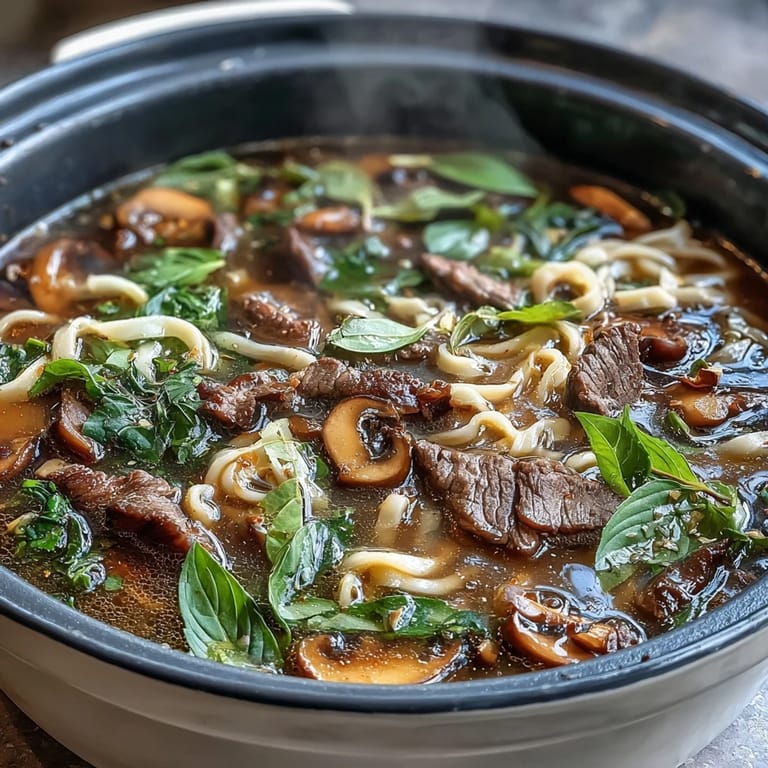
- Once items are cooked to each person's liking, ladle them and some broth into bowls, then crown everything with fresh herbs, a squeeze of lime, and whatever dipping sauces call to you. Taste as you go and adjust seasoning with more soy sauce or fish sauce if you want deeper umami.
 Save
Save There's a moment during every hot pot dinner—usually around the second round of cooking—when someone looks up from their bowl and says, 'I could do this every week,' and everyone nods in agreement with their mouth full. That's the real success of this dish, when it stops being about individual recipes and becomes about gathering, slowing down, and finding joy in the simple act of cooking together.
Why This Broth Works
The secret to a broth that tastes like it came from a restaurant instead of your home kitchen is patience and layers—you're not just boiling ingredients, you're extracting their essence and building complexity one element at a time. The ginger provides heat and brightness, the lemongrass adds tropical floral notes, and the star anise brings a subtle warmth that ties everything together without shouting. By the time you've simmered for 25 minutes, you've created something that tastes like it spent hours on the stove, even though you were only standing there for half that time.
Prep Strategy for Success
The key to keeping stress out of this meal is doing everything possible before guests arrive—slice your beef, prep your vegetables, arrange your platters, and get your broth simmering at least 30 minutes before people sit down. I learned this the hard way trying to chop bok choy while my partner was frantically transferring the hot pot to the table and someone was asking if the beef was supposed to be that pink. Now I set a personal rule: if you can't do it before people walk through the door, don't do it at all.
Customization Without Compromise
One of the beauties of hot pot is that it welcomes substitutions without requiring apologies—swap the beef for thinly sliced chicken or even thicker shrimp, replace the broth with vegetable stock, or load up on mushrooms and tofu if that's your preference. I've served vegetarian versions to guests who warned me they'd be hungry afterward, only to watch them go back for thirds because the broth and noodles together create this satisfying, complete meal that doesn't need meat to feel substantial. The framework stays the same; you just change what you're cooking in that gorgeous broth.
- Substitute chicken, shrimp, or tofu for beef depending on what you're craving or what your guests prefer.
- Use vegetable broth and skip the fish sauce entirely for a fully vegetarian version that tastes just as complex.
- Add spinach, daikon, enoki mushrooms, or any vegetable that sounds good to you—this is your table, your rules.
 Save
Save This meal is proof that the best food isn't about complicated techniques—it's about creating space for people to gather and cook together. Every time you make this, you're not just feeding bodies; you're giving everyone permission to slow down and be present for a little while.
Recipe Guide
- → How do I prepare the broth for the hot pot?
Simmer beef broth with ginger, garlic, lemongrass, star anise, soy sauce, fish sauce, sugar, and chili for 20–25 minutes, then strain before serving.
- → What vegetables work best in this hot pot?
Baby bok choy, shiitake mushrooms, Napa cabbage, carrots, bean sprouts, and scallions add great texture and flavor.
- → Can I substitute beef with other proteins?
Yes, thinly sliced chicken, shrimp, or tofu work well and offer delicious variations.
- → How long should the noodles soak before cooking?
Soak dried rice noodles in warm water for 20–30 minutes until pliable, then drain before use.
- → What dipping sauces complement this dish?
Hoisin sauce, sriracha or chili garlic sauce, and soy sauce are popular options to enhance flavor.