 Save
Save The first time I really understood imam bayildi was standing in a cramped Istanbul kitchen on a humid summer morning, watching my friend's grandmother cradle an eggplant like it was something precious. She moved slowly, deliberately, scoring the skin with practiced fingers and telling me this dish came from a time when Ottoman cooks needed to win hearts through vegetables alone. There's something almost theatrical about it—the way those purple halves swell in the oven, the filling darkening into something molten and fragrant. I've made it dozens of times since, but that quiet kitchen moment never left me.
I made this for a potluck once, skeptical that vegetables alone could compete with all the meat dishes people were bringing. By the end of the night, the baking dish was scraped clean and someone asked for the recipe on their phone. What I didn't expect was how the warm spiced filling and yielding eggplant would stop conversations mid-bite, how people would eat smaller portions but come back for seconds. That's when I realized this dish doesn't need to prove itself—it just needs to sit on a table.
Ingredients
- Eggplants (4 medium, about 250g each): Choose ones that feel heavy for their size with tight, unblemished skin; they hold their shape better during cooking.
- Onions (3 medium, thinly sliced): The long, slow cooking turns them almost translucent and sweet—this is the flavor backbone.
- Tomatoes (4 ripe, peeled and diced): Use the ripest ones you can find; canned works too if fresh ones are mealy.
- Garlic cloves (4, minced): Add it after the onions soften so it doesn't burn and turn bitter.
- Green bell peppers (2, seeded and finely chopped): They add brightness and a subtle sweetness that balances the earthiness.
- Flat-leaf parsley (1 bunch, chopped): Stir it in at the end so it stays vibrant green and fresh-tasting.
- Extra virgin olive oil (120 ml): Don't skimp here; good olive oil makes a real difference in the final taste.
- Water (120 ml): This becomes part of the braising liquid that keeps everything moist.
- Lemon juice (from ½ lemon): A squeeze at the end brightens everything and cuts through the richness.
- Sugar (1 tsp): Just enough to balance the acidity of the tomatoes without tasting sweet.
- Sea salt (1½ tsp, plus more to taste): Taste as you go; salt intensity varies with different brands.
- Black pepper (½ tsp): Freshly ground makes all the difference in a simple dish like this.
- Paprika (1 tsp, optional): Adds a subtle warmth and deeper color if you want it.
Tired of Takeout? 🥡
Get 10 meals you can make faster than delivery arrives. Seriously.
One email. No spam. Unsubscribe anytime.
Instructions
- Set your stage:
- Preheat the oven to 180°C (350°F) so it's ready when you are. Get your baking dish out and give it a light coating of olive oil to prevent sticking.
- Prepare the eggplants:
- Wash them well and use a vegetable peeler to remove alternating lengthwise stripes—this looks beautiful and helps them cook evenly. With a sharp knife, cut a slit down the length of each eggplant, being careful to leave about an inch intact at both ends.
- Draw out the bitterness:
- Sprinkle the cut eggplants generously with salt and let them sit for 20 minutes; you'll see moisture bead on the surface. Rinse under cool water and pat completely dry with a kitchen towel.
- Build the filling base:
- Heat half the olive oil in a large skillet over medium heat and add your sliced onions. Stir occasionally and let them soften for about 8 minutes until they're turning translucent and smell sweet.
- Deepen the flavor:
- Add the minced garlic and chopped peppers, cooking for 3 minutes until fragrant. You'll know it's ready when the raw garlic smell disappears and everything smells warm.
- Create the filling:
- Stir in the diced tomatoes, sugar, salt, black pepper, and paprika if using. Let this simmer gently for 10 minutes, stirring now and then, until the mixture thickens and the raw tomato taste mellows out. Just before taking it off the heat, fold in the fresh parsley.
- Brown the eggplants:
- In a clean skillet, heat the remaining olive oil over medium-high heat. Working in batches if needed, gently fry the eggplants on all sides for about 8 minutes total until they're lightly browned and starting to soften. They should still have some resistance when you press them.
- Stuff and arrange:
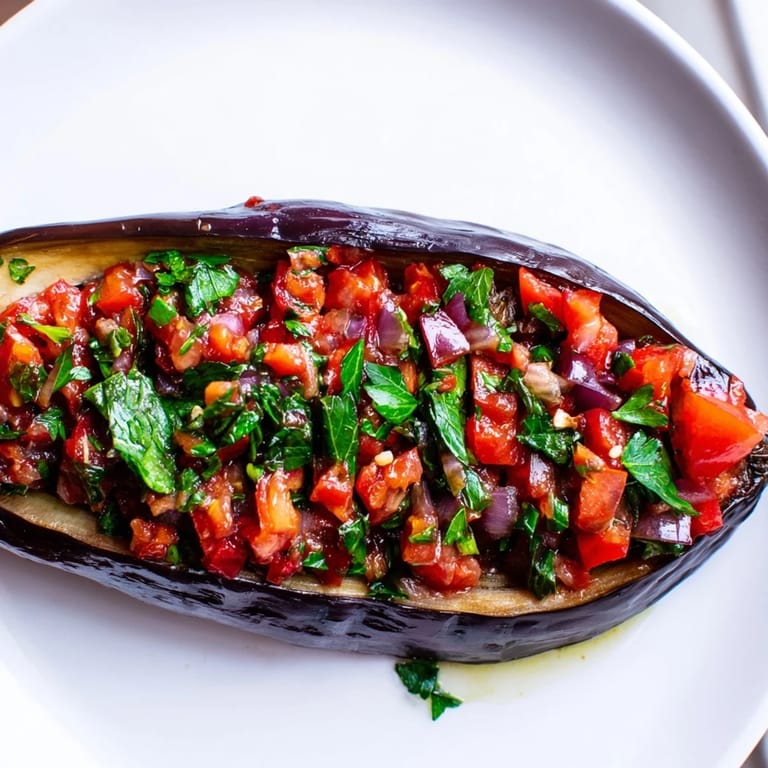
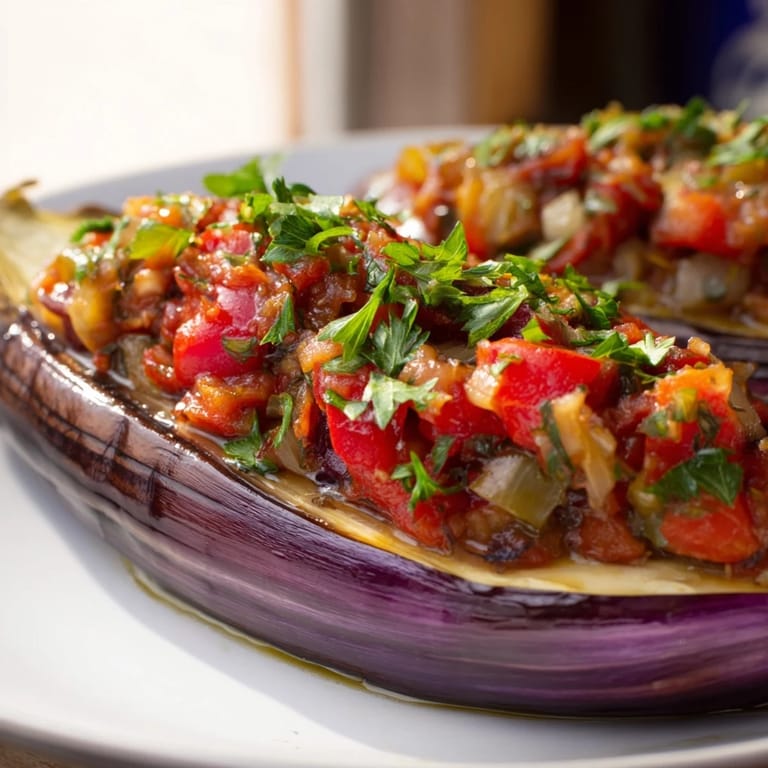
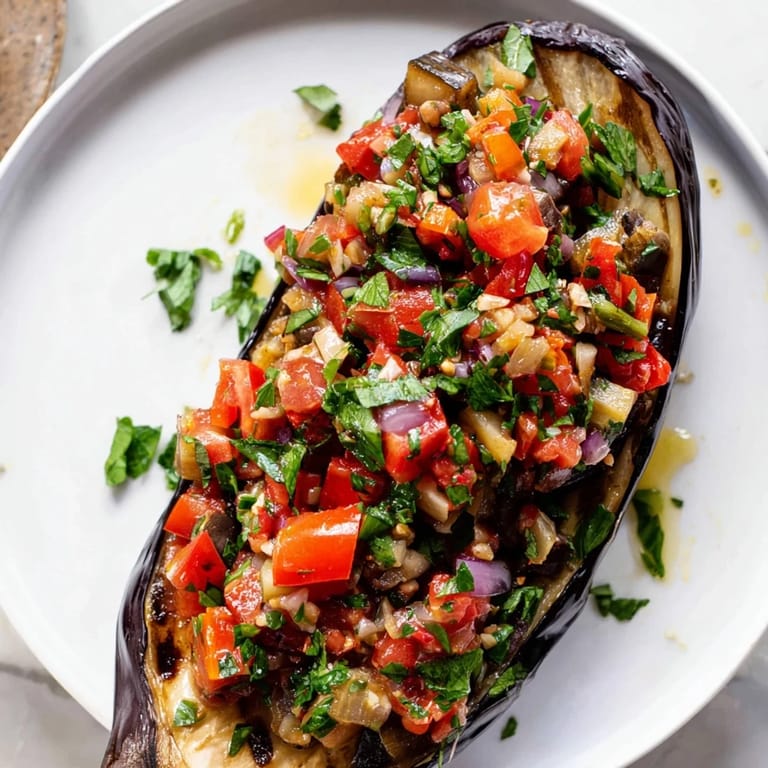
- Transfer the eggplants to your prepared baking dish and carefully open up each slit. Spoon the tomato-onion filling generously into each cavity, tucking it in so some nestles into the opening and some sits on top.
- Prepare for the oven:
- Drizzle everything with lemon juice and pour the water around the eggplants (not over them—you want the tops to develop color). Cover the dish tightly with aluminum foil.
- First bake:
- Slide into the oven covered and bake for 35 minutes. The eggplants will soften and the filling will start to bubble at the edges.
- Final bake:
- Remove the foil and bake for another 10–15 minutes until the eggplants are completely tender when pierced with a fork and the filling is bubbling visibly around the edges, with the tops slightly darkened.
- Cool and serve:
- Let the dish cool to room temperature before serving; this allows the flavors to settle and meld together beautifully. The eggplants will firm up slightly as they cool, making them easier to serve without falling apart.
 Save
Save I served this to my partner on a quiet Tuesday evening when neither of us felt like anything fancy, and somewhere between the second and third bite, they looked up and said, "This tastes like somewhere." That's what this dish does—it transports you without any fuss, just eggplant and onion and time working in your favor.
Why Room Temperature Matters
There's a reason this dish is served cool or at room temperature in Turkey—it's not laziness or tradition for its own sake. As imam bayildi cools, the eggplant flesh firms up just enough to hold together beautifully when you cut into it, and the flavors come into sharper focus. The filling isn't screaming heat anymore, so you can taste the individual notes: the sweetness of the onions, the earthiness of the paprika, the brightness of the lemon. Warm, it's comforting; room temperature, it's elegant.
The Name's Secret
"Imam bayildi" translates to "the imam fainted," and while the legend shifts depending on who's telling it, the idea is always the same—someone in power was so moved by this humble vegetable dish that they lost consciousness. Whether it was rapture or surprise at how good vegetables could taste, I'm not sure it matters. What matters is that a dish simple enough to make without butter or cream or meat became worthy of that kind of reaction. That tells you something about the power of respecting your ingredients and cooking them slowly.
Making It Your Own
The beauty of this dish is its flexibility within tradition. Some cooks add a pinch of cinnamon or allspice to the filling, creating a subtle warmth that feels almost Moroccan. Others introduce a finely chopped green chili for heat that builds on the back of your tongue. I've seen versions with a touch of pomegranate molasses stirred in, which adds a tart complexity. The skeleton of the recipe—eggplant, onion, tomato, slow cooking—stays the same, but the personality shifts with each kitchen and each season.
- If you want richness, add ¼ teaspoon of cinnamon or allspice to the filling.
- For heat, mince one green chili and cook it with the peppers and garlic.
- Serve alongside crusty bread or rice and a cool dollop of yogurt to balance the warmth.
 Save
Save There's something quietly revolutionary about a dish made entirely from vegetables that tastes like abundance. Keep this in your rotation not just for special dinners, but for those ordinary moments when you want food that feels like it was made with intention.
Recipe Guide
- → How do you prepare the eggplants before cooking?
Salt the eggplants after peeling alternating stripes to reduce bitterness, rinse, then lightly fry until softened before stuffing.
- → What enhances the filling's flavor?
Simmering tomatoes, onions, garlic, and peppers with sugar, salt, pepper, and paprika intensifies the filling’s aroma and taste.
- → Can this dish be served cold?
Yes, it is traditionally enjoyed warm or at room temperature, allowing the flavors to meld beautifully.
- → What oil is recommended for cooking?
Extra virgin olive oil is used both for frying and baking, contributing to the dish’s silkiness and richness.
- → Are there optional spices to vary the flavor?
Cinnamon or allspice may be added to the filling for extra warmth, and a chopped green chili can add a spicy kick.