 Save
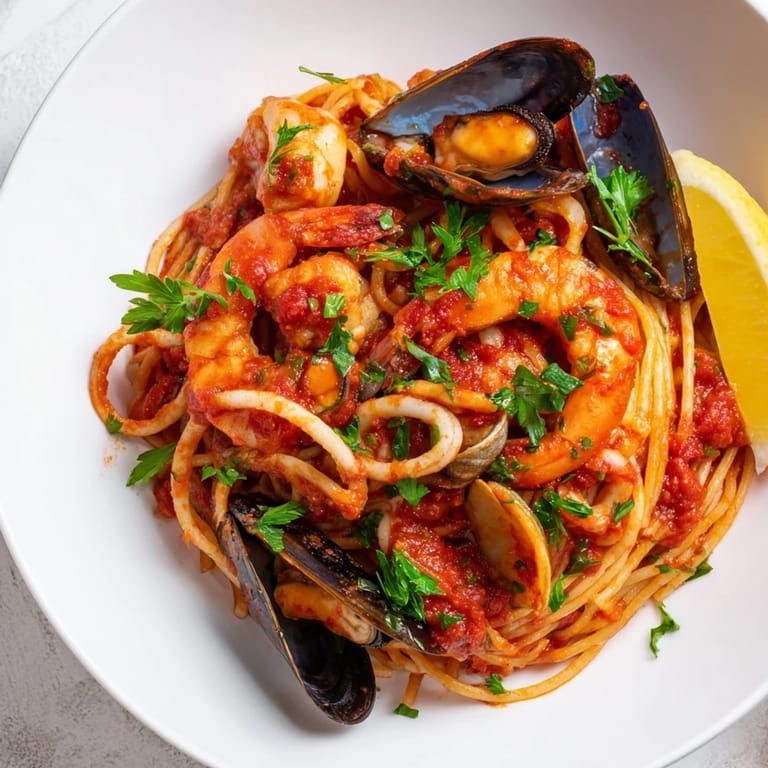
Save There's something about the smell of garlic hitting hot olive oil that makes you feel like you're cooking in someone's kitchen in Naples, even if you're a thousand miles away. I discovered this marinara with seafood during a spontaneous dinner party when a friend brought home a bag of the most beautiful shrimp and mussels from the market, and I had maybe thirty minutes to pull something impressive together. The sauce came together so naturally—tomatoes, wine, a whisper of red pepper—and when the seafood hit the pan, the aroma alone convinced everyone I'd been planning this all day.
I remember my neighbor leaning over the fence, drawn in by the smell of white wine reducing with tomatoes, and asking what smelled so good. By the time I invited her to stay for dinner, she was already mentally clearing her schedule. Watching her twirl that first forkful of pasta loaded with a plump shrimp and scallop told me everything—this dish has that rare quality of feeling indulgent while still being honest and straightforward.
Ingredients
- Large shrimp, peeled and deveined (200 g/7 oz): Buy them the same day you cook if possible—they cook in minutes and turn from translucent to coral pink as your signal they're done.
- Mussels, cleaned and debearded (200 g/7 oz): Tap any open ones against the counter; if they don't close, discard them before cooking, and again after, to avoid grittiness.
- Squid rings (150 g/5 oz): They add a subtle briny sweetness and take only 2 minutes to cook—any longer and they get tough.
- Sea scallops (150 g/5 oz): Pat them dry before they hit the pan; moisture is the enemy of a good sear.
- Spaghetti or linguine (350 g/12 oz): The long strands catch the sauce beautifully, better than shorter shapes would.
- Olive oil (2 tbsp): Use something you actually enjoy tasting—cheap oil makes itself known in delicate dishes like this.
- Onion, finely chopped (1 small): This becomes almost invisible in the sauce but builds the flavor foundation.
- Garlic cloves, minced (3): Don't skip the fresh garlic; dried garlic powder creates a completely different, harsher dish.
- Red pepper flakes (1/2 tsp, optional): A small amount adds warmth without heat if you choose to use it.
- Canned crushed tomatoes (800 g/28 oz): Canned tomatoes are actually picked at peak ripeness, so they're reliable year-round.
- Tomato paste (2 tbsp): This concentrates the tomato flavor and deepens the sauce color.
- Dry white wine (100 ml/1/3 cup + 1 tbsp): The acidity balances richness and the alcohol mellows as it reduces.
- Dried oregano (1 tsp): If you have fresh oregano instead, use three times as much and add it near the end.
- Dried basil (1 tsp): Basil can taste dusty in long-simmered sauces, so some cooks prefer to stir in fresh basil at the very end.
- Sugar (1/2 tsp): Just enough to balance any bitterness from the tomatoes without making the sauce taste sweet.
- Sea salt and freshly ground black pepper: Taste as you go—seafood is naturally salty, so you might need less than you'd expect.
- Fresh parsley, chopped (2 tbsp): Adds a brightness that feels almost necessary once you taste it.
- Lemon wedges: A squeeze of fresh lemon right before eating transforms the whole dish.
Tired of Takeout? 🥡
Get 10 meals you can make faster than delivery arrives. Seriously.
One email. No spam. Unsubscribe anytime.
Instructions
- Start the pasta water and get organized:
- Fill a large pot with salted water—it should taste like sea water—and bring it to a rolling boil. This takes longer than most people think, so start it first. Have all your ingredients prepped and within arm's reach, because once the seafood hits the pan, everything moves quickly.
- Build the sauce foundation:
- Heat olive oil in your largest skillet over medium heat until it shimmers, then add the onion. You want it to turn translucent and soft, which takes about 2-3 minutes—listen for a gentle sizzle. Stir in the garlic and red pepper flakes, letting them perfume the oil for just one minute so the garlic doesn't burn.
- Deglaze with white wine:
- Pour in the white wine and watch it bubble and reduce for about 2 minutes, which mellows its sharp edge. You'll notice the kitchen filling with this wonderful aroma that's part cooking show, part vacation.
- Add the tomato base:
- Stir in the crushed tomatoes, tomato paste, oregano, basil, sugar, salt, and pepper, mixing until everything is combined. The tomato paste should dissolve into the oil and tomatoes, coloring everything a deeper red. Simmer uncovered for 10 minutes, stirring occasionally, until the sauce feels cohesive and the raw-tomato smell has mellowed into something rich.
- Cook the pasta:
- While the sauce simmers, add the pasta to your boiling water and follow the package directions, shooting for al dente—that tender-but-still-firm texture. Reserve a full half cup of pasta water before you drain it; this starchy liquid is your secret weapon for silky sauce.
- Add the seafood in stages:
- This is the part that feels like you're orchestrating a small performance. Start with the squid and scallops, simmering them for 2 minutes until they just barely lose their raw translucence. Then add the shrimp and mussels, cover the skillet, and cook for 3-4 minutes until the shrimp turn bright coral pink and the mussels crack open (discard any that stubbornly stay closed—they're telling you something).
- Bring it all together:
- Add your drained pasta directly to the sauce, tossing gently so every strand gets coated. If the sauce feels too thick, splash in some of that reserved pasta water, a few tablespoons at a time, until it feels silky and clings to the pasta. Taste it, adjust salt and pepper, and remember that lemon is waiting to brighten everything right at the end.
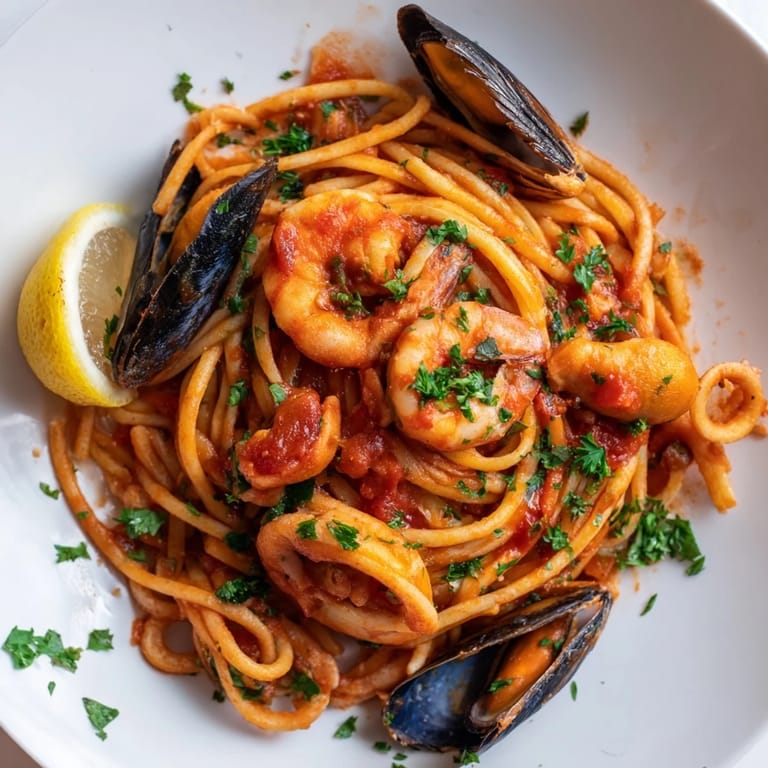 Save
Save The moment I understood this dish was the night I made it for someone who swore they didn't like seafood. Watching their expression when they realized the scallop on their fork was actually tender and sweet, not rubbery, felt like a small victory. This dish stopped being just dinner and became the thing I made when I wanted someone to feel genuinely cared for.
Why Fresh Seafood Makes All the Difference
Buying seafood the same day you cook it sounds fussy until you taste the difference. Fresh shrimp have a sweetness that frozen ones can't quite replicate, and mussels should smell like the ocean, not fishy or off. If your fishmonger knows you by name, you're already winning—they'll steer you toward what came in that morning and will taste best tonight.
The Wine Choice Matters More Than You Think
I used to grab whatever white wine was on sale, and the sauce would taste oddly flat or bitter. Then I started using wine I'd actually drink—a Pinot Grigio or Vermentino—and suddenly the sauce had this bright, mineral quality that made everything taste more alive. The wine reduces down to almost nothing, so don't overthink it, but do pick something pleasant. You're not cooking with vinegar; you're cooking with something that should taste good.
Timing and Temperature Control
This dish lives or dies by medium heat and attention. If your burner is too high, the sauce scorches and tastes bitter, the seafood toughens, and the whole thing falls apart. Medium heat feels slow, almost frustratingly so, but that's where the magic lives—the sauce thickens properly, flavors meld, and seafood stays tender. Keep your timer visible and stir occasionally so nothing sticks to the bottom.
- Cover the skillet only when the mussels and shrimp go in, so the steam helps them cook through evenly.
- If your sauce is too thick at the end, pasta water fixes it—add it in small splashes and stir between additions.
- Serve immediately while the pasta is still hot and the seafood is at its most tender.
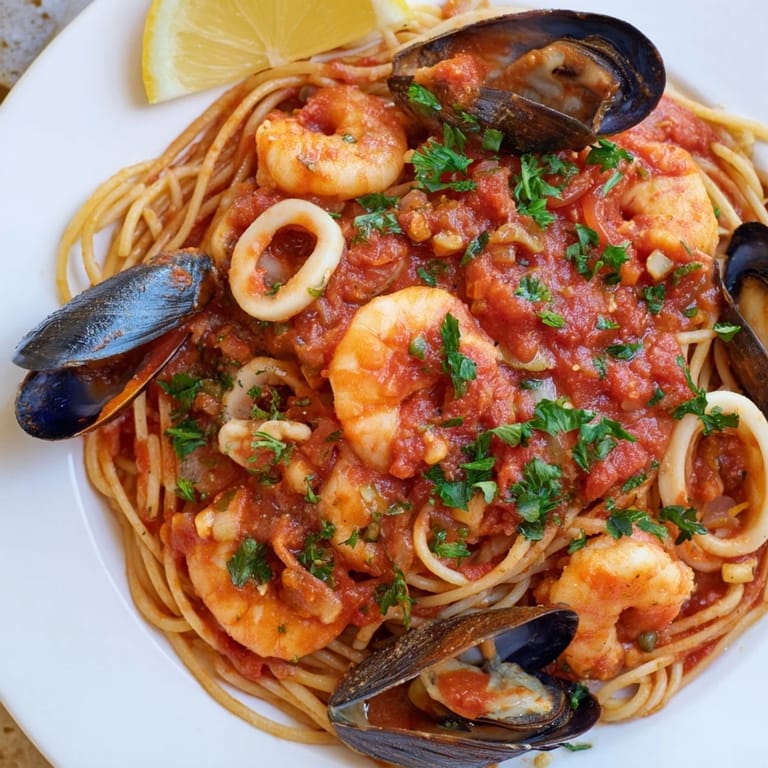 Save
Save This marinara feels fancy enough for guests but honest enough for a quiet Tuesday night when you just want something that tastes like care. A squeeze of lemon and a twist of black pepper right at the table, and you're not just eating pasta—you're having a moment.