 Save
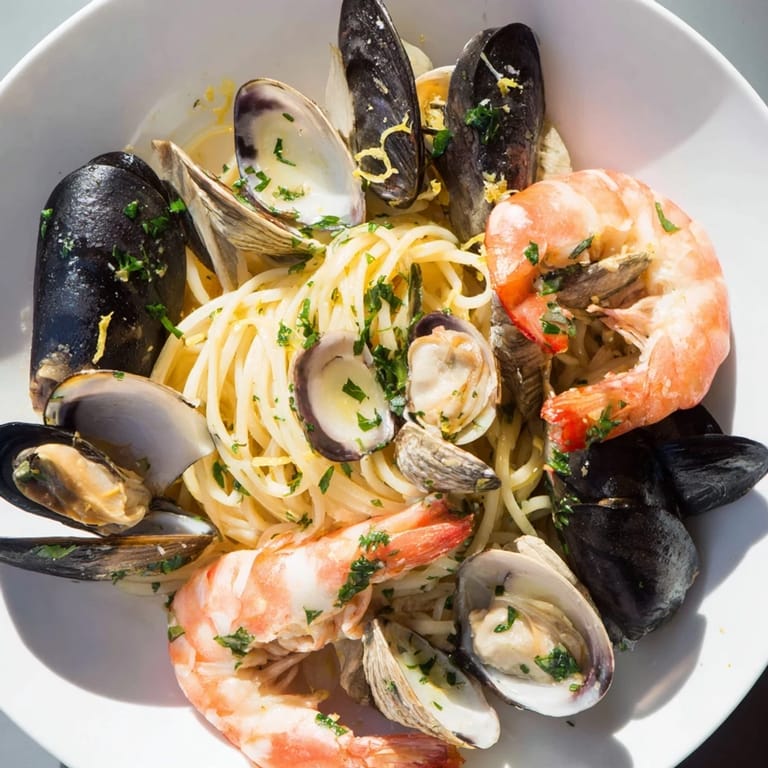
Save There's something about the smell of garlic hitting hot olive oil that makes you stop whatever you're doing. I learned that the hard way one evening when I was trying to impress someone who actually knew Italian food, and instead of panicking, I just leaned into it—letting that golden, fragrant base become the foundation for what turned into this stunning seafood linguine. The clams opened with little pops of steam, the shrimp curled pink and tender, and suddenly the kitchen felt alive in a way that made all the timing feel worth it.
I made this for the first time when my neighbor brought over a bag of just-caught clams and mussels from the farmers market, and I had maybe thirty minutes before dinner guests arrived. The beauty of this dish is that panic actually works in your favor—when you move quickly and confidently, the seafood cooks perfectly, the sauce comes together, and everyone assumes you've done this a hundred times before.
Ingredients
- Large shrimp (200 g): Use ones that are still plump and smell like the ocean, not fishy; they'll cook in seconds and turn tender if you don't overcook them.
- Fresh clams and mussels (250 g each): Tap any that are open before cooking, and discard them if they don't close; the ones that stay sealed are the ones that'll open beautifully in the wine.
- Dried linguine (400 g): This pasta has just enough surface area to catch the sauce without being fussy.
- Extra virgin olive oil (3 tbsp): Good oil matters here because it's basically your flavor foundation; don't cheap out.
- Garlic and shallot: Slice the garlic thin so it softens into the oil rather than browning, and mince the shallot fine so it disappears into the sauce.
- Dry white wine (200 ml): Use something you'd actually drink; the wine becomes the soul of the sauce.
- Fish or chicken stock (250 ml): This gentle liquid rounds out the wine's acidity and ties everything together.
- Butter (2 tbsp): Add this at the end to make the sauce glossy and rich without making it feel heavy.
- Lemon zest and juice: The zest brings brightness without adding liquid, and the juice keeps everything from feeling heavy.
Tired of Takeout? 🥡
Get 10 meals you can make faster than delivery arrives. Seriously.
One email. No spam. Unsubscribe anytime.
Instructions
- Get your pasta going first:
- Bring a pot of salted water to a hard boil—this is the only chance you get to season the pasta itself. Cook the linguine just until al dente, then scoop out ½ cup of that starchy water before draining; you'll need it to bind everything later.
- Build your flavor base:
- Heat olive oil in your skillet over medium heat, then add the sliced garlic and chopped shallot. Listen for a gentle sizzle, not a sizzle that sounds angry; you want these aromatics to soften and turn golden, not brown and bitter. This takes about 2 minutes and changes everything about the final dish.
- Quick sear the shrimp:
- Crank the heat to medium-high and add the shrimp, giving them a full minute on each side until they just start to curl and turn opaque pink. They'll look undercooked, but that's on purpose because they'll finish cooking later in the sauce.
- Let the shells open:
- Add your clams and mussels to the same pan, pour in the white wine, and cover the skillet. The shells need moisture and heat to open up, which usually takes 3 to 4 minutes; steam will escape around the lid and you'll start to smell something almost too good to be true.
- Bring it all together:
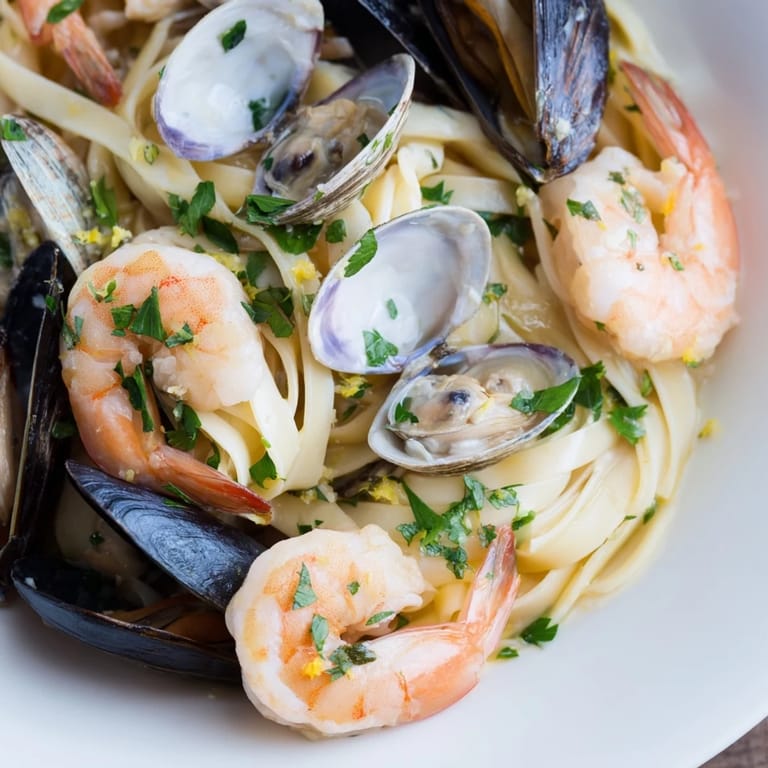
- Add the stock, return the shrimp to the pan, then toss in the cooked linguine with that reserved pasta water. Add the butter, lemon zest, and lemon juice, then gently toss everything over low heat until the sauce coats the pasta and every component heats through. Season with salt and pepper—taste as you go because seafood can be briny.
 Save
Save The first time someone asked for seconds, it hit me that this wasn't fancy or pretentious—it was just honest food made with care, and that's the whole point. There's something almost meditative about watching a plate of seafood and pasta come together, knowing that in five minutes it'll be on the table and people will be happy.
The Seafood Question
Choosing seafood is where a lot of home cooks second-guess themselves, but it's simpler than it feels. Buy from a place where seafood actually moves—a farmers market, a fish counter with a loyal crowd, or someone who clearly cares. Fresh clams and mussels should feel heavy, smell like ocean spray, and close immediately if you tap them. Shrimp should smell like brine and look translucent, never mushy or gray at the edges.
The Wine Matters More Than You Think
Using a wine you wouldn't drink is a false economy because it's literally becoming your sauce. A crisp Pinot Grigio, Vermentino, or Sauvignon Blanc transforms into something that tastes less like wine and more like the essence of what makes this dish work. The alcohol cooks off in the first minute or two, leaving behind acidity and subtle fruit notes that make seafood taste more like itself.
Timing and Variations
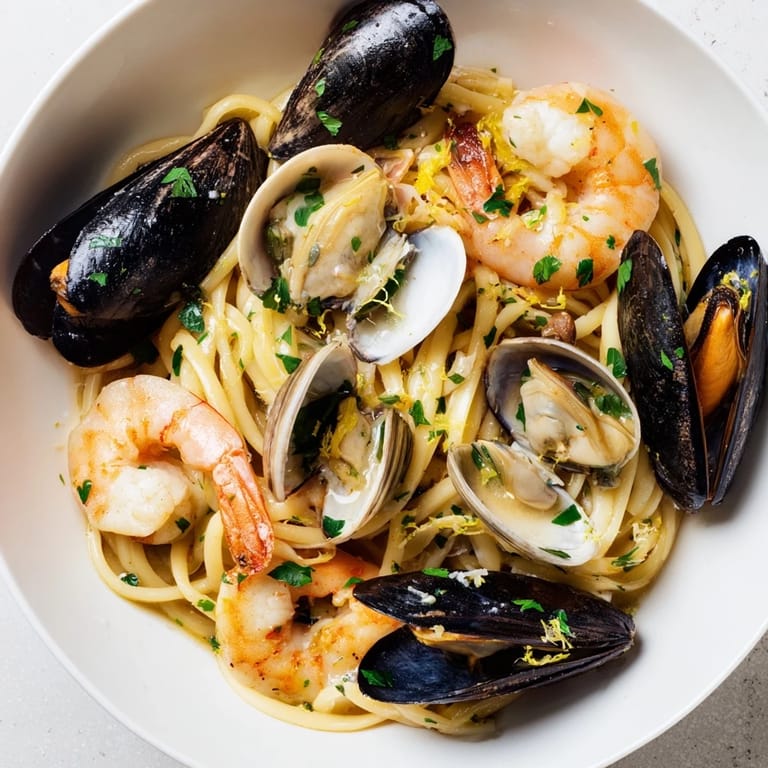
The entire dish hinges on not overthinking the timing once you start cooking. Have everything prepped and within arm's reach before you heat the oil, because once you begin, everything moves fast and that's actually a beautiful thing. If you want to make it richer, a splash of cream stirred in at the very end won't hurt, and you can absolutely swap out some seafood for what you can find or what you love.
- Scallops or calamari work beautifully if you can't find certain shellfish or prefer something different.
- Add a small pinch of saffron to the stock for a note of color and subtle earthiness if you're feeling adventurous.
- Save a handful of pasta water even after you think you won't need it; sometimes the sauce tightens and you'll want that escape hatch.
 Save
Save This is the kind of dinner that makes people linger at the table, asking for one more bite, one more glass of wine, one more moment. Make it for people who matter, and watch how something simple becomes a memory.
Recipe Guide
- → How do I ensure the clams and mussels are safe to eat?
Make sure to scrub them thoroughly before cooking and discard any that do not open after steaming to avoid potential spoilage.
- → Can I substitute other seafood in this dish?
Yes, calamari or scallops can be used instead for a different texture and flavor profile.
- → What type of wine is best for the sauce?
A dry white wine like Pinot Grigio or Vermentino complements the sauce’s flavors and enhances the seafood.
- → How do I keep the linguine from sticking together?
Cook linguine until just al dente, reserve some pasta water, and toss immediately with the sauce while warm to prevent sticking.
- → Can I make the sauce creamier?
Adding a splash of cream towards the end of cooking enriches the sauce without overpowering the seafood flavors.