 Save
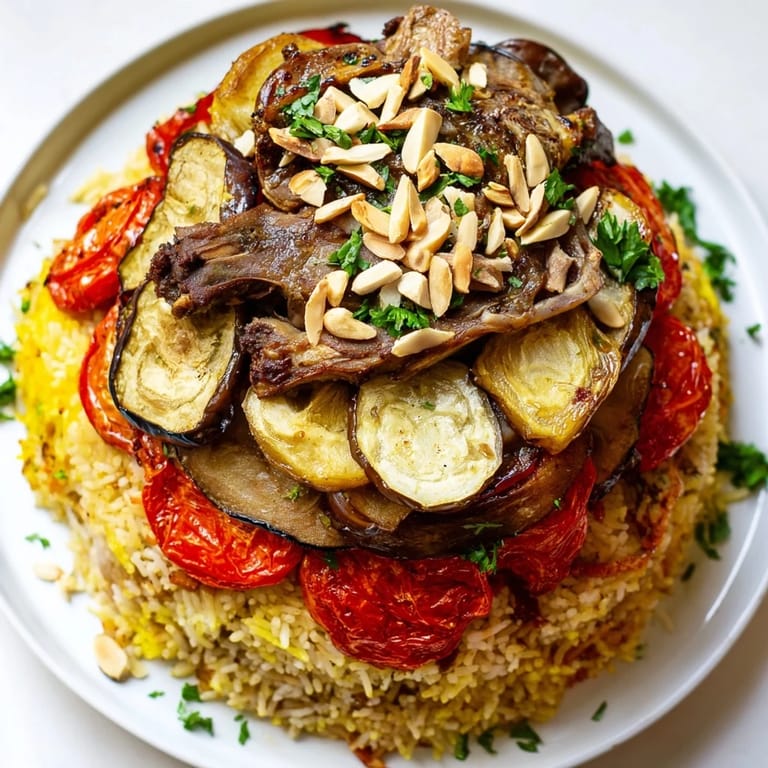
Save The first time I watched my grandmother flip a pot of maqluba onto a platter, I held my breath—would it hold together, or would it tumble into chaos? That moment of anticipation, waiting to see if all those careful layers would emerge intact and golden, made me understand why this Palestinian dish feels like edible architecture. Now, whenever I make it, that same magic unfolds in my kitchen: the aroma of spiced meat and caramelized eggplant filling the air, the dramatic inversion, and then the collective gasp when it lands perfectly on the plate.
I made this for friends who'd never tried Palestinian food before, and watching them taste that first forkful—the way their eyes lit up at how the flavors layered—reminded me that food carries stories. The allspice and cinnamon aren't just seasonings; they're whispers of history, of kitchens where this dish has been made for generations. Suddenly, it wasn't just dinner; it was a small act of sharing something irreplaceable.
Ingredients
- Bone-in lamb shanks or chicken pieces (900 g / 2 lbs): Bone-in cuts give the broth a deep, silky body that boneless meat simply can't match—don't skip this detail.
- Long-grain basmati rice (2 cups): Basmati grains stay separate and elegant rather than clumping together, which matters when you're stacking and flipping.
- Ground allspice, cinnamon, and black pepper: These three spices are the soul of the dish; they perfume the broth so that every grain of rice carries warmth and complexity.
- Eggplants and potatoes (2 medium each): Slicing them thin and roasting them first concentrates their flavor and ensures they're tender when the pot comes together.
- Large tomatoes (2) and onion (1 medium): Fresh tomatoes at the bottom layer create a light, tangy cushion that prevents sticking and adds brightness.
- Toasted almonds or pine nuts (1/2 cup) and fresh parsley (1/4 cup): These aren't just garnish—they're the finishing touch that catches the light and makes the dish feel celebratory.
- Chicken or beef broth (3-4 cups): Quality broth matters here; if possible, use homemade or a low-sodium version so the spices shine rather than salt overwhelming everything.
- Vegetable oil (3 tbsp): This modest amount is all you need to brown the meat and brush the vegetables—less is more for balance.
Tired of Takeout? 🥡
Get 10 meals you can make faster than delivery arrives. Seriously.
One email. No spam. Unsubscribe anytime.
Instructions
- Rinse and soak the rice:
- Run your rice under cold water until the water runs clear—this removes starch that would otherwise make the rice gluey. Let it sit in water for 30 minutes, then drain; this extra step makes each grain plump and separate.
- Season the meat:
- Mix black pepper, allspice, cinnamon, and salt in a small bowl, then rub it all over the lamb or chicken. Let the meat sit for a few minutes so the spices can grip the surface.
- Sear the meat:
- Heat oil in your heavy pot over medium-high heat until it shimmers. Place the meat in—you'll hear a satisfying sizzle—and don't move it around; let each side develop a caramelized crust before turning.
- Simmer the meat in broth:
- Add your onion slices to the pot and stir until they soften, then return the meat. Pour in enough broth to almost cover everything and let it bubble gently for 30–40 minutes until the meat is nearly cooked through. The broth will taste deeply savory now—this is your liquid gold.
- Roast the vegetables:
- While the meat simmers, preheat your oven and brush eggplant and potato slices lightly with oil. Spread them on baking sheets and roast for 20–25 minutes until they're golden at the edges and tender inside; this step caramelizes their natural sugars.
- Layer the pot (the architecture moment):
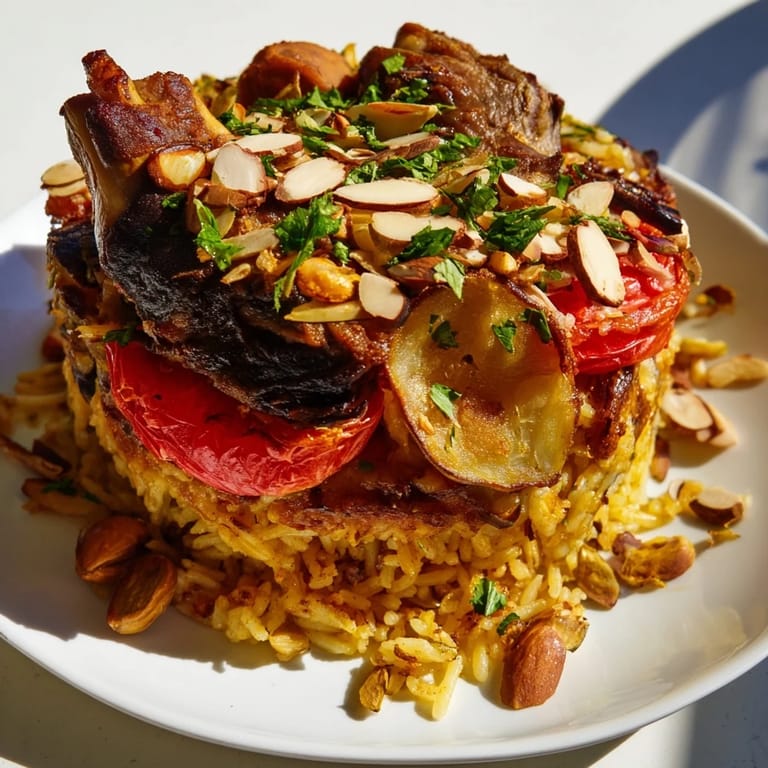
- In your pot, arrange tomato slices to create a base that prevents sticking, then layer roasted potatoes, eggplant, and the cooked meat with its onions. Crown it all with your drained rice, pressing gently so everything nestles together without crushing.
- Season and pour the broth:
- Stir turmeric, cumin, and salt into your reserved broth, then pour enough over the rice to just cover it—about 3–4 cups. You'll see the rice drink it in as it cooks.
- Compress and cover:
- Place a heatproof plate or lid smaller than the pot directly on top of the rice to keep the layers compact. Cover the pot tightly with its lid so steam can't escape and confuse your layers.
- Cook low and slow:
- Bring everything to a gentle simmer over medium heat, then turn it down to low and let it sit undisturbed for 35–40 minutes. The rice will absorb the broth, the vegetables will soften further, and flavors will marry into something magnificent.
- Rest before the flip:
- Remove from heat and let the pot rest, covered, for 15 minutes. This allows the starches to set slightly, making the inversion more forgiving.
- The dramatic inversion:
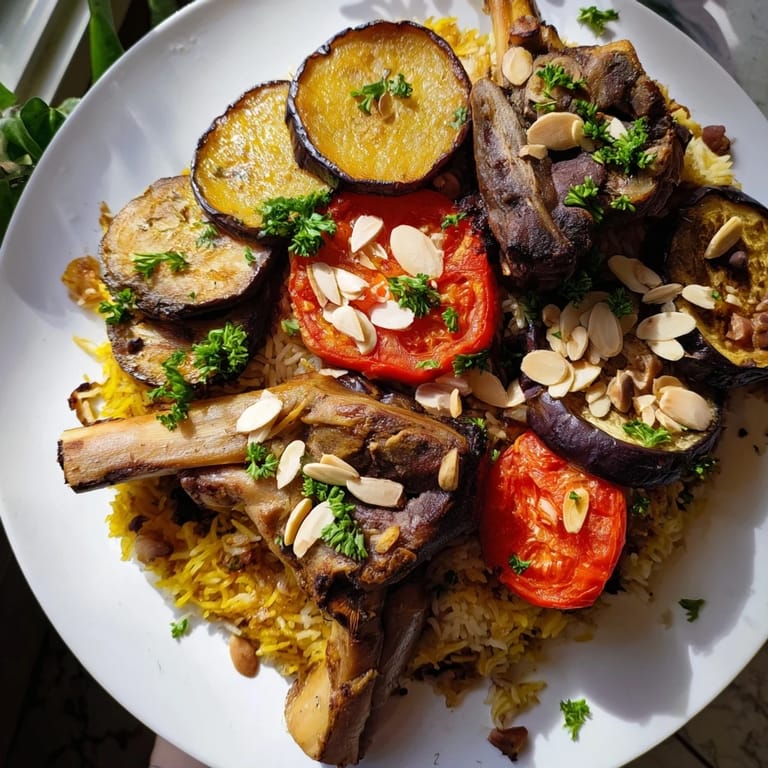
- Place your large serving platter upside down over the pot, then grip both pot and platter firmly and flip everything in one confident motion. Lift the pot away slowly—if you hear a gentle settling sound, that's the layers landing perfectly on the platter.
- Garnish and serve:
- Scatter toasted nuts and fresh parsley over the top in generous handfuls. Bring it to the table while it's still steaming, with yogurt or a crisp salad on the side.
 Save
Save I remember my cousin laughing when my first maqluba cracked slightly in the middle during the flip—"It's still beautiful," she said, and she was right. That imperfect dome taught me that this dish isn't about perfection; it's about the care you put into each layer, the way you respect the ingredients, and how you're brave enough to trust the process. Even when it doesn't look magazine-worthy, it tastes like home.
The Secret of Layering
Maqluba means "upside down" in Arabic, and the name tells you everything about how to approach this dish—you're building in reverse. Start from what will be the top of your final presentation and work backward, which means the tomatoes (your most delicate layer) go down first. This shifts your brain from thinking linearly about cooking to thinking spatially, imagining the finished plate before you've even started cooking.
Choosing Your Meat Wisely
Lamb shanks are traditional and give a rich, almost silky finish to the broth, but they can be pricier and require a bit more time. Chicken thighs work beautifully if you want something lighter or faster—they cook in less time and their subtle flavor lets the spices sing. I've learned that boneless cuts feel convenient but cost you depth in the broth, so if you go that route, consider adding a chicken wing or two just for the liquid's sake.
The Vegetable Variables
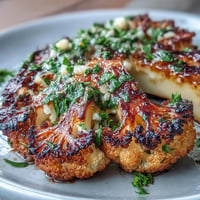
Eggplant is classic, but I've had stunning versions made with cauliflower florets, which adds a nuttier note and cooks even faster. Zucchini works if you salt and drain it first to remove excess moisture. The potatoes are non-negotiable—they anchor the whole structure—but you can use waxy varieties like Yukon Gold instead of russets for a slightly more delicate texture. One last thought: if any of your vegetables are particularly moist (like fresh eggplant), salt them generously 20 minutes before roasting and let them weep their excess water.
- Roast vegetables cut side down so they develop a beautiful caramelized crust.
- If you prefer a lighter dish, reduce the oil slightly, but don't skip it entirely—it carries flavor.
- Taste a roasted piece before layering; it should be fork-tender with slightly crispy edges.
 Save
Save Maqluba is the kind of dish that fills a kitchen with the kind of aroma that makes people pause and ask what you're making. When you serve it, you're not just offering food—you're sharing a moment of magic that tastes like centuries of Palestinian kitchens distilled into one perfect plate.
Recipe Guide
- → What meats are best suited for Maqluba?
Lamb shanks or chicken pieces are ideal for Maqluba, providing rich flavor and tenderness after slow simmering.
- → How is the layering done for this dish?
The layering starts with tomato slices at the bottom, followed by roasted potatoes, eggplants, cooked meat and onions, and topped with soaked rice before adding broth.
- → Can I substitute vegetables in the dish?
Yes, cauliflower florets can replace eggplants for a different taste and texture profile while maintaining the dish's essence.
- → What spices enhance the rice in Maqluba?
Turmeric, cumin, and salt are used to season the rice, imparting an aromatic warmth that complements the layered ingredients.
- → How do you achieve the flipped presentation?
Once cooked and rested, the pot is inverted onto a large platter, carefully unmolding the layered dish to showcase its colorful ingredients.
- → Are there any common allergens in this dish?
The dish contains nuts like almonds or pine nuts, and broth may contain gluten, so check ingredients if allergens are a concern.