 Save
Save There's something about the smell of sautéed peppers hitting hot oil that makes me feel like I'm cooking in someone's kitchen in Tel Aviv, even though I'm just in my own apartment at 7 p.m. on a Tuesday. I discovered shakshuka years ago when a friend brought me leftovers in a glass container, the eggs still soft and the sauce still warm, and I've been making it ever since because it's one of those dishes that tastes like you've done something impressive without actually trying that hard.
I made this for my sister on a random Sunday morning and she sat there dipping pita bread into the sauce while we talked through the entire morning, and now whenever she wants comfort food she asks me to make it. That's when you know a recipe has become more than just instructions.
Ingredients
- Olive oil: Two tablespoons is enough to create a shimmering base that will carry all the flavors forward.
- Yellow onion: Finely chop one medium onion and let it soften completely, which takes about five minutes and releases all its sweetness.
- Red bell pepper: Dice it into pieces that will soften but still hold their shape, adding both color and mild sweetness to balance the spice.
- Garlic: Three cloves minced fine will disappear into the sauce and make everything taste deeper.
- Red chili: One small one chopped fine if you like heat, or skip it entirely if spice isn't your thing.
- Crushed tomatoes: One 400-gram can forms the backbone of the sauce, giving you consistent texture and acidity.
- Fresh tomatoes: Two medium ripe ones, chopped, add brightness and prevent the sauce from tasting one-note.
- Tomato paste: One teaspoon concentrates the tomato flavor and deepens the sauce's color.
- Ground cumin: One teaspoon creates an earthy warmth that makes people guess what they're tasting.
- Sweet paprika: One teaspoon gives color and a gentle pepper flavor without any heat.
- Cayenne pepper: A quarter teaspoon if you want to turn up the warmth, optional entirely if you'd rather not.
- Ground coriander: Half a teaspoon rounds out the spice blend and adds a floral note.
- Salt and black pepper: Season to your taste, tasting as you go rather than guessing.
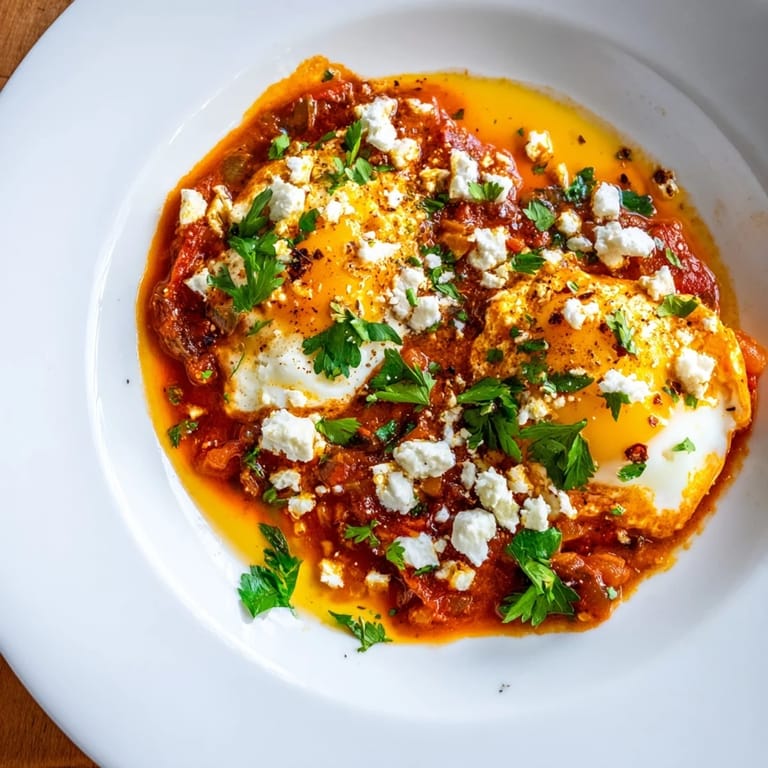
- Large eggs: Four eggs, one per person, cracked gently into wells you'll make in the sauce.
- Fresh parsley: Two tablespoons chopped adds a clean green finish and a whisper of freshness.
- Fresh cilantro: Two tablespoons chopped if you like that bright, herbal taste, or use more parsley if you don't.
- Feta cheese: Crumbled on top at the end, optional, but it adds a salty richness that keeps you coming back for more.
Tired of Takeout? 🥡
Get 10 meals you can make faster than delivery arrives. Seriously.
One email. No spam. Unsubscribe anytime.
Instructions
- Heat your oil and begin:
- Pour two tablespoons of olive oil into a large skillet or cast-iron pan and turn the heat to medium, letting it warm until it shimmers and smells almost nutty. This takes about two minutes and is the moment you commit to the dish.
- Soften the vegetables:
- Add your chopped onion and diced red bell pepper, stirring occasionally as they cook down and release their juices, which takes about five to seven minutes. You'll know they're ready when the onion turns translucent and the pepper begins to collapse at the edges.
- Bloom the aromatics:
- Stir in your minced garlic and chopped chili, cooking for just about a minute until the smell rises up and makes you hungry. The garlic will soften but shouldn't brown, so keep the heat at medium and keep stirring.
- Build the sauce:
- Pour in your canned crushed tomatoes and your fresh chopped tomatoes, then add the tomato paste and stir everything together until the paste dissolves completely. This is when the pan suddenly looks alive and red and promising.
- Season and simmer:
- Sprinkle in your cumin, paprika, cayenne if you're using it, coriander, salt, and pepper, stirring to distribute the spices evenly, then let the whole thing simmer for ten to twelve minutes. Stir occasionally, watching as the sauce thickens and darkens and concentrates into something deeper than it was a few minutes before.
- Create the wells:
- Use the back of a spoon to make four small indentations in the surface of the sauce, spacing them so the eggs won't touch as they cook. Press gently so you're creating little nests but not actually breaking through to the bottom of the pan.
- Add the eggs:
- Crack each egg gently into a well and let it settle into the sauce, which will still be bubbling quietly underneath. The heat will do almost all the work from here.
- Cover and finish:
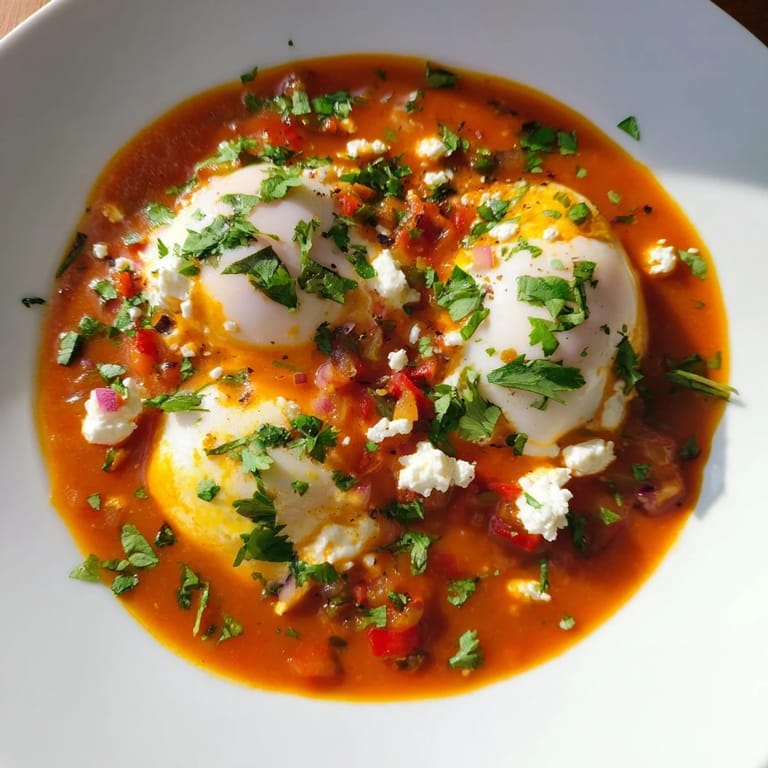
- Put a lid on the pan and turn the heat down slightly to medium-low, cooking for six to eight minutes depending on how hot your pan runs. The egg whites will set while the yolks stay soft, which is exactly what you want.
- Garnish and serve:
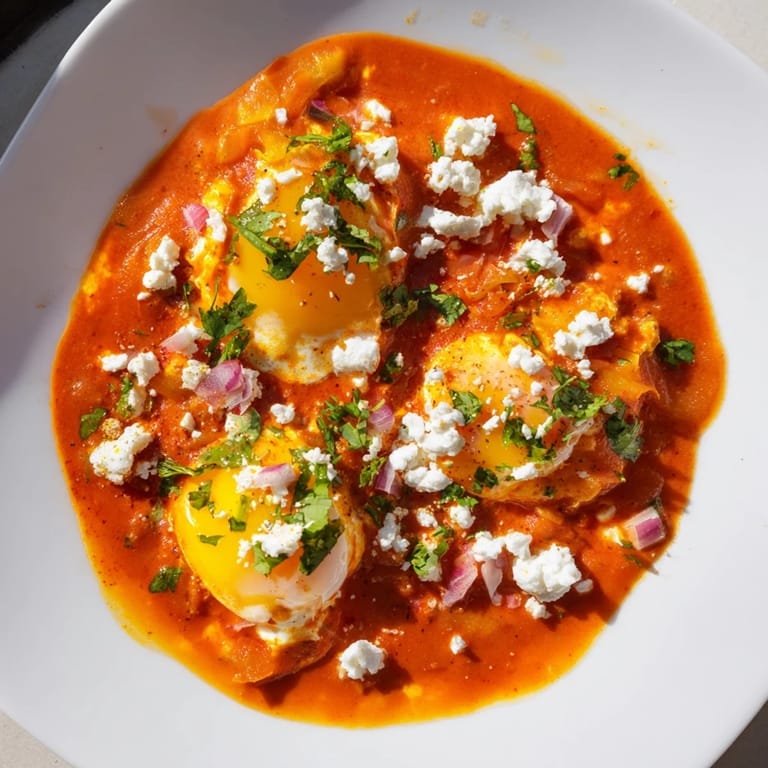
- Remove from heat and scatter your fresh parsley and cilantro over the top, along with crumbled feta if you're using it. Serve immediately with warm pita or crusty bread so people can wipe every drop of sauce from the pan.
 Save
Save I remember my neighbor knocking on my door asking what I was cooking because the smell had traveled into the hallway, and then she was sitting at my counter watching the eggs cook and asking if I could teach her. That's when I realized this dish is about more than just breakfast or appetizers, it's about creating a moment where people want to sit together.
The Magic of Spice Balance
The secret that took me several attempts to understand is that the spices should whisper, not shout, and they work together in layers rather than competing for attention. Cumin provides the earthiness, paprika adds color and gentle pepper notes, coriander brings in something almost floral and complex, and cayenne is just there in the background ready to wake things up if you want it to. I learned this by making it too spicy once and having to water down the sauce, which taught me to taste as I went and add heat gradually rather than all at once.
Using Cast Iron Changes Everything
A cast-iron pan holds heat more evenly than regular stainless steel, which means your sauce simmers gently instead of bubbling aggressively at the edges, and the eggs cook at exactly the pace you want them to. The pan also develops this beautiful patina over time that seems to improve the flavor, or maybe that's just me getting better at using it. Either way, if you have a cast-iron pan, this is the moment to use it.
Variations That Keep It Interesting
I've made this with sautéed spinach folded into the sauce, which makes it feel more like a complete meal, and I've added chopped eggplant that I cooked separately first so it wouldn't release water and make the sauce thin. A pinch of smoked paprika instead of regular paprika gives it a deeper, more mysterious flavor that people notice immediately, and serving it with labneh or thick Greek yogurt on the side creates a cool, creamy contrast to the warm, spiced sauce.
- Stir in sautéed spinach or eggplant for vegetables that feel like part of the main course.
- Try a pinch of smoked paprika for a flavor that tastes like it came from somewhere distant and important.
- Serve with labneh or Greek yogurt so each person can add cool creaminess to every bite.
 Save
Save This dish has become my answer to the question of what to cook when I want to feel like a real cook but don't want to spend all evening in the kitchen. It's the kind of food that brings people together without asking for much in return.
Recipe Guide
- → What is the best pan for cooking shakshuka eggs?
A large skillet or cast-iron pan with a lid works best to evenly cook the sauce and gently poach the eggs.
- → Can I adjust the spice level?
Yes, adding or omitting the fresh chili and cayenne pepper can control the heat to your preference.
- → What are good garnishes for this dish?
Fresh parsley, cilantro, and crumbled feta cheese enhance the flavor and add freshness and creaminess.
- → How can I make the sauce thicker?
Simmer the tomato and pepper sauce longer to reduce excess liquid and deepen the flavors.
- → Is it possible to add vegetables to this dish?
Sautéed spinach or eggplant can be added for extra texture and nutrients without overpowering the dish.