 Save
Save The first time I bit into a sabich at a food stall near Tel Aviv's old bus station, I understood why locals queue for it. The pita was still warm, steam rising as I unwrapped the foil, and the moment my teeth hit that golden fried eggplant, everything clicked—crispy outside, silky within, pooling with tahini that tasted like toasted sesame dreams. I came home determined to recreate it, and after a few burnt batches and one spectacular oil splatter, I finally nailed it. Now this is the sandwich I make when I want to feel transported without leaving my kitchen.
I made this for my sister one Sunday afternoon when she was stressed about work, and watching her close her eyes after that first bite—really *close her eyes*—reminded me that food is sometimes the gentlest way to say you care. She came back for seconds and asked for the recipe before she'd even finished the first one. Since then, it's become our thing: a quick-but-feels-fancy lunch when we need to reconnect.
Ingredients
- Eggplant: Two medium ones, sliced into half-inch rounds. The salt draw-out step isn't just technique—it's what prevents them from turning into soggy sponges and gives you that restaurant-quality crunch.
- All-purpose flour: Just half a cup to coat the eggplant lightly. A thin, delicate dredge is all you need; thick battering defeats the purpose.
- Vegetable oil: One cup for frying. Use something neutral—you want the eggplant to taste like itself, not the oil.
- Eggs: Four large ones, hard-boiled and sliced. They're the quiet protein that holds everything together.
- Tomatoes: Two medium ones, diced small. Use the ripest, most flavorful ones you can find because they season the whole sandwich.
- Cucumber: One medium, diced. Cucumber brings the cool counterpoint to the warm eggplant.
- Red onion: A quarter of one, finely chopped. It's sharp and bright, a necessary wake-up call in the salad.
- Fresh parsley: Two tablespoons, chopped. Don't skip this—it adds a green, herbal whisper.
- Lemon juice: Three tablespoons total (one for salad, two for tahini). Fresh squeezed, never the bottled stuff.
- Extra-virgin olive oil: One tablespoon for the salad. This is where quality matters because you'll taste it directly.
- Tahini paste: Half a cup, the creamy backbone of the whole thing. Find a good one; cheap tahini tastes chalky.
- Garlic clove: One small one, minced. It should whisper, not shout, in the tahini.
- Pita breads: Four large ones. Warm them just before assembly so they're pliable and steamy.
- Amba (pickled mango sauce): Half a cup, optional but highly encouraged. It adds a tangy, fruity punch that ties everything together.
- Fresh cilantro: A quarter cup, chopped. Some people use only parsley; I use both for complexity.
- Pickles: A quarter cup, sliced. They're the final bright note, so choose ones you actually love eating.
- Hot sauce: To taste. I use something with vinegar and heat that doesn't overpower the other flavors.
Tired of Takeout? 🥡
Get 10 meals you can make faster than delivery arrives. Seriously.
One email. No spam. Unsubscribe anytime.
Instructions
- Salt and rest the eggplant:
- Slice your eggplants into half-inch rounds and sprinkle both sides generously with salt. Let them sit for fifteen minutes—this draws out the water that would otherwise make them mushy. You'll see little beads of moisture on the surface; that's exactly what you want. Pat each slice dry with paper towels until they feel almost tacky.
- Flour and fry until golden:
- Dredge each eggplant slice in flour, shaking off the excess so you have just a whisper of coating. Heat your oil in a large skillet over medium-high heat until it shimmers and moves like liquid mercury. Fry the eggplant in batches, about two to three minutes per side, until the edges are deep golden and crispy. Don't crowd the pan or they'll steam instead of fry. Drain on paper towels as they come out.
- Boil the eggs while eggplant fries:
- Cover your four eggs with cold water in a saucepan and bring to a rolling boil. Once boiling, remove from heat, cover, and let sit for exactly nine minutes. Transfer immediately to an ice bath to stop the cooking—this gives you a creamy yolk with no gray ring. Peel gently under cool running water and slice into rounds.
- Build the Israeli salad:
- Dice your tomatoes and cucumber into small, manageable pieces. Finely chop the red onion and parsley, then toss everything together with fresh lemon juice, olive oil, salt, and pepper. Taste it; it should be bright and alive, not bland. This salad is forgiving—adjust the lemon or salt to your preference.
- Whisk the tahini sauce:
- In a bowl, whisk tahini paste with water, fresh lemon juice, minced garlic, and salt. Start with the water quantity in the recipe, then add more by the tablespoon if you need it thinner. The sauce should be pourable but still coat a spoon—think of heavy cream. It will thicken slightly as it sits, so don't make it too thin.
- Warm and pocket the pita:
- Place your pita breads directly over a gas flame for a few seconds per side, or wrap them in a damp towel and microwave for thirty seconds. You want them warm and flexible, not crispy. Carefully slice open the edge of each pita to create a pocket, being careful not to tear through to the other side.
- Assemble with intention:
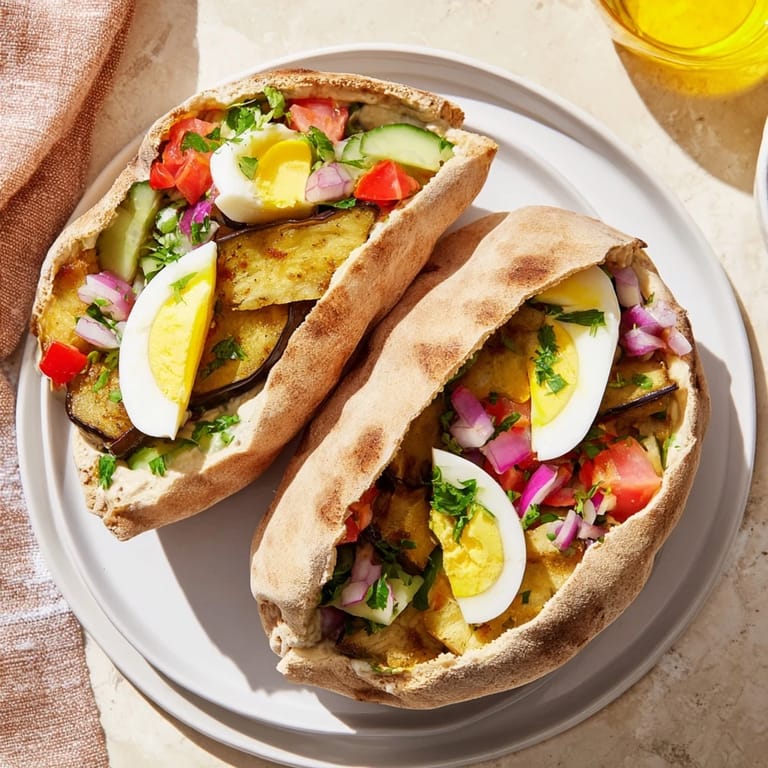
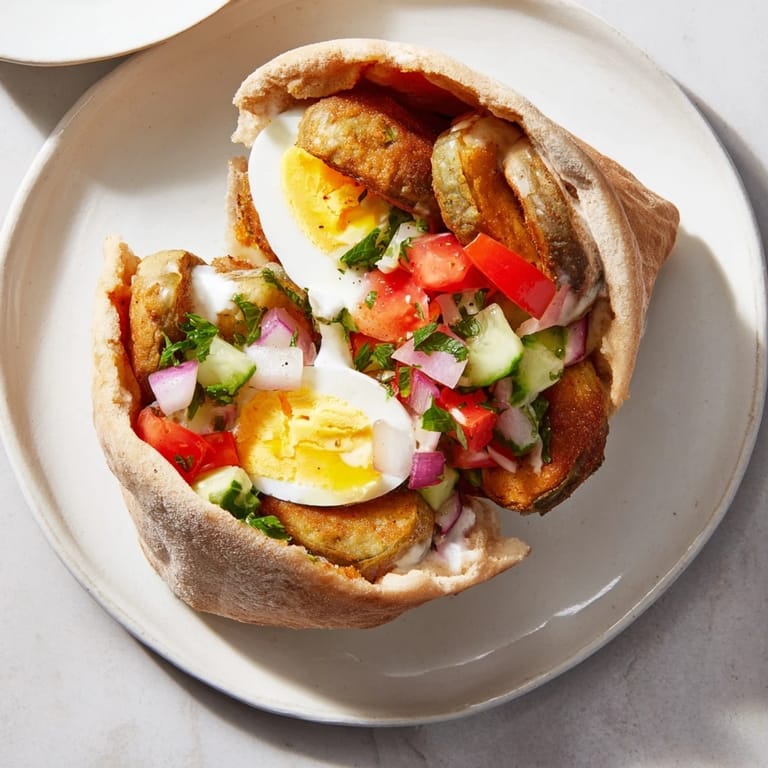
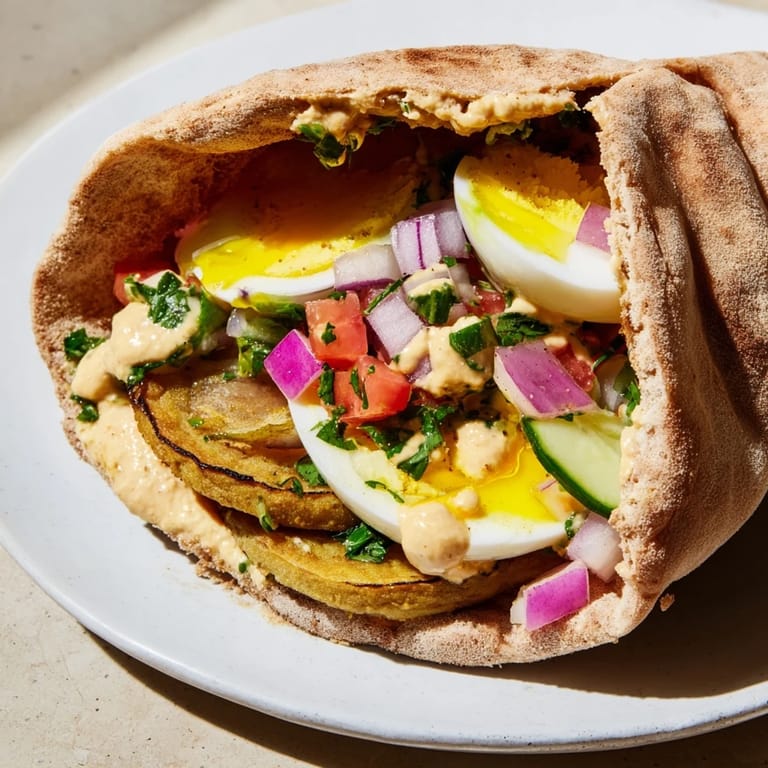
- Here's where it becomes art rather than cooking: lay a piece or two of fried eggplant in the pita, then add some egg slices. Top with a generous spoonful of Israeli salad, then drizzle tahini sauce over everything. If using amba, add it now—don't be shy. Finish with sliced pickles, cilantro, and hot sauce to your liking. The order matters because it creates layers of flavor and texture as you bite through.
- Serve immediately:
- A sabich is best eaten right now, while the pita is warm and the eggplant is still crispy. Wrap it loosely in foil or paper and eat standing up, preferably in the sunshine, like you're on a street in Jerusalem.
 Save
Save My neighbor watched me assemble one of these through the kitchen window and just shook her head in amazement—not because it looked complicated, but because the aroma wafting out was making her reconsider what she'd planned for dinner. That's when I realized a sabich isn't just food; it's an invitation to slow down and notice all the individual flavors coming together.
The Eggplant is Everything
The eggplant is honestly the soul of this sandwich, and I spent an embarrassing amount of time perfecting it. Overcooked and it turns to mush; undercooked and it tastes bitter and tough. The sweet spot is when the exterior is deeply golden and crispy—almost crackling—while the inside is silky and absorbs the tahini like a sponge absorbs water. The initial salting step matters more than you'd think; it removes excess moisture that would otherwise steam the eggplant from the inside. I've tried it without salting, and the results were disappointing every single time. Now, I salt the eggplant, make my tahini sauce, hard-boil the eggs, and chop my vegetables while it sits—that fifteen minutes of rest does the heavy lifting for you.
Tahini: The Unsung Hero
Tahini sauce might seem like an afterthought, but it's the glue that holds this entire sandwich together—literally and figuratively. A good tahini sauce should taste nutty and rich, never bitter or thin. The trick is balancing it; too much water and it becomes soup, too little and it clumps. I start with the water amount listed in the recipe, then add more gradually while whisking, tasting as I go. The lemon juice is crucial because it brightens the sesame and prevents the sauce from tasting heavy. And the garlic—just one small clove, minced fine—whispers into the background without overwhelming anything else. I've made this sauce dozens of times now, and I still taste it before assembling the sandwich just to make sure it's perfect.
Making It Your Own
The beauty of a sabich is that it's deeply traditional yet infinitely adaptable to what you have on hand and what you love. If amba seems too exotic, use hot sauce or sriracha instead—the goal is that final spark of flavor. If cilantro isn't your thing, double the parsley. If you can't find fresh lemon, lime works too, though it changes the flavor profile slightly. The architecture of the sandwich matters more than the exact ingredients.
- Make it vegan by skipping the eggs or replacing them with crumbled baked tofu that's been seasoned and pan-fried until crispy.
- For extra richness, add a dollop of hummus underneath the eggplant—it creates a creamy layer that's wonderful.
- Prepare the eggplant and salad ahead of time; assemble only when you're ready to eat so everything stays fresh and the pita stays warm.
 Save
Save This sandwich taught me that sometimes the most satisfying meals come from simple ingredients treated with care and respect. It's not fussy, but it's never rushed.
Recipe Guide
- → How do you prepare the eggplant for Sabich?
Slice eggplant into rounds, salt to remove moisture, then lightly dredge in flour and fry until golden brown.
- → What ingredients make up the Israeli salad?
Tomatoes, cucumber, red onion, fresh parsley, lemon juice, olive oil, salt, and pepper create the fresh salad.
- → How is the tahini sauce made for this dish?
Whisk tahini paste with water, lemon juice, minced garlic, and salt until smooth and creamy.
- → Can this dish be adapted for vegan diets?
Yes, by omitting hard-boiled eggs or substituting them with tofu, and ensuring vegan-friendly pita.
- → What optional condiments enhance Sabich’s flavor?
Pickled mango sauce (amba), sliced pickles, and hot sauce add tangy and spicy notes when desired.
- → What are the best tools to prepare Sabich?
A large skillet for frying, saucepan for boiling eggs, mixing bowls, whisk, and sharp knife help with preparation.