 Save
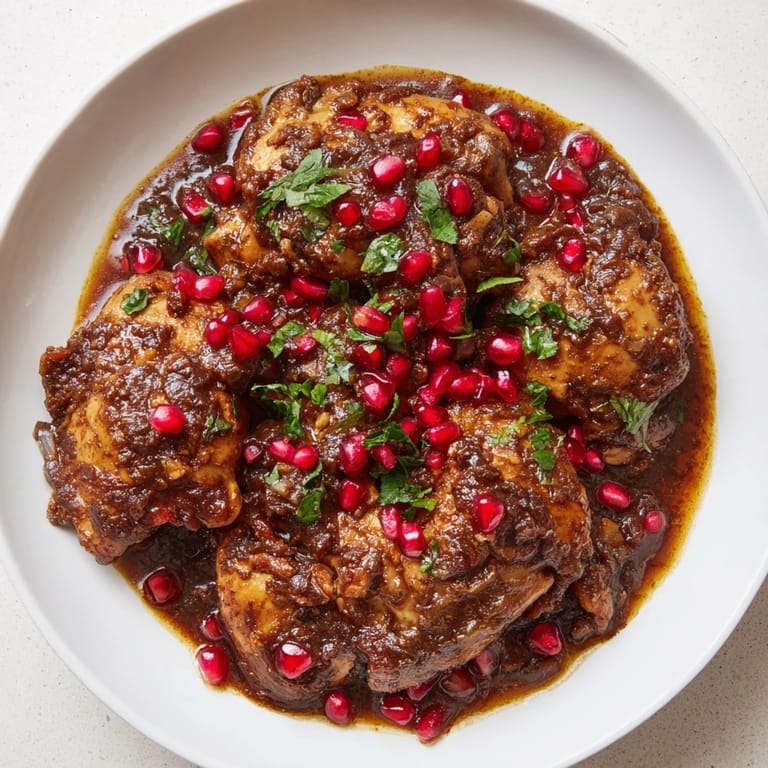
Save I discovered fesenjan by accident at a family gathering where my cousin's mother-in-law brought a pot of something that smelled like autumn and jewels. The first spoonful stopped the conversation—tart pomegranate, earthy walnuts, meat so tender it dissolved on my tongue. She explained it was Persian, that her grandmother had made it for celebrations, and I realized I'd been missing something essential from my cooking life.
The first time I made it myself, I was nervous—pomegranate molasses seemed exotic, and I wasn't sure if grinding walnuts to powder at home would work. It did, and better than I imagined. My partner came home to a kitchen that smelled like a spice bazaar, and we ate it slowly with rice, not saying much, just present with the food.
Ingredients
- Boneless chicken thighs or duck (700 g): Thighs have enough fat to stay juicy during the long simmer; duck is traditional and richer, but chicken works beautifully and is easier to find.
- Salt and black pepper: Season the meat before browning so the flavors meld into the sauce.
- Vegetable oil (2 tbsp): Keep it neutral so the pomegranate and walnut flavors lead.
- Large onion, finely chopped: It dissolves into the sauce, thickening it naturally and adding sweetness.
- Ground walnuts (250 g): Toast them lightly before grinding if you have time—it deepens the flavor and prevents a raw, doughy taste.
- Pomegranate molasses (500 ml): This is the soul of the dish; it's tart and concentrated, not sweet pomegranate juice, so don't substitute.
- Water (500 ml): Adjust based on how thick you like your sauce; some prefer it clinging to the meat, others prefer it looser.
- Sugar (2 tbsp): Balance the tartness; you'll taste and adjust as it simmers, which is the real magic.
- Cinnamon, turmeric, and cardamom: These warm spices echo through the sauce, connecting each flavor without overwhelming.
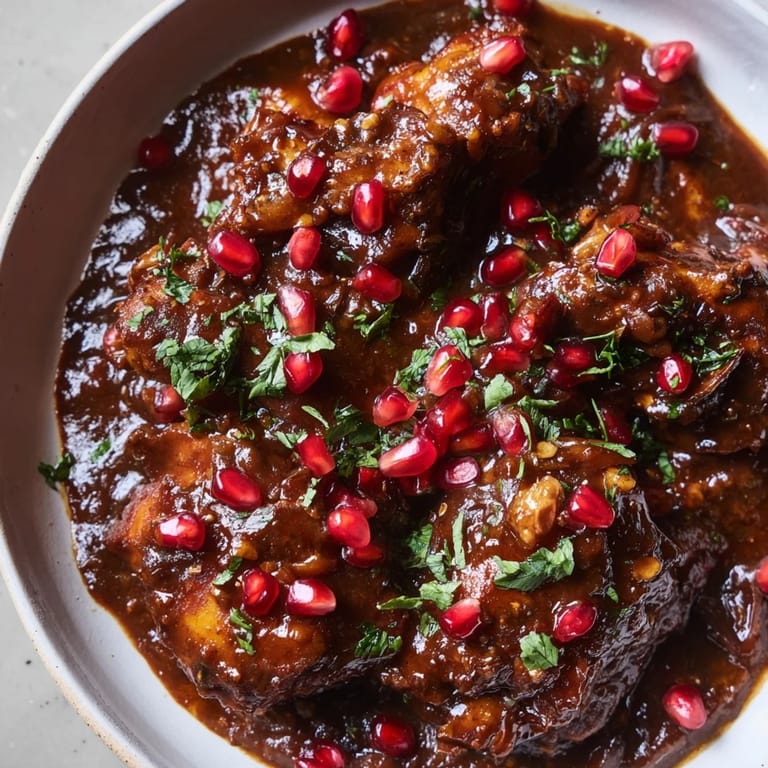
- Pomegranate seeds and fresh parsley for garnish: They add brightness and remind you that this is a celebration dish.
Tired of Takeout? 🥡
Get 10 meals you can make faster than delivery arrives. Seriously.
One email. No spam. Unsubscribe anytime.
Instructions
- Season and prepare:
- Pat your meat dry and season generously with salt and pepper. This step matters more than it seems—it's where the browning magic begins.
- Get the onions golden:
- Heat oil in a heavy pot over medium heat and add chopped onions. Stir them occasionally, letting them soften and turn golden, about 8–10 minutes. You want them fragrant and caramelized, not rushed.
- Brown the meat:
- Increase heat slightly and add the meat pieces, turning them every minute or two until all sides are golden and the pot smells irresistible, about 5–7 minutes total. Don't crowd the pan; work in batches if needed.
- Toast the walnuts in the pot:
- Stir in the ground walnuts and cook for 2–3 minutes, stirring constantly so they don't stick or burn. This brief toasting brings out their depth.
- Build the sauce:
- Add pomegranate molasses, water, sugar, cinnamon, turmeric, and cardamom if using. Stir well, scraping the bottom of the pot to lift any browned bits. Taste it now—this is your baseline for adjusting later.
- Simmer gently:
- Bring to a gentle boil, then turn heat to low, cover, and simmer for 1 hour. Stir occasionally so nothing sticks and the flavors marry. The sauce will be loose still, and that's correct.
- Reduce and finish:
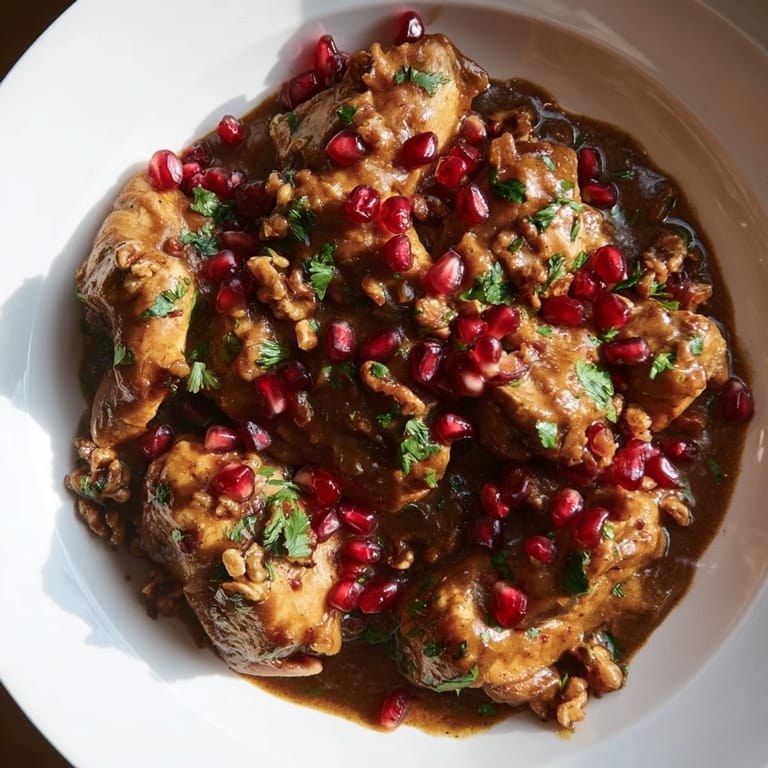
- Uncover and simmer for another 30 minutes, stirring frequently now. Watch for the oil from the walnuts rising to the surface and the sauce thickening into something glossy and cling-worthy. Taste and adjust sugar or pomegranate molasses to your preference—this is where your palate takes over.
- Serve with intention:
- Spoon over steamed basmati or saffron rice, scatter pomegranate seeds and parsley on top, and serve while hot. Every element matters here.
 Save
Save There's a moment, usually near the end of simmering, when you lift the lid and the aroma hits you so fully that you pause. Everything else disappears. That's when you know fesenjan has woven its spell, and you're not just cooking anymore—you're practicing an old, beloved craft.
The Soul of Persian Cooking
Fesenjan represents everything I love about Persian cuisine: it refuses simplicity and celebrates contradiction. Sweet meets sour, meat is tender as silk, and the sauce tastes like it's been perfected over centuries. There's no rush in this dish, no shortcuts that feel right. It asks you to show up, pay attention, and trust the process. That's not just cooking; it's respect.
Choosing Your Protein
Traditionally, this dish calls for duck, which brings a richer, more complex flavor that stands up beautifully to the bold sauce. Chicken thighs are my go-to because they're accessible and they absorb the pomegranate and walnut flavors like they were made for each other. If you want to experiment, lamb works too, though it needs the full cooking time. Vegetarians can use meaty mushrooms or eggplant, adjusted for texture and cooking time. Whatever you choose, respect the cut—dark meat, not white, holds together and stays juicy.
Adjusting the Balance
Fesenjan is a conversation between sweet, sour, and savory, and you're the one who decides the terms. Some families prefer it brighter and more tart; others lean into the sweetness. Some like the sauce thick enough to cling to rice; others prefer it more liquid. This flexibility is a feature, not a bug—it means the recipe belongs to you the moment you make it. Taste often in the last 15 minutes, adjust with small additions, and trust your instincts.
- If it's too tart, add a teaspoon of sugar at a time and stir well, tasting between additions.
- If it's not tangy enough, add pomegranate molasses by the tablespoon, stirring and tasting.
- If the sauce is too thick, thin it with water; if it's too loose, simmer uncovered longer.
 Save
Save This recipe is a reminder that the best meals come from patience and presence. Fesenjan rewards you for slowing down, paying attention, and trusting flavors you might not have encountered before.
Recipe Guide
- → What types of meat work best for this dish?
Boneless chicken thighs or duck pieces provide tender, juicy results and absorb the sauce flavors well.
- → Can I make this dish vegetarian?
Yes, substitute mushrooms or eggplant for meat to create a plant-based variation that retains rich flavors.
- → How long should the stew simmer for optimal texture?
Simmer for about 1 hour uncovered, then an extra 30 minutes uncovered to thicken the sauce and develop flavor.
- → What role does pomegranate molasses play here?
It provides tanginess and sweetness, balancing the richness of walnuts and spices for a unique taste.
- → How do I adjust sweetness and sourness levels?
Modify sugar and pomegranate molasses quantities to suit your preferred balance of sweet and tart notes.