 Save
Save There's something about the smell of beef browning in a hot pot that makes you feel like you're doing something real in the kitchen. Years ago, I stumbled upon wild mushrooms at the market—chanterelles, actually, earthy and delicate—and thought they'd be wasted on anything ordinary. That's when I decided to elevate a classic beef bourguignon, turning it into something that felt both deeply French and entirely my own. The first time I made it, my kitchen filled with this rich, winelike perfume that had my partner asking questions from three rooms away. Now it's become my go-to when I want to impress without actually stressing.
I made this for my sister's birthday dinner last autumn, when the weather had just turned cold enough to justify hours in the kitchen. She arrived early, as she always does, and caught me mid-sear, the kitchen thick with steam and the smell of caramelized beef. We stood there chatting while the mushrooms went golden in the skillet, and by the time everyone sat down, the whole meal felt less like cooking and more like we'd gathered around something warm and honest. That's when I knew this recipe had become more than just food—it was my way of saying I cared enough to spend the time.
Ingredients
- Beef chuck, 1.5 kg cut into 2-inch cubes: Chuck is the workhorse of braises—its marbling melts into the sauce, creating that silky richness you can't fake with leaner cuts.
- Wild mushrooms, 250 g sliced: Chanterelles, porcini, or cremini each bring their own character; I've learned that cremini offer earthiness on a budget, while chanterelles feel almost luxurious.
- Pearl onions, 200 g peeled: Yes, peeling them is tedious, but they caramelize into these sweet, glossy gems that make the dish feel special.
- Carrots, 2 medium sliced: They soften into the sauce and add a gentle sweetness that balances the wine's tannins.
- Celery stalks, 2 diced: This is your aromatic backbone; don't skip it even though it disappears into the background.
- Yellow onion, 1 large chopped: The base of everything—it builds flavor from the moment it hits the hot oil.
- Garlic, 3 cloves minced: Add it after the softer vegetables so it doesn't burn and turn bitter.
- Dry red wine, 750 ml: Use something you'd actually drink; the wine defines the sauce, so cheap wine makes cheap sauce.
- Beef stock, 500 ml: Homemade is ideal, but quality store-bought works when that's what you have.
- Tomato paste, 2 tbsp: A small amount adds depth without making the dish taste tomatoey.
- Olive oil, 3 tbsp: Keep it separate from fancy finishing oils; this is for cooking and browning.
- Unsalted butter, 2 tbsp: This goes into the mushroom and onion pan for that golden, nutty finish.
- Fresh thyme, 3 sprigs: Tie them together so they're easy to fish out at the end.
- Bay leaves, 2: Essential for that classic French backbone flavor; remove them before serving.
- Fresh parsley, 1 tbsp chopped: Save this for the last moment so it stays bright and green.
- Salt and black pepper, to taste: Season as you go, not all at once at the end.
- All-purpose flour, 2 tbsp: This creates a light thickener without cornstarch's slickness; use gluten-free if needed.
- Smoked bacon or pancetta, 100 g diced (optional): When I add this, it becomes the secret nobody can quite identify but everyone notices.
Tired of Takeout? 🥡
Get 10 meals you can make faster than delivery arrives. Seriously.
One email. No spam. Unsubscribe anytime.
Instructions
- Get your oven ready and prep the beef:
- Preheat to 160°C (325°F)—this gentle heat is what makes the magic happen. Pat your beef cubes completely dry with paper towels, then season generously with salt and pepper; damp meat steams instead of sears, and we want that beautiful brown crust.
- Brown the beef in batches:
- Heat 1 tbsp olive oil in your Dutch oven over medium-high heat until it shimmers. Working in batches so you don't crowd the pot, sear the beef until deeply browned on all sides—don't rush this, it takes about 3 minutes per side. Set each batch aside on a plate.
- Crisp the bacon if you're using it:
- Add the diced bacon to the same pot and cook until the edges curl and it releases its fat, about 4 minutes. Remove it and set it with the beef; you'll add it back later.
- Build your aromatics:
- Add another 1 tbsp oil to the pot, then sauté the chopped onion, carrots, and celery for about 5 minutes until they soften and the onion turns translucent. Add the minced garlic and cook for just 1 more minute so it mellows without burning.
- Dust with flour and cook it out:
- Sprinkle the flour over the vegetables and stir everything together, coating well. Let it cook for 2 minutes—you're not making a roux, just coating the vegetables and slightly toasting the flour.
- Deglaze with wine and stock:
- Stir in the tomato paste until it's distributed, then pour in the red wine, scraping up all those brown bits stuck to the bottom of the pot with your spoon. Add the beef stock next, then nestle the beef (and bacon, if using) back into the pot with the thyme sprigs and bay leaves.
- Braise low and slow in the oven:
- Bring everything to a gentle simmer on the stovetop, then cover the pot with its lid and transfer it to the oven for 2 hours. The beef should be fork-tender when you pierce it; if it still feels tough, give it another 15 minutes.
- Sauté the mushrooms while the beef braises:
- About halfway through the braising time, heat 1 tbsp oil and the butter in a large skillet over medium-high heat. When the butter foams, add the wild mushrooms and sauté them until they're golden and any liquid they release has evaporated, about 6 minutes. Set them aside.
- Caramelize the pearl onions:
- In the same skillet (don't wash it, that fond is flavor), add the pearl onions and cook them until they're lightly caramelized and tender, about 8 minutes. Shake the pan occasionally so they brown evenly.
- Finish braising with the mushrooms and onions:
- After the beef's first 2 hours, add the sautéed mushrooms and caramelized pearl onions to the pot. Continue braising uncovered for another 30 minutes; this lets the sauce reduce and thicken naturally as the heat concentrates the flavors.
- Season and garnish:
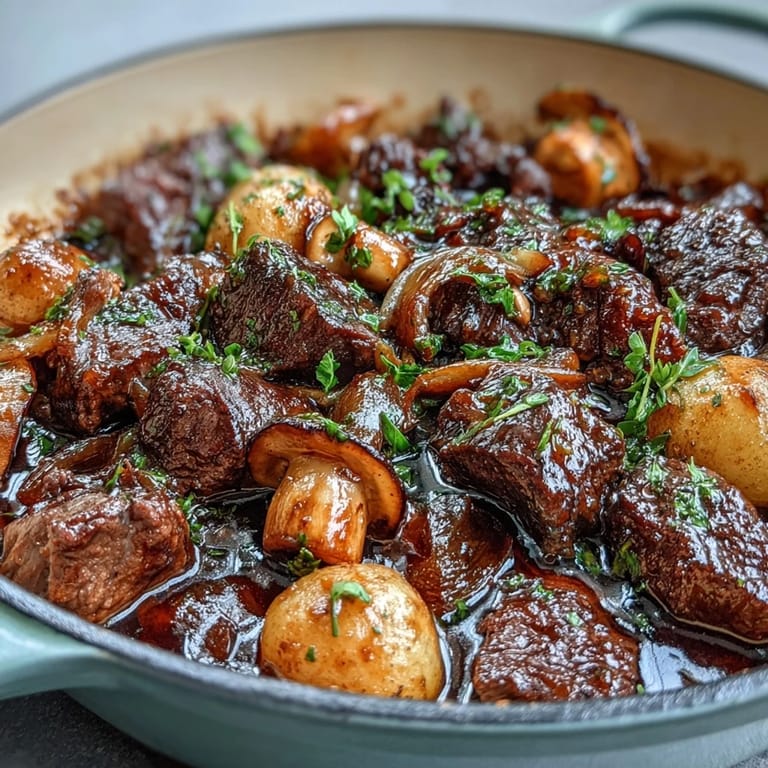
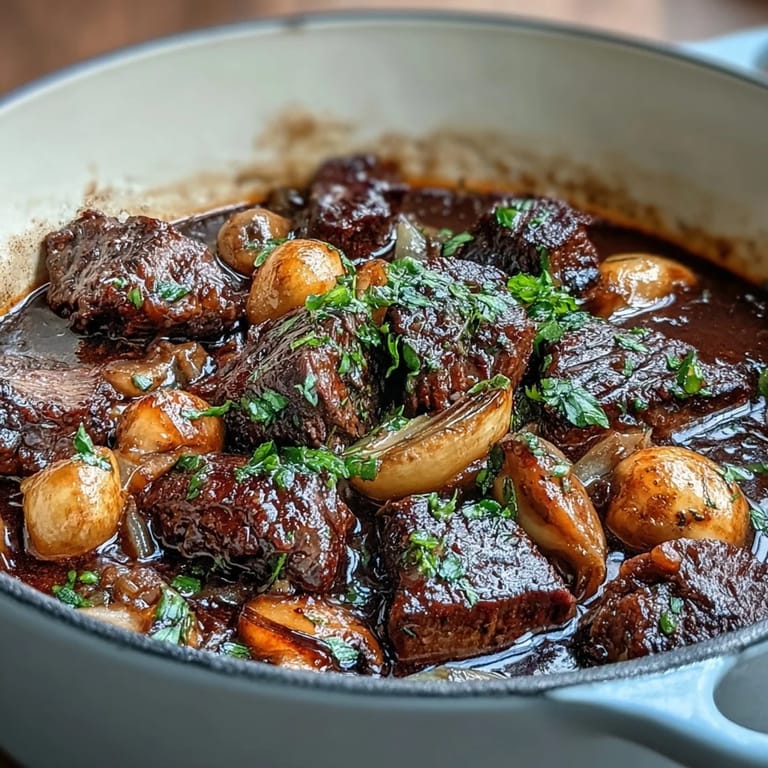
- Remove the bay leaves and thyme sprigs, then taste and adjust the salt and pepper. Serve hot, scattered with fresh parsley that catches the light and adds a final bright note.
 Save
Save What struck me most about making this dish regularly is how it transforms your relationship with time in the kitchen. You're not standing over the stove watching things happen; instead, you're trusting a process that's been refined over centuries, and somewhere around hour two, you realize the oven is doing the work while you exist peacefully in your own home. That's when cooking shifts from being a task into something meditative.
Why This Works as an Elegant Dinner Party Dish
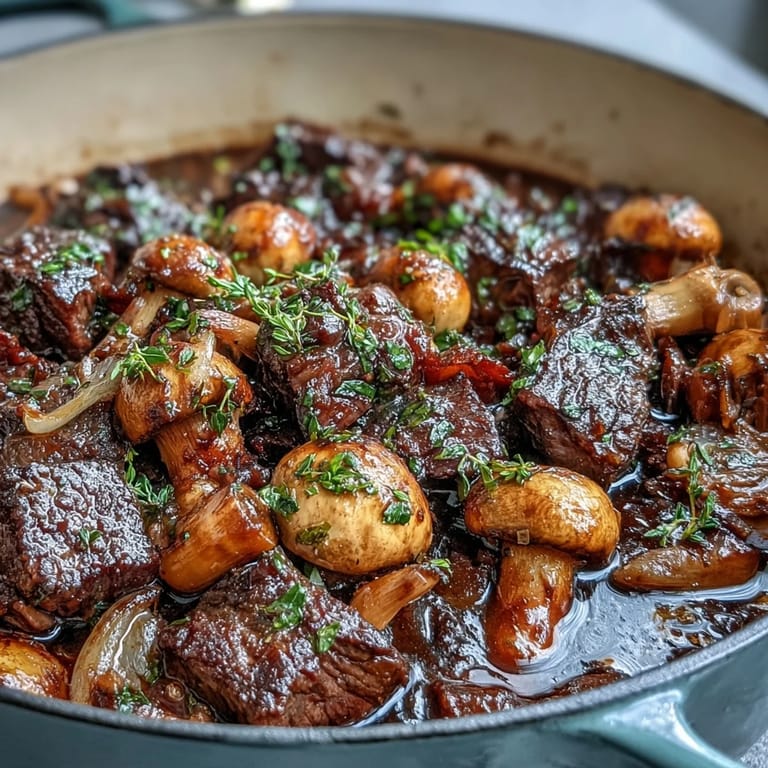
The beauty of beef bourguignon is that almost everything can be done ahead—you can braise it the day before, refrigerate it overnight (the flavors deepen magnificently), and simply reheat it gently while you set the table and light candles. I've learned that serving it in the Dutch oven it braised in actually adds to the drama; it shows people you didn't fuss over plating, you just made something worth their time. The wine-dark sauce, the glossy mushrooms, the tender beef—it all speaks for itself without needing any pretense.
Pairing and Serving Suggestions
Creamy mashed potatoes are the classic pairing, and honestly, they exist mainly as vehicles for soaking up every last drop of that incredible sauce. Buttered egg noodles work beautifully if you want something lighter, and crusty French bread is never wrong because sometimes you just want to wipe your bowl clean without apology. I've also served it over polenta, spooned into a bowl with nothing else, and even over wild rice when I wanted something earthier to echo the mushrooms.
- If the sauce seems too thin after braising, simmer it uncovered on the stovetop for another 10 minutes to concentrate the flavors.
- Leftovers genuinely taste better the next day once everything has had time to meld together; reheat gently so the beef doesn't toughen.
- Frozen mushrooms work in a pinch, but fresh wild ones make a noticeable difference in both texture and that earthy complexity.
A Note on Wine Choice
This is where I learned not to be shy—use a wine you actually enjoy drinking, because it becomes the soul of your sauce. A Burgundy or Pinot Noir from a region that matters to you adds character that cheap wine can never replicate, and it's often not as expensive as people think once you start looking past the fancy labels. The acidity and tannins in a quality red wine balance the rich beef and mushrooms, creating a sauce that tastes both complex and somehow simple.
 Save
Save This is the kind of dish that reminds you why people gathered around tables for centuries—not just to eat, but to feel held by something warm and made with intention. Make it, and it becomes yours.
Recipe Guide
- → What type of mushrooms work best in this dish?
Wild varieties like chanterelles, porcini, or cremini add earthy depth, but button mushrooms are a suitable substitute if unavailable.
- → Can the beef be marinated beforehand?
Yes, marinating the beef overnight in red wine enhances tenderness and infuses richer flavor throughout the braising process.
- → How do I ensure the sauce thickens properly?
Sprinkling flour over the sautéed vegetables and cooking briefly before adding liquids helps achieve a thick and glossy sauce.
- → Is there a gluten-free option for thickening?
Using gluten-free flour instead of all-purpose flour works well without compromising the sauce’s texture.
- → What side dishes complement this meal?
Creamy mashed potatoes, buttered noodles, or crusty French bread pair beautifully with the rich flavors and sauce.