 Save
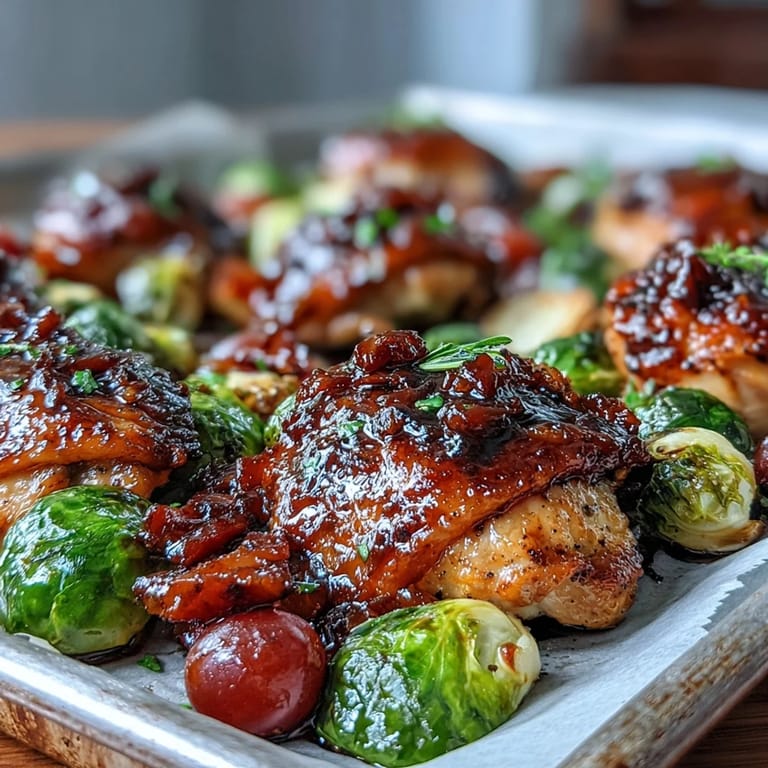
Save My neighbor knocked on the kitchen door one Tuesday evening, curious about the caramelized aroma drifting through our shared wall. When I opened the oven to show her, she watched the grapes burst into jammy sweetness alongside those golden Brussels sprouts, and something shifted—she realized sheet pan dinners didn't have to taste like obligation. That moment stayed with me, and now whenever I need to cook something that feels both effortless and impressive, this balsamic chicken finds its way back to my table.
I made this for my parents on a rainy Sunday, and my dad—who claims he doesn't like Brussels sprouts—went back for seconds without realizing what he was eating. The grapes were the gateway drug, I think, sneaking him into appreciating something he'd written off years ago.
Ingredients
- Boneless, skinless chicken thighs: Thighs stay juicier than breasts during the high heat, and they don't dry out if you're not obsessively checking them—they're forgiving that way.
- Olive oil: Use something you actually enjoy tasting; the good stuff makes a difference here since there's nowhere to hide.
- Dried thyme: This herb whispers into the background, letting the glaze take the spotlight without competing.
- Garlic powder: Fresh would overpower during roasting, so the powder disperses evenly and plays nice with the balsamic.
- Brussels sprouts: Cut them in half so the flat side hits the pan and gets gorgeously caramelized—that's where the magic happens.
- Seedless red grapes: They burst slightly when roasted, creating little pockets of sweetness that balance the savory elements around them.
- Red onion: The slight bite mellows into something almost jammy after thirty minutes, bridging the gap between sweet and savory beautifully.
- Balsamic vinegar: Quality matters here since it's doing heavy lifting as your glaze—cheaper versions taste thin and one-dimensional.
- Honey: A touch of sweetness that rounds out the acidity and helps the glaze cling to everything.
- Dijon mustard: This isn't about mustard flavor—it's an emulsifier that makes the glaze stick and adds subtle complexity you won't consciously taste but absolutely will miss if it's gone.
Tired of Takeout? 🥡
Get 10 meals you can make faster than delivery arrives. Seriously.
One email. No spam. Unsubscribe anytime.
Instructions
- Set your stage:
- Preheat the oven to 425°F and line your sheet pan with parchment paper so nothing sticks and cleanup becomes almost fun. This temperature is hot enough to caramelize everything but not so aggressive that the chicken's exterior burns before the inside cooks.
- Season the chicken:
- Toss those thighs with olive oil, thyme, garlic powder, salt, and pepper in a bowl—don't worry about being delicate here. The coating should look like the chicken has been given a gentle, garlicky blanket.
- Prepare the vegetables:
- In a separate bowl, toss Brussels sprouts, grapes, and red onion with olive oil, salt, and pepper until everything glistens slightly. This separate step keeps the vegetables from getting bogged down by excess moisture.
- Build your pan:
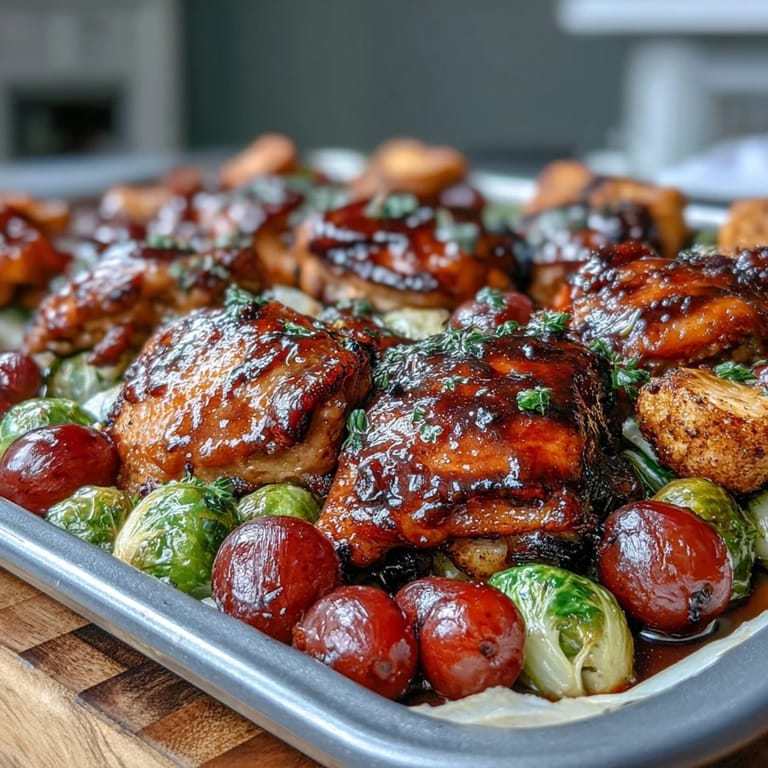
- Spread the vegetable mixture across the sheet pan in a single layer, then nestle the chicken thighs among them like they're settling into a vegetable nest. This arrangement lets steam circulate and everything roast rather than steam.
- Make the glaze:
- Whisk together balsamic vinegar, honey, and Dijon mustard in a small bowl until it's smooth and unified. You'll know it's right when it smells sharp and sweet at the same time.
- First glaze coat:
- Drizzle half the glaze over the chicken and vegetables—don't use it all now because a second coat at the end is what creates that glossy, restaurant-quality finish. The initial glaze will caramelize slightly during roasting.
- Roast everything together:
- Slide the pan into the oven for 25 to 30 minutes, listening for that gentle sizzle and watching for the Brussels sprouts to turn deep golden brown on the edges. The chicken is done when an instant-read thermometer reads 165°F in the thickest part.
- Final flourish:
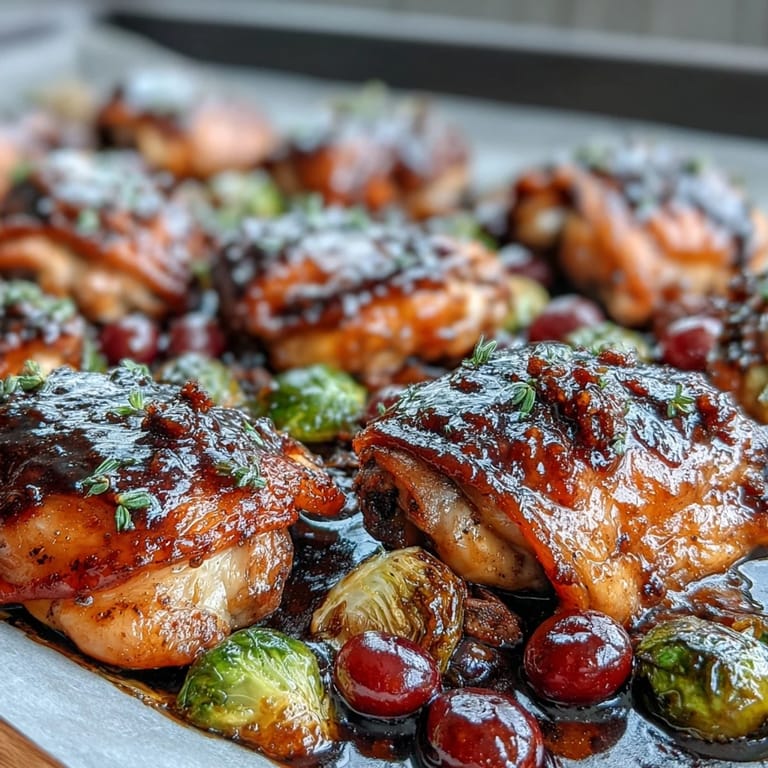
- Pull the pan out and drizzle with the remaining glaze while everything is still hot—it will hit the warm pan and cling in the most beautiful way. Serve immediately while everything is still steaming.
 Save
Save My daughter asked if she could help plate it one night, and she arranged the grapes like little garnishes between the Brussels sprouts, turning dinner into something she'd actually made. That's when I realized this dish does something quiet but powerful—it brings people into the cooking, not just the eating.
Why Brussels Sprouts Work Here
These little green heads get a bad reputation, mostly from people who've only encountered them boiled and sad. But roasted at high heat, something magical happens—their outsides crisp and char while the insides turn buttery and tender, and they actually taste like something worth eating instead of enduring. The balsamic glaze brings out their natural sweetness, making them taste less like a vegetable and more like a minor miracle you accidentally created.
The Sweet and Savory Balance
Grapes in a savory dish feel strange until you taste it, and then you realize this combination has probably been hiding in plain sight your whole life. The burst of sweetness from the roasted grapes against the salty chicken and tangy vinegar creates layers of flavor that keep your palate interested through the whole meal, preventing that mid-dinner fatigue when every bite tastes the same.
Pan Roasting Wisdom
Sheet pan meals taught me that proximity is everything in the kitchen—ingredients roasting near each other exchange flavors, brown together, and create something unified instead of a collection of separate components squeezed onto the same plate. This particular combination benefits from that intimacy; the chicken fat seasons the Brussels sprouts, the grapes release their liquid into the glaze, and everything becomes greater than the sum of its parts.
- Line your pan before you start so you can actually enjoy the meal instead of scrubbing caramelized bits for an hour afterward.
- Don't crowd the pan—give everything breathing room so it roasts rather than steams into submission.
- Use an instant-read thermometer if you have one; it removes the guesswork and means you'll never serve dry chicken again.
 Save
Save This meal has become my answer to that question everyone asks—something that looks like you fussed but requires almost no actual fussing, and tastes good enough that people will think you're secretly a better cook than you actually are. That's worth keeping close.
Recipe Guide
- → What type of chicken is best for this dish?
Boneless, skinless chicken thighs provide juiciness and flavor, but chicken breasts can be used with adjusted cooking times.
- → Can I substitute the grapes with another fruit?
Yes, seedless red grapes add sweetness and moisture, but small chunks of apple or pear can offer a similar balance.
- → How do I know when the chicken is fully cooked?
The chicken is done when it reaches an internal temperature of 165°F (74°C) and its juices run clear.
- → Can I prepare this dish ahead of time?
You can assemble the ingredients on the sheet pan and refrigerate for a few hours before roasting, but cook immediately for best texture.
- → What can I serve alongside this sheet pan dish?
It pairs well with a light-bodied red wine like Pinot Noir and can be complemented by simple sides such as quinoa or crusty bread.
- → Is this meal gluten-free?
Yes, all ingredients are naturally gluten-free, but always check labels to avoid hidden gluten in condiments.