 Save
Save There's something about the way sausage hits the hot oil that tells you dinner's about to get real. My neighbor Marco once dropped by unannounced on a random Tuesday evening, and instead of ordering in, I threw together what I had in the fridge—some Italian sausage, a handful of peppers that were getting soft, and a can of tomatoes. He sat at my kitchen counter while I cooked, and by the time the pasta hit the pan, he was already asking for the recipe. That's when I realized this wasn't just a weeknight rescue meal; it was the kind of dish that makes people linger at the table.
I made this for a small dinner party once, back when I still thought I needed to impress people with complicated recipes. One guest took a bite and said it reminded them of their grandmother's kitchen in Naples, even though I'm pretty sure I did everything slightly wrong that night. But that's the magic of this dish—it's forgiving enough to work even when you're learning, yet satisfying enough to feel like you actually knew what you were doing.
Ingredients
- Italian Sausage (1 lb): This is your backbone; buy it fresh from the butcher if you can, and remove those casings immediately so it breaks into proper little pieces instead of staying clumpy.
- Bell Peppers (3 colors, sliced): The red and yellow ones bring natural sweetness that mellows the spice, while the green pepper adds just a whisper of bitterness that keeps things interesting.
- Onion (1 large, thinly sliced): Slice it against the grain so it melts into the sauce rather than staying chunky and assertive.
- Garlic (3 cloves, minced): Don't skip the mincing step; big chunks will burn before they have a chance to perfume the whole dish.
- Penne or Rigatoni (12 oz): The ridges and tubes matter here because they trap the sauce instead of letting it slide off like it owes you nothing.
- Crushed Tomatoes (1 can): Room-temperature canned tomatoes work just as well as fresh ones, and honestly, they're more reliable when you're working on weeknight time.
- Tomato Paste (2 tbsp): This concentrates the tomato flavor and adds depth that the canned tomatoes alone can't deliver.
- Dried Oregano and Basil (1 tsp and 1/2 tsp): These are non-negotiable; fresh herbs would be lovely but dried ones are what make this taste authentically Italian-American diner without the pretense.
- Red Pepper Flakes (1/2 tsp, optional): Add them if you want that warm tingle at the back of your throat, hold them if someone at your table is heat-sensitive.
- Olive Oil (2 tbsp): Use something you actually enjoy tasting because the flavor comes through in the beginning when you're browning the sausage.
- Fresh Parsley (1/4 cup): This is your final flourish; it looks pretty but also adds a bright, herbaceous note that cuts through the richness.
- Parmesan Cheese: Freshly grated is always better than the pre-grated stuff, which tastes like sawdust once it hits hot sauce.
Tired of Takeout? 🥡
Get 10 meals you can make faster than delivery arrives. Seriously.
One email. No spam. Unsubscribe anytime.
Instructions
- Get Your Pasta Water Going:
- Boil a pot of generously salted water—it should taste like the sea. Cook your pasta one minute before it's totally tender, because it'll keep cooking when you toss it with the hot sauce later.
- Brown the Sausage:
- Heat olive oil in a large skillet over medium heat and let it shimmer just a moment. Crumble the sausage in and break it into small pieces with your spoon; you want every bit to touch the hot pan so it browns instead of steaming.
- Build the Pepper Base:
- Once the sausage is golden and cooked through, transfer it to a plate. In that same skillet, add your sliced peppers and onions to catch all the flavorful brown bits stuck to the bottom. Cook them gently until the edges start to caramelize and everything softens, about 5 to 6 minutes.
- Wake Up the Garlic:
- Stir in your minced garlic and let it cook just until you can smell it—maybe 30 seconds to a minute. The moment you smell it is the moment you need to add the next ingredient, or it'll turn bitter.
- Build Your Sauce:
- Add the tomato paste first and let it toast in the pan for a minute, which deepens its flavor. Then add your crushed tomatoes, oregano, basil, and red pepper flakes if you're using them; season everything with salt and pepper to taste and let it bubble gently for about 5 minutes so the flavors marry.
- Bring It Together:
- Return the sausage to the skillet and stir everything well. Simmer for another 3 to 4 minutes, and if the sauce looks too thick or too coating, splash in some of that reserved pasta water until it flows like liquid velvet.
- Final Toss:
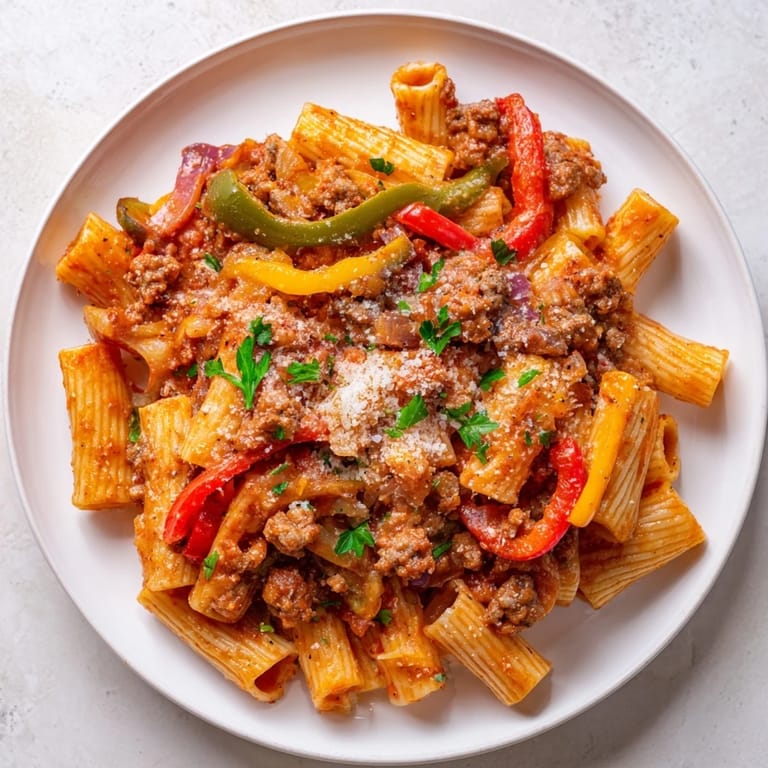
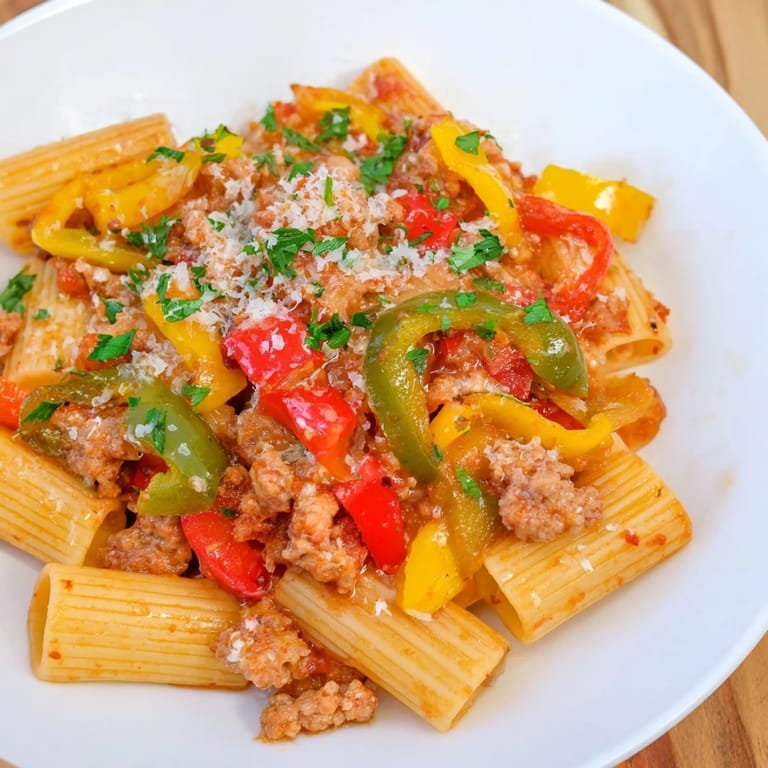
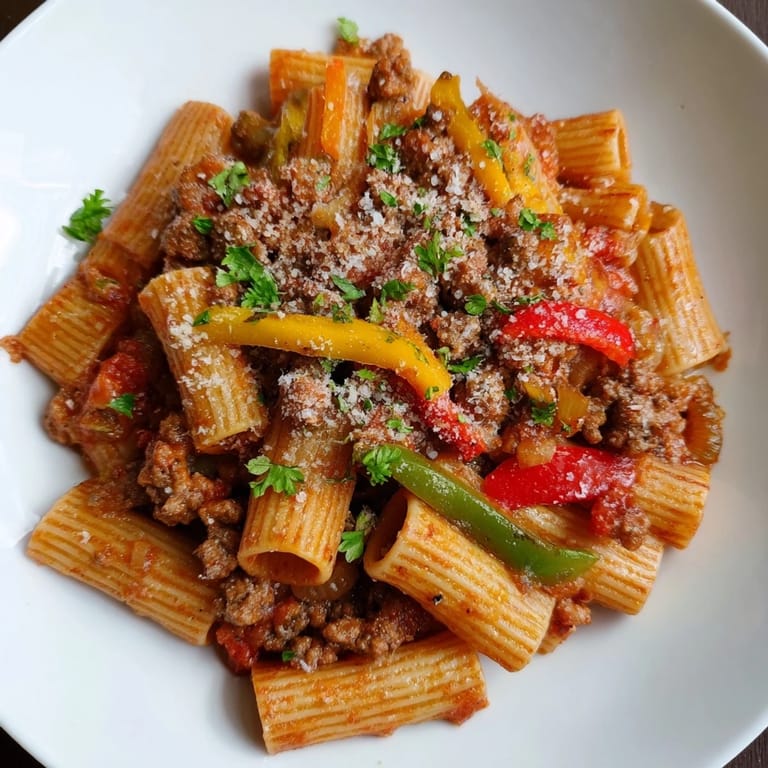
- Add your drained pasta directly to the skillet and toss until every strand is coated in that ruby red sauce. Let it heat through for a minute or two so the pasta and sauce really get to know each other.
 Save
Save I think the real moment I stopped treating this as a simple dinner and started understanding why people crave it happened during a snowstorm when my sister and her kids showed up at my door. We ate this straight from the pot, standing around my kitchen island, and nobody said much because everyone was too busy eating. That's when I realized that food like this doesn't need to be fancy; it just needs to be honest and warm.
The Pepper Question
I've learned that the color of your peppers matters more than most people think. Red and yellow peppers are sweeter and more forgiving if you slightly overcook them, while green peppers hold their shape longer and bring a subtle vegetal bite. If you can only find one or two colors, don't stress—the dish still works—but if you have the choice, that three-color mix creates a more interesting flavor journey. One time I used only red peppers out of laziness, and the dish tasted almost too sweet, which taught me that variety in the vegetables is actually what keeps this from being one-note.
Sausage Choices and Flexibility
Mild sausage gives you a gentler warmth that lets the peppers shine, while spicy sausage grabs your attention immediately and demands the red pepper flakes step back. I've made this with turkey sausage on occasion when someone was trying to eat lighter, and it genuinely works, though you lose some of that meaty richness that makes this dish feel substantial. The texture of how you break up the sausage matters too; smaller pieces distribute flavor more evenly throughout, while bigger chunks create little pockets of intense meatiness.
Making It Your Own
This recipe is more like a foundation than a rule book, which is exactly why I keep coming back to it. Some nights I add a splash of red wine to the sauce for richness, and other times a pinch of fennel seed if I'm craving something slightly different.
- A handful of fresh spinach or mushrooms can be stirred in during the last minute if you want to sneak in more vegetables without changing the basic character of the dish.
- If you're feeling fancy, a crack of fresh black pepper and a drizzle of your best olive oil over the finished plate makes it look like you spent hours on it.
- Leftovers actually taste better the next day after the flavors have had time to settle and deepen, so don't hesitate to make extra.
 Save
Save This is the kind of dish that stops being about following instructions and starts being about understanding your own stove and your own tastes. Once you've made it a couple of times, you'll know exactly how to adjust it to match what you're craving that day.
Recipe Guide
- → What type of sausage works best?
Italian sausage, whether mild or spicy, adds rich flavor and pairs wonderfully with the peppers and tomato sauce.
- → Can I use different pasta shapes?
Penne or rigatoni hold the sauce well, but feel free to use any firm pasta like fusilli or farfalle.
- → How do I soften the peppers without losing flavor?
Sauté the sliced bell peppers and onions over medium heat until they soften and caramelize slightly, enhancing their sweetness.
- → Is it possible to make it less spicy?
Omit the crushed red pepper flakes or use mild sausage to reduce the heat level.
- → How can I adjust the sauce thickness?
Reserve some pasta cooking water and add it gradually to the sauce if it becomes too thick during simmering.