 Save
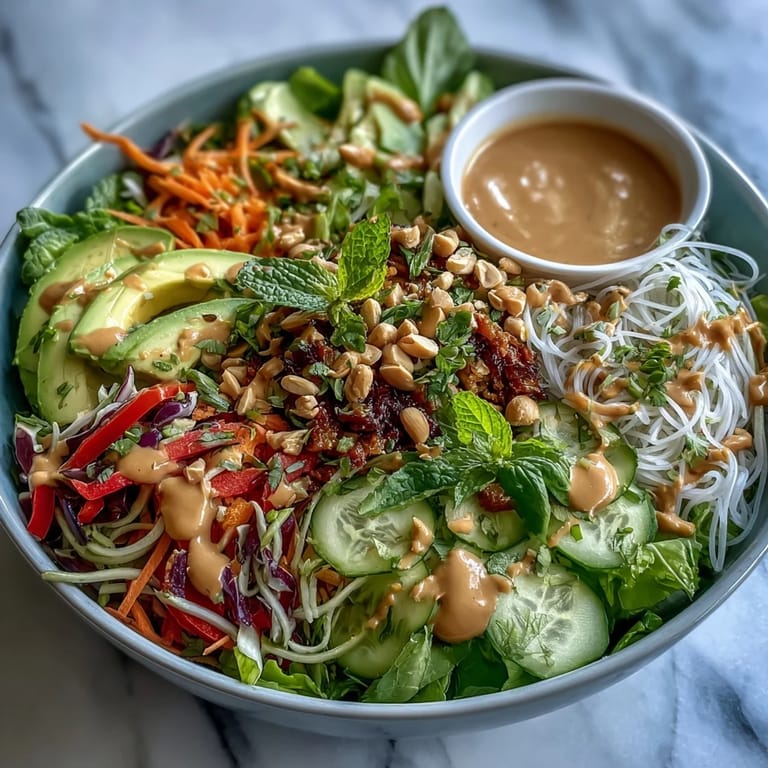
Save My neighbor brought this salad to a summer potluck, and I watched people actually abandon the heavier dishes to go back for seconds. She mentioned it took her twenty minutes flat, and the moment I tasted that peanut dressing—warm, creamy, with lime cutting through everything—I understood why everyone was hovering around her bowl. There's something about spring roll flavors loosened into a salad that just works, especially when you're not in the mood for anything heavy.
I made this for my sister when she was visiting and learning to cook vegan, and she got so absorbed in slicing vegetables that we ended up talking through lunch. She loved how each ingredient kept its own texture and flavor rather than getting lost in the mix. By the time we drizzled the dressing on, she was already planning to make it for her book club.
Ingredients
- Red cabbage: Buy it whole and shred it fresh—pre-shredded cabbage turns soft and loses that satisfying crunch that makes this salad sing.
- Carrots: A vegetable peeler makes them ribbon-thin, which is honestly better than a grater if you want them to stay fresh and not get watery.
- Cucumber: Slice on the bias if you have the patience; it looks more intentional and holds the dressing better.
- Rice noodles: Cook them ahead and let them cool completely, otherwise they'll wilt everything around them.
- Bell pepper: Red ones are sweeter and prettier, but use whatever color you have—they all work.
- Bean sprouts: Add these last, right before serving, or they'll turn mushy and nobody wants that.
- Fresh herbs—mint, cilantro, basil: This is where the salad gets its personality, so don't skimp and definitely don't use the dried versions.
- Avocado: Slice it just before assembly so it stays bright green and doesn't turn that sad gray-brown color.
- Roasted peanuts: Roughly chop them so you get different sized pieces that catch in the dressing.
- Creamy peanut butter: The kind with just peanuts and salt makes the smoothest dressing; the natural stuff with oil on top works too.
- Lime juice: Fresh squeezed, always—bottled lime juice tastes like it's been sitting in a sad cupboard.
- Soy sauce or tamari: Tamari is the move if anyone at your table avoids gluten, and honestly it tastes slightly better anyway.
- Maple syrup: It balances the saltiness and adds a subtle sweetness that makes you pause and wonder what it is.
- Toasted sesame oil: A little goes a long way—this stuff is potent in the best way and you'll taste it immediately.
- Garlic and ginger: Mince them small so they distribute evenly through the dressing and don't leave surprises in each spoonful.
Tired of Takeout? 🥡
Get 10 meals you can make faster than delivery arrives. Seriously.
One email. No spam. Unsubscribe anytime.
Instructions
- Prep everything first:
- This is not a suggestion. Set out your cutting board, grab all the vegetables, and arrange them in little piles like you're setting up a mise en place. It sounds fussy but it makes the actual assembly feel effortless.
- Build your salad base:
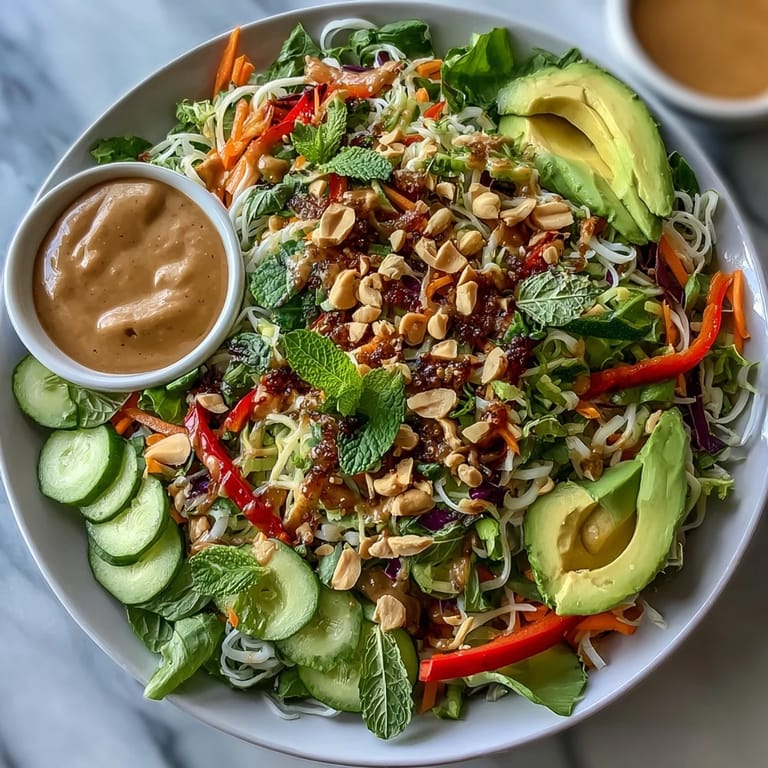
- Toss the cabbage, carrots, cucumber, noodles, bell pepper, bean sprouts, and herbs in a large bowl with just a gentle hand—you're mixing, not manhandling. Let it sit for a minute and notice how the colors look together.
- Arrange on your serving vessel:
- Pour it onto a platter or divide into bowls, then crown everything with avocado slices and scattered peanuts. This step is where it goes from salad ingredients to something people actually want to eat.
- Make the dressing while everything is ready:
- Whisk peanut butter, lime juice, soy sauce, maple syrup, sesame oil, garlic, and ginger in a small bowl until it looks chunky and promising. Add warm water one tablespoon at a time—you want it pourable but still thick enough to cling to vegetables, not a sad sauce that just pools at the bottom.
- Finish and serve:
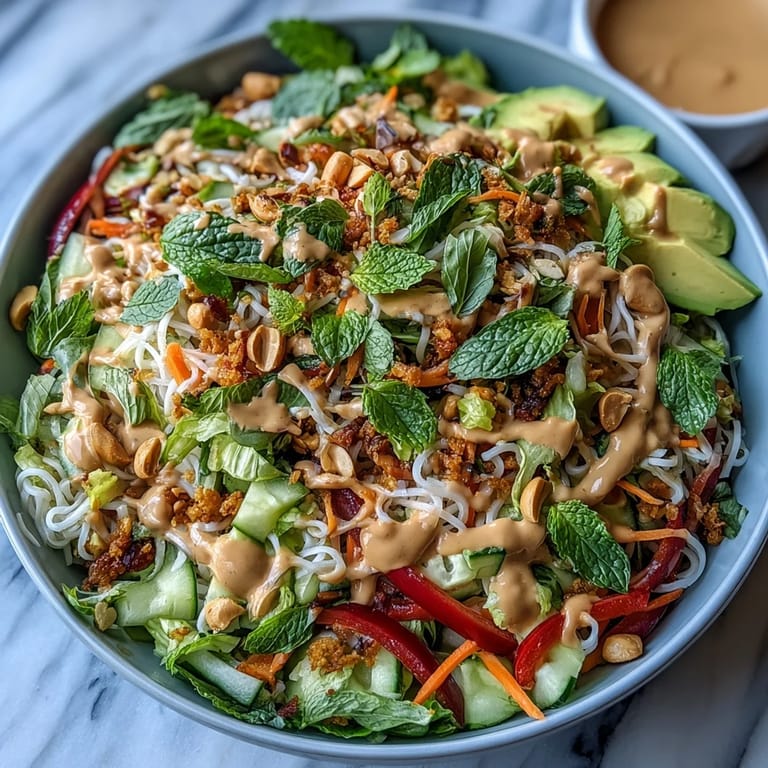
- Drizzle the dressing over the salad or let people add their own—I prefer serving it on the side so everyone gets to control how much they use. Eat it right away while everything is still cool and crisp.
 Save
Save There was this moment when I served this to my picky friend who claimed he didn't like salads, and he sat there quietly eating three-quarters of it before admitting that fresh herbs and a good dressing changed everything for him. It wasn't fancy or complicated, just vegetables that tasted like themselves, which somehow meant more than something complicated ever could.
Variations That Actually Work
The beauty of this salad is that it's forgiving enough to handle swaps. Add thinly sliced radishes or snap peas if you want more bite, or throw in some shredded beets for earthiness and color. I've made it with almond butter when someone had a peanut allergy, and honestly it's just as good—lighter, maybe, with its own quiet nutty thing going on. Tofu cubes or chickpeas can bulk it up if you need more protein, and they soak up the dressing beautifully.
The Dressing, Broken Down
People always ask for the dressing recipe separately, which tells you something about how important it is here. The lime juice wakes everything up, the maple syrup smooths out the saltiness, and the ginger-garlic combo gives it depth that plain peanut butter could never achieve alone. The sesame oil is the secret ingredient—just a teaspoon but it changes the entire character of the dressing from basic to something that tastes intentional.
- Make extra dressing and store it in a jar; it keeps for days and works on grain bowls, roasted vegetables, or even as a dip.
- If your dressing breaks or looks grainy, whisk in a splash more warm water and it usually comes back together.
- Taste as you go—everyone's palate is different, so adjust the lime and garlic to what makes you happy.
When to Make This
This is my salad for when it's warm outside and you don't want to turn on the stove, or when you're bringing something to a gathering and you want people to eat vegetables happily. It works as a light lunch, a side dish next to grilled tofu, or honestly just as dinner when you want something you can eat in your favorite chair without guilt. The fact that it's vegan usually surprises people because it tastes too good to be restricted by dietary choices.
 Save
Save This salad quietly became the thing I make when I want to feel good about what I'm eating, and that's all you really need from a recipe. It tastes bright and feels clean without any of the usual deprivation that comes with eating light.
Recipe Guide
- → Can I make this salad ahead of time?
Yes, prepare vegetables and dressing separately up to 24 hours in advance. Store vegetables in an airtight container and dressing in the refrigerator. Toss together just before serving to maintain crispness.
- → What can I substitute for peanut butter?
Almond butter, sunflower seed butter, or cashew butter work well as substitutes. The flavor profile will shift slightly but still provide creamy richness to the dressing.
- → Is this salad gluten-free?
Yes, when using tamari instead of soy sauce and ensuring your rice noodles are certified gluten-free. All vegetables and the remaining dressing ingredients are naturally gluten-free.
- → How can I add more protein?
Add baked tofu, edamame, shredded chicken, or grilled shrimp. Roasted peanuts already provide some protein, but these additions make it a more substantial main course.
- → Can I make the dressing spicy?
Absolutely. Add sriracha, chili garlic sauce, or fresh minced chili peppers to the dressing. Start with ½ teaspoon and adjust to your preferred heat level.