 Save
Save I was clearing out my fridge one April afternoon when I noticed how much green had piled up: half a bunch of asparagus, a handful of peas left in a bag, some wilted spinach that still had life in it. Instead of letting them fade, I tossed everything into a bowl with leftover quinoa and squeezed a lemon over the top. That random assembly turned into something I now crave every spring. It taught me that the best meals sometimes come from what you already have, not what a plan tells you to buy.
I made this for a friend who swore she hated healthy food, and she went quiet halfway through her bowl. She looked up and said it tasted like something expensive from a café, not like something I just threw together in my kitchen. That moment reminded me that fresh vegetables, treated simply, dont need to apologize for being good for you. They can be the main event if you let them speak for themselves.
Ingredients
- Quinoa, brown rice, or farro: The base that makes this bowl filling, quinoa cooks fastest and stays fluffy, while farro adds a nice chew if you have the extra time.
- Fresh or frozen green peas: Frozen peas are just as sweet as fresh and save you from shelling, just blanch them for a minute less than fresh ones.
- Asparagus: Snap off the woody ends by bending each spear gently, it will break right where the tender part begins.
- Green beans: Look for slim, crisp beans that snap cleanly, the thicker ones can taste tough even after blanching.
- Baby spinach leaves: These wilt in seconds and add a soft, earthy layer without turning mushy or bitter.
- Extra virgin olive oil: Use something fruity and green here, it becomes the backbone of the dressing and you will taste the difference.
- Freshly squeezed lemon juice: Bottled juice will not give you the brightness you need, squeeze a real lemon and save the zest.
- Lemon zest: This is where the floral, aromatic punch lives, do not skip it even if you are tempted.
- Dijon mustard: It emulsifies the dressing and adds a subtle sharpness that balances the sweetness of the maple syrup.
- Maple syrup or honey: Just a teaspoon smooths out the acidity and ties everything together without making it taste sweet.
- Garlic clove: Mince it finely so it dissolves into the dressing, big chunks will overpower the delicate vegetables.
- Toasted pumpkin seeds or sunflower seeds: A quick toast in a dry pan adds crunch and a nutty warmth that contrasts beautifully with the tender greens.
- Crumbled feta cheese: Optional, but it brings a creamy, salty bite that makes the bowl feel more indulgent.
- Fresh herbs: Mint, parsley, or dill add a final burst of freshness, use whatever you have or love most.
Tired of Takeout? 🥡
Get 10 meals you can make faster than delivery arrives. Seriously.
One email. No spam. Unsubscribe anytime.
Instructions
- Cook the grains:
- Rinse your grains under cold water to remove any dust or bitterness, then bring salted water to a boil and simmer until tender, fluffing with a fork when done. Quinoa will be ready in about 15 minutes, but brown rice takes longer, so plan accordingly.
- Prepare the vegetables:
- Bring a large pot of salted water to a rolling boil and blanch each vegetable separately for 2 to 3 minutes until they turn bright green and just tender. Plunge them immediately into ice water to stop the cooking and lock in that vibrant color, then drain them well.
- Sauté the spinach:
- Heat a large skillet over medium heat and add the spinach, letting it wilt for just a minute or two until it collapses but still looks lively. Remove it from the heat right away so it does not turn drab or slimy.
- Make the lemon dressing:
- In a small bowl, whisk together olive oil, lemon juice, zest, mustard, maple syrup, minced garlic, salt, and pepper until the mixture thickens and becomes smooth. Taste it and adjust the balance, it should be tangy, slightly sweet, and bold enough to stand up to all those greens.
- Assemble the bowls:
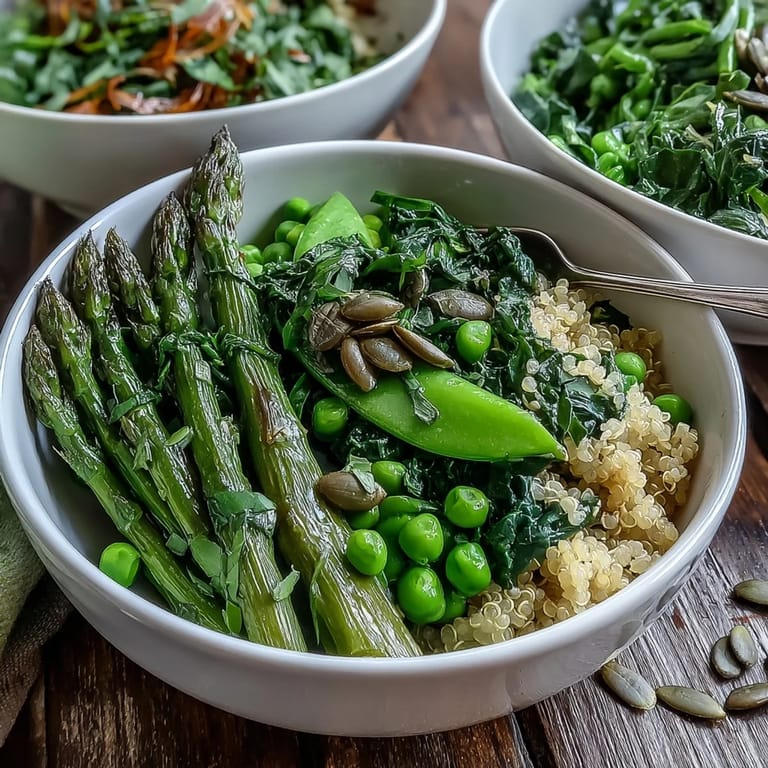
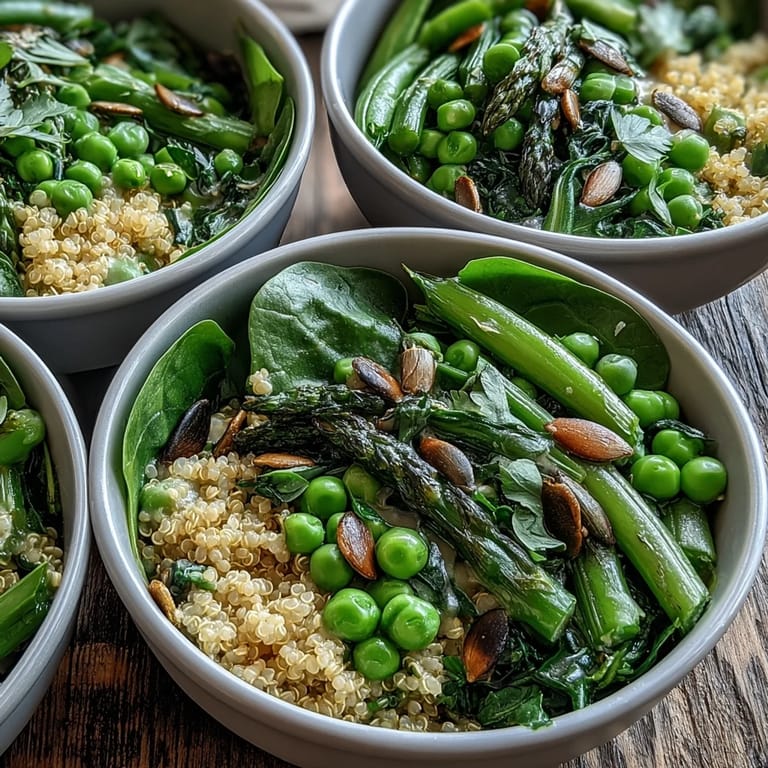
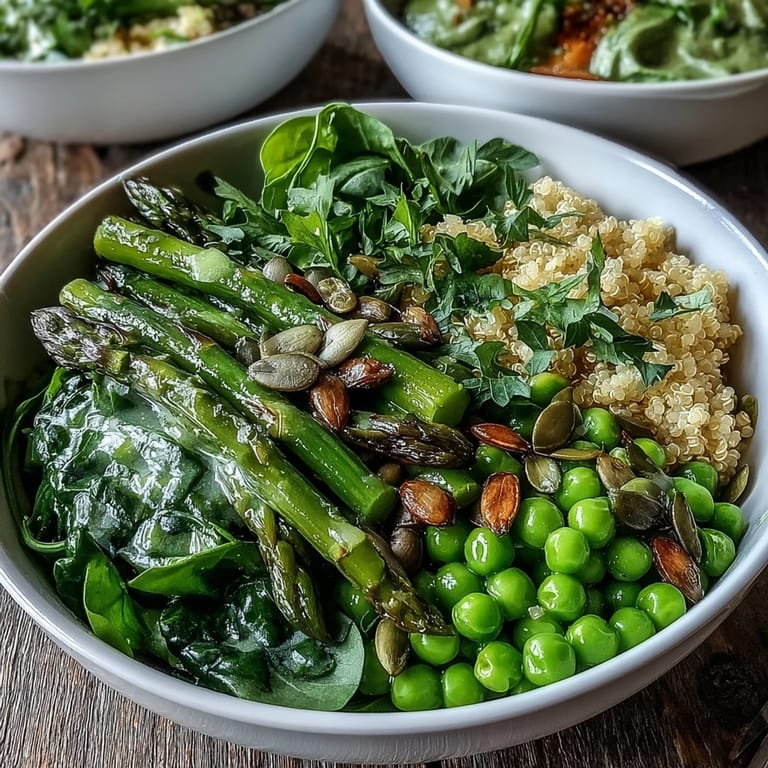
- Divide the cooked grains among four bowls and arrange the blanched peas, asparagus, green beans, and sautéed spinach on top in separate little piles. Drizzle the lemon dressing generously over everything, letting it pool at the bottom so every bite gets a little of that bright flavor.
- Garnish:
- Sprinkle toasted seeds over the top for crunch, add crumbled feta if you are using it, and finish with a handful of chopped fresh herbs. Serve immediately while everything is still vibrant and the textures are at their best.
 Save
Save One evening I brought this bowl to a potluck and someone asked if I had ordered it from a restaurant. I laughed and told them it was just vegetables and grains, but they insisted it felt special. I realized then that food does not need to be complicated to feel like a gift, it just needs to be made with attention and a little bit of care.
Choosing Your Grains
Quinoa is my go to when I am short on time because it cooks in 15 minutes and stays light and fluffy. Farro takes longer but has a chewy, almost nutty texture that makes the bowl feel heartier and more rustic. Brown rice sits somewhere in between, offering a familiar comfort without stealing the spotlight from the vegetables. Whatever you choose, rinse it first to remove any dust or residual bitterness that can cling to the grains.
Blanching Without Fear
The first time I blanched vegetables I panicked and left them in the water too long, turning them limp and dull. Now I set a timer for exactly two minutes and keep a bowl of ice water ready on the counter. The moment those greens turn bright and just tender, I scoop them out and plunge them into the cold water, which stops the cooking instantly and locks in that vivid color. It is a small step, but it makes all the difference between vegetables that look alive and ones that look tired.
Making It Your Own
This bowl is endlessly flexible, so do not feel locked into the exact vegetables listed. Snap peas, zucchini, or even thinly sliced radishes work beautifully if that is what you have on hand. If you want protein, add grilled chicken, pan fried tofu, or a scoop of warm chickpeas on top. The lemon dressing is forgiving too, swap in lime juice for a different brightness or add a spoonful of tahini if you want something creamier.
- Try adding a handful of fresh arugula for a peppery bite.
- Roast the asparagus and green beans instead of blanching them for a deeper, caramelized flavor.
- Toss in some cooked lentils or white beans to make the bowl more filling without adding heaviness.
 Save
Save Every time I make this bowl I am reminded that spring does not need to be complicated to feel joyful. Let the vegetables shine, trust the brightness of a good lemon, and you will have something that tastes like the season itself.
Recipe Guide
- → What vegetables work best in this bowl?
Asparagus, green peas, and green beans are ideal for their quick cooking time and complementary flavors. You can also add snow peas, sugar snap peas, or shredded zucchini during peak season.
- → Can I make this bowl ahead of time?
Prepare grains and blanch vegetables up to 3 days in advance. Store separately in airtight containers. Keep dressing in a sealed jar and assemble just before serving to maintain texture.
- → How do I blanch vegetables properly?
Boil salted water, cook vegetables for 2-3 minutes until bright green and tender-crisp, then immediately transfer to ice water. This stops cooking and preserves color, texture, and nutrients.
- → What grains work best as a base?
Quinoa offers quick cooking and complete protein. Brown rice provides nutty depth and extra fiber. Farro delivers chewy texture and Mediterranean appeal. Bulgur or couscous offer faster alternatives.
- → How can I add more protein?
Top with grilled chicken, baked tofu, roasted chickpeas, or a soft-boiled egg. Adding hemp seeds, pumpkin seeds, or walnuts during garnish also boosts plant-based protein.