 Save
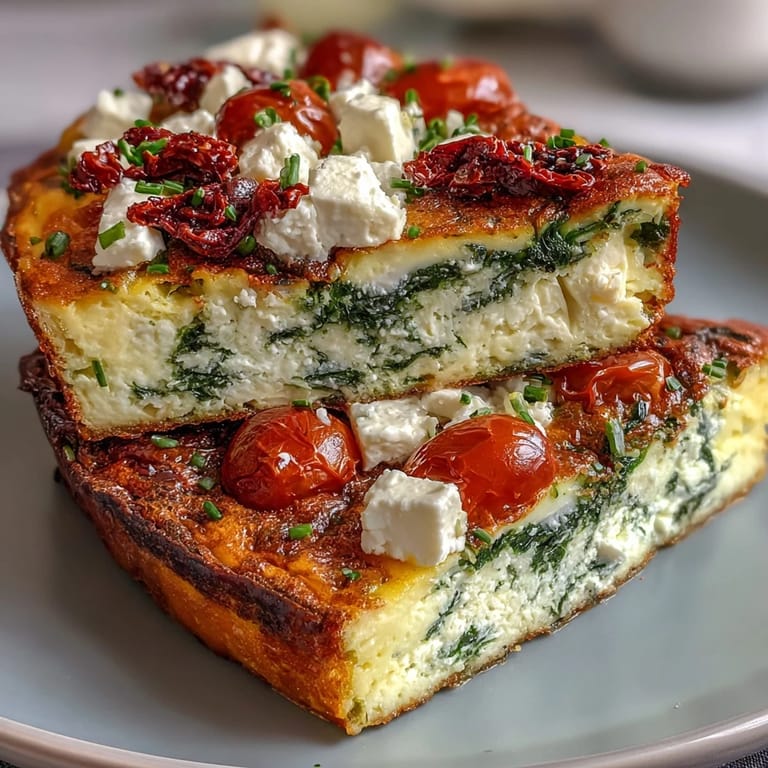
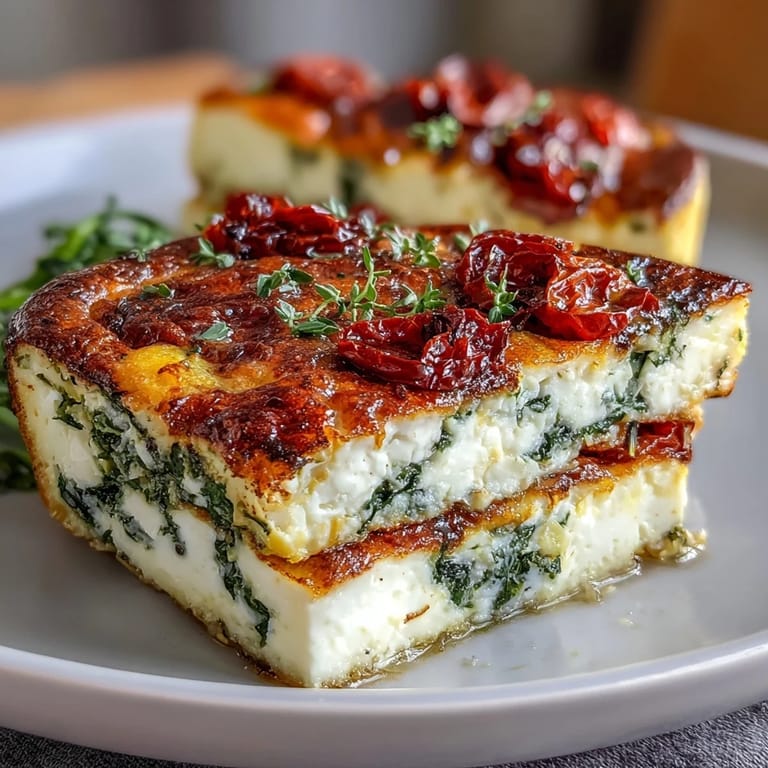
Save My neighbor knocked on my kitchen door one Sunday morning with a basket of sun-dried tomatoes from her garden project, and I had no idea what to do with them until she mentioned her grandmother's Mediterranean frittata. That afternoon, I assembled eggs, spinach, and feta in a cast-iron skillet and watched it puff up in the oven like something magical was happening inside. It's been my go-to brunch move ever since, especially when I want something that looks impressive but doesn't demand much fuss.
I served this to my sister on a random Wednesday evening after she'd had a brutal day at work, and watching her face light up when she tasted the salty feta mixed with those tangy sun-dried tomatoes reminded me that food doesn't need an occasion to matter. She's asked me to make it at least once a month since then, and I've never said no.
Ingredients
- Fresh baby spinach (2 cups): Buy it pre-washed if you're short on time, and don't worry if it looks like a mountain in your pan—it shrinks down to almost nothing once it hits the heat.
- Sun-dried tomatoes (1/2 cup, oil-packed): Those packed in oil are richer and more forgiving than the dry kind, and they add a sweet-tart punch that wakes up every bite.
- Yellow onion (1 small): Finely chop this so it softens completely and melts into the background, adding sweetness without announcing itself.
- Garlic (1 clove): A single clove is enough here—the feta and sun-dried tomatoes already bring plenty of bold flavor.
- Large eggs (6): Room temperature eggs incorporate more smoothly into the milk, creating a fluffier texture than cold ones straight from the fridge.
- Whole milk (1/4 cup): This is what gives the frittata its custard-like center instead of a dense, rubbery finish.
- Feta cheese (1/2 cup, crumbled): Use authentic feta if you can find it—the briny, sharp taste is what makes this dish feel Mediterranean instead of just savory.
- Parmesan cheese (1/4 cup, grated): This adds a nutty undertone that rounds out the tangy feta and keeps the frittata from tasting one-note.
- Dried oregano (1/2 tsp): Mediterranean oregano is your friend here, bringing an earthy warmth that ties everything together.
- Olive oil (2 tbsp): Good olive oil matters more than you'd think—it carries flavor and ensures nothing sticks to your skillet.
- Salt and black pepper: Go easy on the salt since both cheeses bring their own saltiness to the party.
Tired of Takeout? 🥡
Get 10 meals you can make faster than delivery arrives. Seriously.
One email. No spam. Unsubscribe anytime.
Instructions
- Heat your oven and get your skillet ready:
- Preheat to 375°F while you gather everything, and make sure your skillet is ovenproof—cast iron or a stainless steel handle are your best bets.
- Sauté the aromatics:
- Pour olive oil into the skillet over medium heat, add your chopped onion, and let it soften for 3–4 minutes until it turns translucent and smells sweet. Add the garlic and cook for just 1 minute more, stirring constantly so it doesn't brown and turn bitter.
- Wilt the spinach and tomatoes:
- Toss in your chopped spinach and watch it collapse from a huge pile into something manageable—this takes about 2 minutes. Stir in the sun-dried tomatoes and cook for 1 more minute until everything is cozy together.
- Make the egg custard:
- In a separate bowl, whisk your eggs with milk, oregano, salt, and pepper until the mixture is uniform and pale yellow. Stir in both cheeses until they're distributed throughout.
- Combine and start cooking:
- Pour the egg mixture over the vegetables in your skillet and stir gently just once to bring everything together—you want the vegetables slightly distributed, not completely mixed. Let it cook on the stovetop for 2–3 minutes, watching until you see the edges starting to set while the center still jiggles slightly.
- Finish in the oven:
- Transfer the entire skillet to your preheated oven and bake for 10–12 minutes until the center is just set and the top has turned slightly golden. You're looking for a tiny jiggle in the very center when you shake the pan—that means it's perfectly cooked and won't dry out as it cools.
- Rest and serve:
- Let it cool for a few minutes in the skillet so it holds together, then slice right into wedges. Serve it warm, at room temperature, or even cold the next day straight from the fridge.
 Save
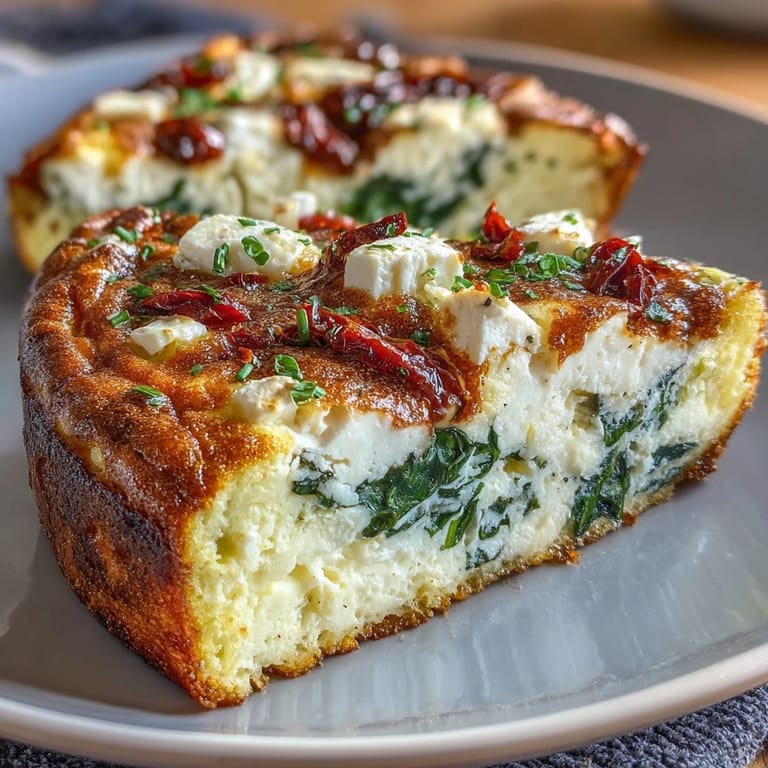
Save There's a moment when the frittata comes out of the oven and the kitchen fills with that herb-and-cheese smell that makes you feel like you've accomplished something real. That's when you know you've made something worth repeating.
Why This Works as Brunch or Dinner
Frittatas bridge the gap between breakfast and dinner in a way that feels elegant without requiring you to pretend you know what you're doing. You can serve it at 11 a.m. on a Sunday with mimosas and crusty bread, or at 6 p.m. on a weeknight with a simple salad on the side. The beauty is that it tastes just as good whether you're eating it warm from the oven or pulling it straight from the fridge the next afternoon.
Customizing Without Losing the Soul
The Mediterranean foundation here is strong enough that you can swap things around without everything falling apart. If you don't have sun-dried tomatoes, roasted red peppers work beautifully, or even fresh cherry tomatoes if you're making this in summer. You could swap spinach for kale if you want something more substantial, or add mushrooms and caramelized onions for extra depth.
Making It Your Own and Storing Leftovers
The best part about frittata is that it's forgiving enough to become your signature dish once you've made it a few times. Leftovers keep in the refrigerator for up to three days, and they're genuinely better than takeout when you're hungry and tired. You can eat it cold straight from the fridge, or reheat a slice gently in a low oven so it stays creamy instead of rubbery.
- Wrap individual slices in parchment paper and freeze them for up to a month if you want to make several frittatas at once for meal prep.
- Serve it with a squeeze of fresh lemon juice right before eating to brighten all those rich, salty flavors.
- Pair it with a green salad dressed in a light vinaigrette so the meal feels balanced and complete.
 Save
Save This frittata has quietly become one of those dishes that reminds me why cooking for people matters. Make it once and it'll become something you reach for without thinking.
Recipe Guide
- → How do I prevent the frittata from sticking to the pan?
Use an ovenproof skillet with a good coating of olive oil and ensure it is heated before adding vegetables. Nonstick skillets also work well.
- → Can I use frozen spinach instead of fresh?
Yes, just thaw and drain the frozen spinach thoroughly to avoid excess moisture before adding it to the skillet.
- → What is the best way to check if the frittata is fully cooked?
The center should be just set and the top slightly golden. A toothpick inserted in the center should come out clean.
- → Can I substitute the feta cheese with a different cheese?
Yes, you can swap feta for goat cheese or ricotta for a milder taste; Parmesan adds a nutty depth, so consider balancing flavors accordingly.
- → What side dishes pair well with this frittata?
A simple green salad or crusty bread complements the flavors nicely. A crisp white wine such as Sauvignon Blanc is also a great match.