 Save
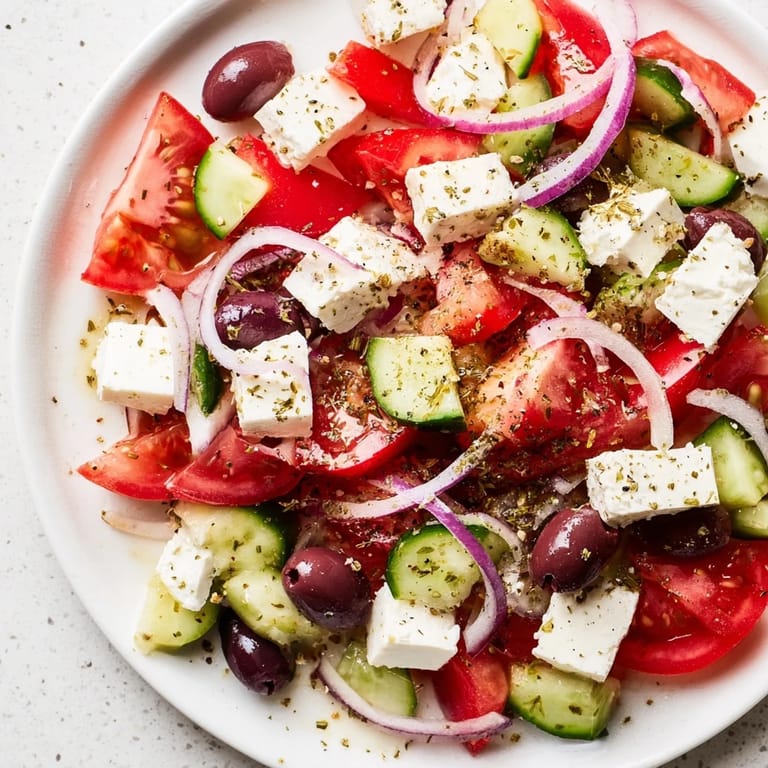
Save There's a moment every summer when I stop trying to cook elaborate dinners and just surrender to simplicity. I was sitting at my neighbor's kitchen table in Athens, watching her assemble a salad with the kind of casual confidence that only comes from making the same dish a hundred times, and I realized she wasn't following a recipe—she was playing. Tomatoes, cucumber, feta, olives, and oil in a bowl, and somehow it tasted like the whole Mediterranean Sea had condensed into one bite.
My sister brought this salad to a potluck one July afternoon, and I watched three different people go back for seconds without realizing they were eating the same thing twice. There's something about Mediterranean flavors that makes people slow down and actually taste their food instead of just eating around the table.
Ingredients
- Ripe tomatoes (4 medium): The fresher and juicier, the better—they're the backbone here, so pick ones that smell like summer and feel heavy in your hand.
- Cucumber (1 large): Dice it right before assembly so it stays crisp; watery cucumbers will dilute the dressing, so choose firm ones.
- Red onion (1 small, thinly sliced): The sharpness mellows as it sits, and it adds a purple stripe that makes the salad look alive.
- Feta cheese (150 g): Buy the real thing if you can; it crumbles differently and tastes less salty than most store brands.
- Kalamata olives (100 g, pitted): Pitting them yourself makes a difference, but if you buy pre-pitted, just check they're not waterlogged.
- Extra virgin olive oil (3 tbsp): This is not the place to use the cheap bottle—get one you actually like the smell of.
- Red wine vinegar (1 tbsp): It cuts through the richness without being aggressive, unlike lemon juice which can overpower.
- Dried oregano (1/2 tsp): Greek oregano is more floral; use what feels right to you.
- Salt and black pepper: Add to taste after the dressing is mixed; feta is already salty.
- Fresh parsley or mint (optional): Mint is brighter; parsley is more traditional, but choose based on your mood.
Tired of Takeout? 🥡
Get 10 meals you can make faster than delivery arrives. Seriously.
One email. No spam. Unsubscribe anytime.
Instructions
- Gather and Prep:
- Dice the tomatoes, cucumbers, and red onion on a cutting board, then transfer everything to your largest bowl. You want them roughly the same size so each bite feels intentional.
- Add the Cheese and Olives:
- Fold in the feta gently—you're not making a smoothie. The chunks should stay visible and creamy, not crushed into the background.
- Make the Dressing:
- In a small bowl, whisk the olive oil, vinegar, and oregano together until they look a little thicker, then season with salt and pepper. Taste it on a vegetable; it should make you want to drink it.
- Combine Everything:
- Pour the dressing over the salad and toss with a gentle hand, turning it a few times so every ingredient meets the oil. Don't overdo it; this isn't a workout.
- Finish and Serve:
- Top with fresh herbs if you're using them, and serve right away while the textures are still distinct. This salad doesn't improve with age.
 Save
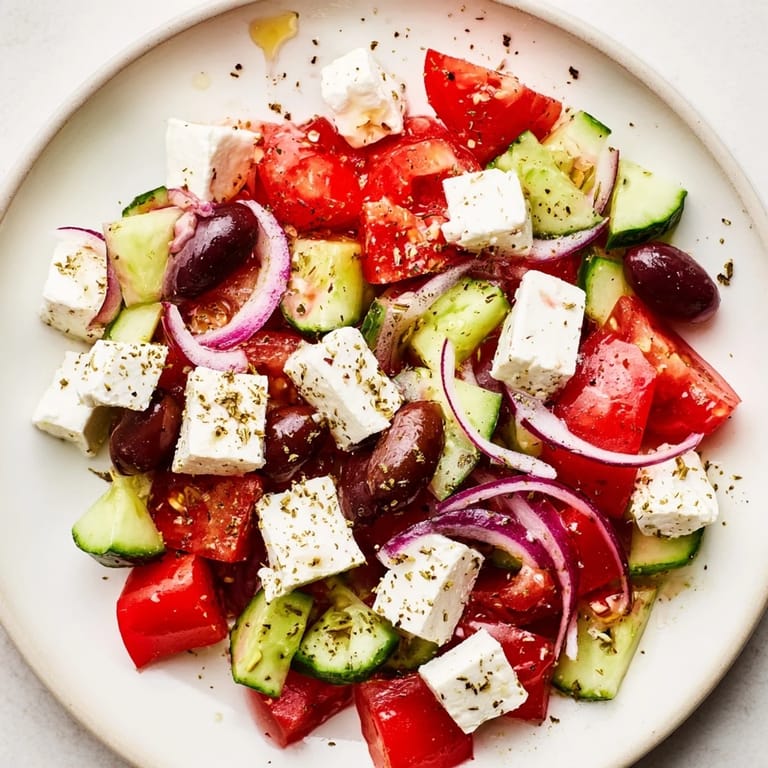
Save A friend once told me that this salad reminded her of a specific vacation she took fifteen years ago, even though she'd never had it exactly like this before. That's when I understood it isn't about the ingredients—it's about the feeling they create together, the way they make you feel present and grateful for a simple, perfect meal.
On Choosing Your Tomatoes
The most important thing I've learned about this salad is that it will only be as good as your tomatoes. Grocery store tomatoes in winter are basically decorative; wait for summer or find a farmers market where you can actually talk to the person who grew them. A truly ripe tomato should smell like tomato—earthy and sweet—and should feel slightly soft when you squeeze it gently. If you can't find good tomatoes, make something else instead.
About the Feta
There's a difference between crumbly feta and creamy feta, and both work here, but they change the salad slightly. Crumbly feta gets lost and textured; creamy feta stays in chunks and feels more luxurious. I usually buy a block and crumble it myself, partly because it's cheaper and partly because there's something satisfying about breaking cheese with your hands. Avoid the pre-crumbled kind if possible—it's often coated with starch that makes it feel grainy.
Ways to Play With This
The beauty of this salad is that it welcomes changes without falling apart. You can add sliced bell peppers, capers, artichoke hearts, or even a handful of chickpeas without losing the Mediterranean feeling. Some people add a pinch of fresh dill or a tiny bit of garlic to the dressing. I once added pomegranate seeds because that's what I had, and it was unexpectedly perfect.
- Try adding crumbled goat cheese alongside the feta for a sharper, tangier version.
- Fresh lemon zest in the dressing brings brightness if you want to swap out the vinegar.
- Serve it on a bed of greens if you need it to feel more substantial, or pile it into pita bread with hummus for lunch.
 Save
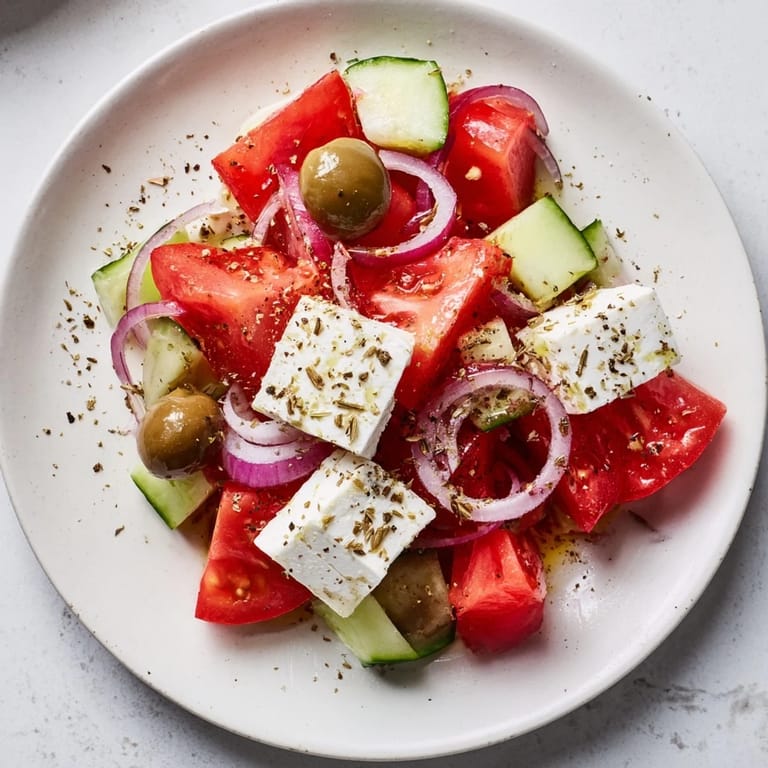
Save This salad has saved countless dinners when I didn't know what to cook, and it tastes just as good whether you're eating it at a Greek taverna or at your kitchen counter on a Tuesday night. Sometimes simple is exactly what you need.
Recipe Guide
- → What type of olives is best for this salad?
Kalamata olives are preferred for their rich, tangy flavor that complements the fresh vegetables and feta.
- → Can I substitute feta cheese in this dish?
Yes, a vegan or dairy-free alternative to feta can be used without compromising the salad's texture and creaminess.
- → Is this salad served chilled or at room temperature?
It is best served immediately at room temperature to maintain the brightness of the ingredients and crisp textures.
- → What dressing ingredients enhance the flavors?
A simple mix of extra virgin olive oil, red wine vinegar, dried oregano, salt, and pepper brings out the authentic Mediterranean taste.
- → Can additional vegetables be added?
Sliced bell peppers or capers are great additions that add depth and extra flavor without overpowering the base ingredients.