 Save
Save There's something about the smell of butter and lemon hitting a hot pan that makes me stop whatever I'm doing. Years ago, I was frantically throwing together dinner on a Tuesday night when someone dropped by unannounced, and I grabbed cream, fresh dill from the garden, and whatever pasta I had. Twenty minutes later, I'd created something that felt both elegant and effortless—the kind of dish that tastes like you tried much harder than you actually did.
I made this for my sister who'd been craving something fresh but comforting, and watching her twirl it on her fork while the steam rose up—that's when I knew it wasn't just a quick dinner fix. It became the dish I reach for when I want to feel like I'm taking care of people without spending hours in the kitchen.
Ingredients
- Dried pasta (350 g): Fettuccine or linguine catches the sauce beautifully because of all those ridges and flat surfaces, but penne works too if that's what you have—the shape matters less than your willingness to use what's there.
- Unsalted butter (2 tbsp): This is your foundation, so don't skimp or use the salted kind; you need control over the salt level.
- Garlic (2 cloves): Mince it fine so it dissolves into the sauce rather than leaving chunks that announce themselves.
- Lemon zest (from 1 lemon): This is where the magic lives—the oils in the zest are brighter than the juice alone, so use a microplane or the smallest holes on your grater.
- Heavy cream (200 ml): The richness that makes everything smooth; don't be tempted to use half-and-half unless you're watching your fat intake, because the sauce needs that body.
- Fresh lemon juice (2 tbsp): Squeeze it yourself if you can; bottled juice tastes tired by comparison.
- Dijon mustard (1 tsp): A small amount acts like an emulsifier and adds a whisper of depth that no one will identify but everyone will taste.
- Salt and black pepper: Taste as you go; this is where confidence in the kitchen starts.
- Parmesan cheese (40 g): Grate it fresh—the pre-grated stuff has cellulose in it that doesn't melt as smoothly.
- Fresh dill (3 tbsp plus extra): This is the personality of the dish; don't use dried dill as a substitute because it tastes like hay and sadness in comparison.
Tired of Takeout? 🥡
Get 10 meals you can make faster than delivery arrives. Seriously.
One email. No spam. Unsubscribe anytime.
Instructions
- Set your water to dance:
- Get a large pot of salted water boiling hard—you want it aggressive and rolling, not timid. Salt it generously so the pasta has a fighting chance at flavor from the start.
- Cook the pasta:
- Follow the package time but start testing two minutes early; al dente means it should still have a tiny resistance when you bite it, not soft all the way through. When it's ready, scoop out half a cup of the starchy water before you drain—that liquid is your secret weapon for loosening the sauce later.
- Build the sauce gently:
- In a large skillet, melt the butter over medium heat until it stops foaming. Add the garlic and lemon zest, stirring for about a minute until your kitchen smells incredible—that's your signal to know you're on the right track.
- Add the cream and brightness:
- Pour in the heavy cream, lemon juice, and Dijon mustard, then let it simmer softly for two to three minutes. You're not boiling it hard; you want gentle bubbles around the edges, and you'll see the sauce thicken just slightly.
- Melt in the cheese:
- Sprinkle the Parmesan over the sauce while whisking constantly so it melts into something silky instead of forming clumps. Season with salt and pepper, then taste and adjust—this is your only chance to get it right before the pasta goes in.
- Bring it all together:
- Toss the drained pasta into the skillet, moving it around so every strand gets coated. If the sauce looks too thick, add a splash of that reserved pasta water and stir until it moves like silk.
- Finish with what matters:
- Stir in the chopped dill and peas if you're using them, then give everything one more gentle toss over low heat. The whole thing should take thirty seconds so nothing gets overcooked.
- Plate and serve:
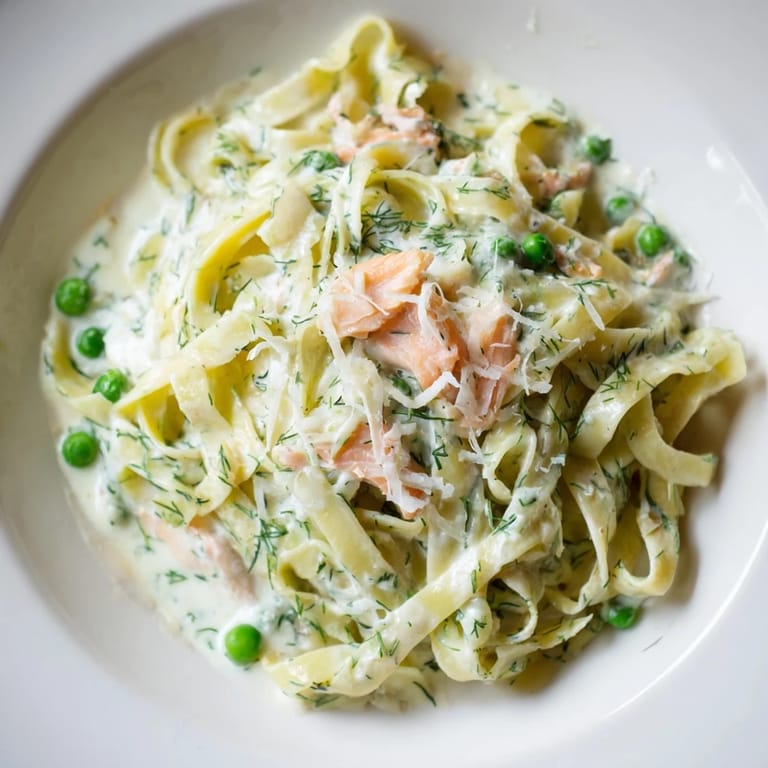
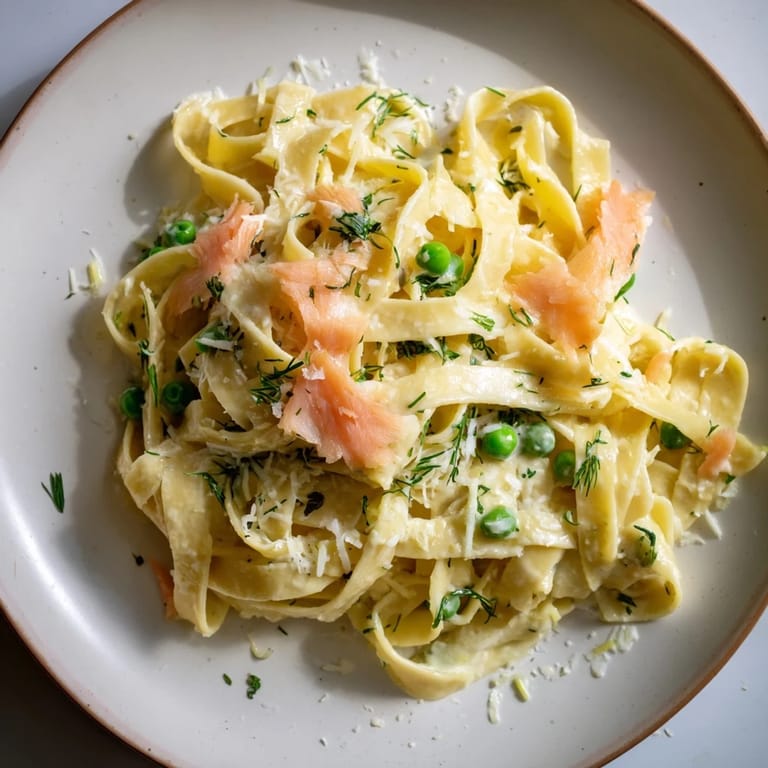
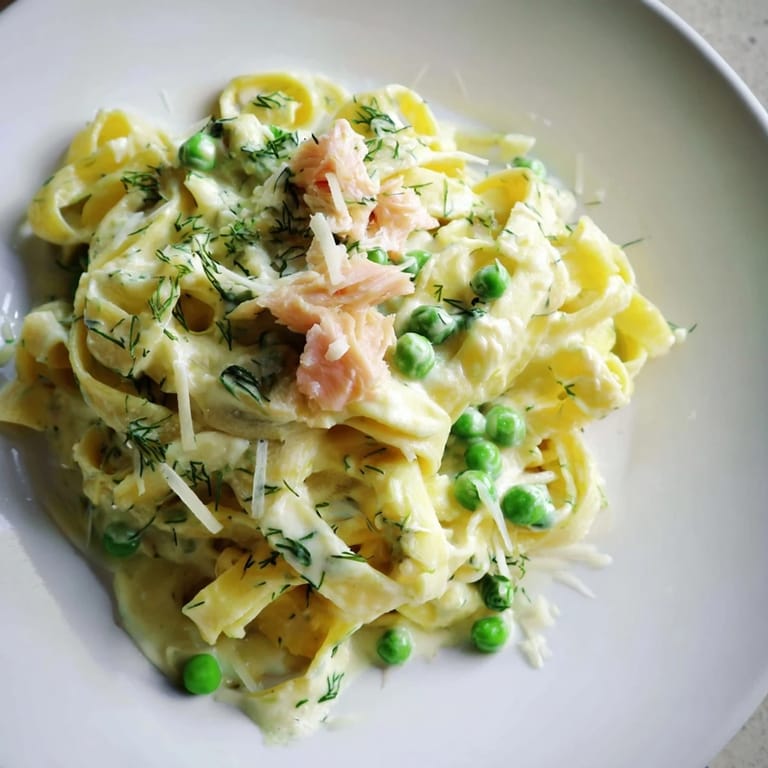
- Divide among bowls, top with extra dill, and if you have smoked salmon, flake some over the top. Serve immediately while the sauce still clings to every noodle.
 Save
Save The first time someone asked me for the recipe, I realized it wasn't because they wanted instructions—it was because they wanted that feeling again, the one where everything in your life felt manageable for the time it took to eat dinner. That's when a recipe stops being a recipe and becomes something you want to share.
When to Make This
I reach for this when I'm tired but need to feel accomplished, or when someone's coming over and I want to seem effortless. It's equally at home on a weeknight when you're eating alone at eight o'clock as it is when you're feeding four people who suddenly showed up at your door. The beauty is that it never looks like a last-minute decision.
How to Customize Without Losing the Soul
This recipe is forgiving in a way that matters. If you have frozen peas, they're perfect—no need to thaw them first. Asparagus works beautifully if you cut it into bite-sized pieces and add it when you add the peas. Smoked salmon transforms it into something you might order at brunch, but the dish is just as complete without it. You could add sautéed mushrooms, a handful of spinach, or even caramelized shallots if you want something deeper. The one thing you shouldn't skip is the lemon—that brightness is what keeps the cream from feeling heavy.
What Pairs Well with This
A crisp white wine like Sauvignon Blanc or Pinot Grigio cuts through the richness and makes you feel fancy while you're eating at your kitchen counter. A simple green salad with vinaigrette beforehand clears your palate, and if you want dessert, something light and citrusy—a lemon posset or even just sorbet—feels like the natural ending. Crusty bread isn't strictly necessary, but it's never wrong for soaking up sauce.
- Chill your wine glass for at least fifteen minutes before opening the bottle if you want that perfect ice-cold first sip.
- Make the salad while the water heats so one course leads naturally into the next without dead time.
- If you're feeding guests, plate everything at once so the pasta doesn't sit and get gluey while you're finishing up.
 Save
Save This dish taught me that some of the best meals are the ones you never planned to make, where instinct and whatever's in your kitchen come together and surprise you. Every time I make it, I'm back in that moment, and it reminds me why cooking matters.
Recipe Guide
- → What type of pasta works best with dill and cream sauce?
Long shapes like fettuccine, linguine, or penne hold the creamy sauce well and complement the fresh herbs.
- → Can I substitute the heavy cream?
Yes, half-and-half can be used for a lighter texture without compromising flavor.
- → How do I prevent the sauce from separating?
Simmer gently and stir constantly after adding cream and cheese. Adding reserved pasta water helps maintain a smooth texture.
- → What are good optional additions to this dish?
Peas, sautéed mushrooms, asparagus, or smoked salmon can add extra flavor and texture.
- → How to enhance the lemon flavor without making it sour?
Use both lemon zest and juice sparingly and balance with Dijon mustard and cream to soften acidity.