 Save
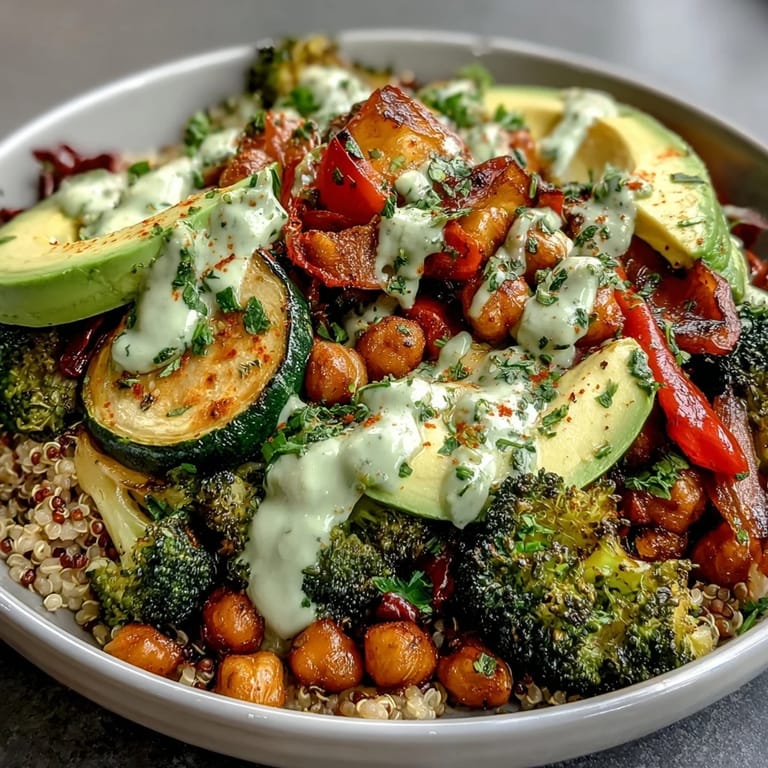
Save My kitchen counter was cluttered with half-empty jars and wilting produce when I stumbled into this bowl. I had no plan, just hunger and a determination not to waste what was left from the week. The oven was already hot from something else, so I started chopping whatever looked salvageable. What emerged was so satisfying, so unexpectedly complete, that I made it again the next night on purpose.
I started making these bowls for my neighbor who was recovering from surgery and needed easy meals she could reheat. She told me later that the smell of the roasted vegetables made her apartment feel alive again. After that, I kept a batch in my fridge most weeks, not for anyone in particular, just because it felt good to have something ready that could be a full meal or a side, depending on the day.
Ingredients
- Quinoa, brown rice, or farro (1 cup): The base that soaks up all the dressing and gives the bowl its heartiness; quinoa cooks fastest if you are in a rush.
- Water or vegetable broth (2 cups): Broth adds a subtle depth, but water works perfectly fine when you are keeping it simple.
- Chickpeas (1 cup cooked): They crisp up beautifully if you toss them on the baking sheet for the last ten minutes of roasting.
- Lentils (1 cup cooked, green or brown): These hold their shape and add an earthy, satisfying chew that balances the softer vegetables.
- Red bell pepper (1, diced): Sweetens as it roasts and adds a pop of color that makes the bowl look as good as it tastes.
- Zucchini (1, sliced): Cut them thicker than you think; they shrink down and can turn mushy if sliced too thin.
- Red onion (1 small, cut into wedges): Roasting mellows the sharpness and caramelizes the edges into something almost sweet.
- Cherry tomatoes (1 cup, halved): They burst and release their juices, creating little pockets of concentrated flavor on the baking sheet.
- Broccoli florets (2 cups): The florets get crispy and nutty at the tips, especially if you do not overcrowd the pan.
- Olive oil (2 tbsp): Do not skimp; it helps everything caramelize and prevents sticking.
- Smoked paprika (1 tsp): This is what gives the vegetables a warm, almost campfire-like depth.
- Ground cumin (1/2 tsp): A little goes a long way; it adds an earthy note that ties the spices together.
- Tahini (2 tbsp): The backbone of the dressing; stir it well before measuring because it separates in the jar.
- Lemon juice (1 tbsp): Freshly squeezed makes a difference, brightening the tahini and cutting through the richness.
- Garlic (1 small clove, minced): Raw garlic in the dressing gives it a subtle bite that wakes up the whole bowl.
- Avocado (1, sliced): Creamy, cool, and rich, it balances the warmth of the roasted vegetables perfectly.
- Toasted pumpkin seeds (2 tbsp): A quick toast in a dry pan brings out their nuttiness and adds crunch.
- Fresh parsley (1/4 cup, chopped): Brightens everything and adds a fresh, herbal note at the end.
Tired of Takeout? 🥡
Get 10 meals you can make faster than delivery arrives. Seriously.
One email. No spam. Unsubscribe anytime.
Instructions
- Preheat and prep:
- Turn your oven to 425°F and let it get fully hot while you chop. A hot oven is what gives the vegetables their caramelized edges.
- Cook the grains:
- Bring your water or broth to a boil with a pinch of salt, add the grains, then lower the heat and cover. Let them simmer gently until tender and all the liquid is absorbed, then fluff with a fork to keep them light.
- Toss the vegetables:
- In a large bowl, mix your chopped vegetables with olive oil, smoked paprika, cumin, salt, and pepper until everything is evenly coated. Spread them out on a baking sheet in a single layer so they roast instead of steam.
- Roast until golden:
- Slide the pan into the oven and roast for 20 to 25 minutes, stirring once halfway through. You want tender vegetables with some charred, caramelized spots.
- Warm the legumes:
- If you like, heat the chickpeas and lentils in a small pan with a splash of olive oil and a pinch of salt for a couple of minutes. It is optional, but it makes them feel more cohesive in the bowl.
- Whisk the dressing:
- Combine tahini, lemon juice, water, minced garlic, salt, and pepper in a small bowl and whisk until smooth. Add more water, a teaspoon at a time, until it is pourable but still thick enough to cling.
- Build the bowls:
- Divide the cooked grains among four bowls, then layer on the roasted vegetables and warmed legumes. Drizzle the tahini dressing over the top.
- Garnish and serve:
- Finish each bowl with fresh parsley, avocado slices, toasted pumpkin seeds, and a lemon wedge on the side. Squeeze the lemon over everything just before eating.
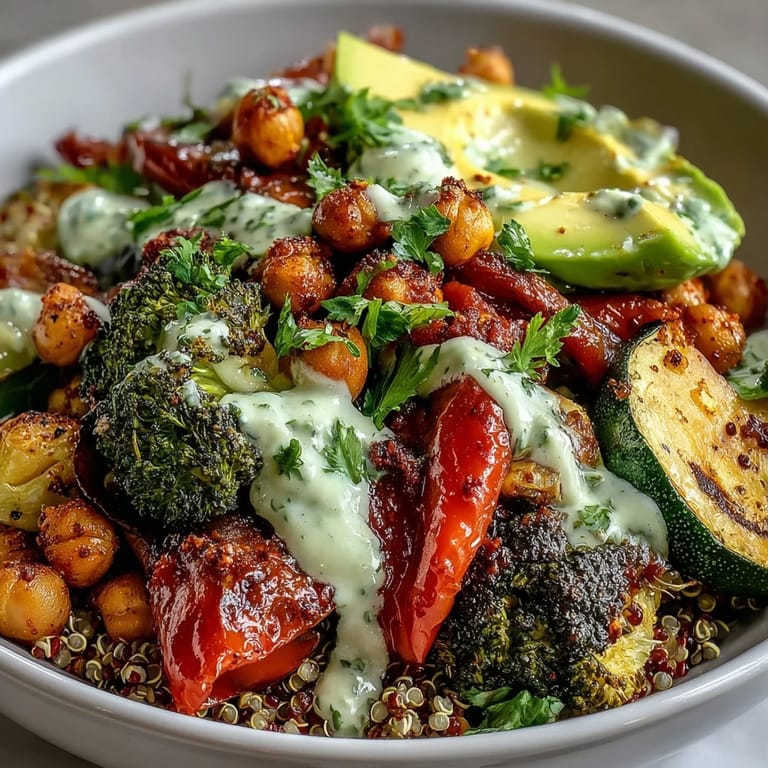 Save
Save One evening, a friend came over feeling worn out from a long week, and I assembled one of these bowls without much ceremony. She sat at my kitchen table, quiet at first, then started talking between bites about how good it felt to eat something that did not require a decision or a menu. Sometimes food does not need to be fancy to matter.
Choosing Your Grains
Quinoa is my go-to when I am short on time because it cooks in fifteen minutes and has a light, fluffy texture that does not weigh you down. Brown rice takes longer but has a chewier, heartier feel that makes the bowl more filling. Farro sits somewhere in between, with a nutty flavor and a satisfying bite that holds up well under all the toppings. Pick based on your mood and your schedule, and remember that you can cook a big batch and keep it in the fridge for several days.
Making It Your Own
This bowl is forgiving and adaptable in the best way. Swap in sweet potato, cauliflower, or carrots when bell peppers are not in season, or toss in whatever looks good at the market. You can add crumbled feta or a soft-boiled egg if you are not keeping it vegan, or stir in a spoonful of harissa or pesto to change the flavor profile entirely. The structure stays the same, but the bowl shifts with the season and your pantry.
Storing and Reheating
I usually store the components separately in the fridge so everything stays fresh and you can mix and match throughout the week. The grains and roasted vegetables keep well for up to four days, and the dressing lasts even longer in a sealed jar. When you are ready to eat, reheat the grains and vegetables gently in a pan or microwave, then add fresh garnishes and dressing. Cold bowls are surprisingly good too, especially in warmer weather.
- Let everything cool completely before storing to avoid condensation and sogginess.
- Keep the avocado and lemon wedges separate until serving so they stay fresh.
- If reheating in the microwave, cover loosely to keep moisture in without steaming everything.
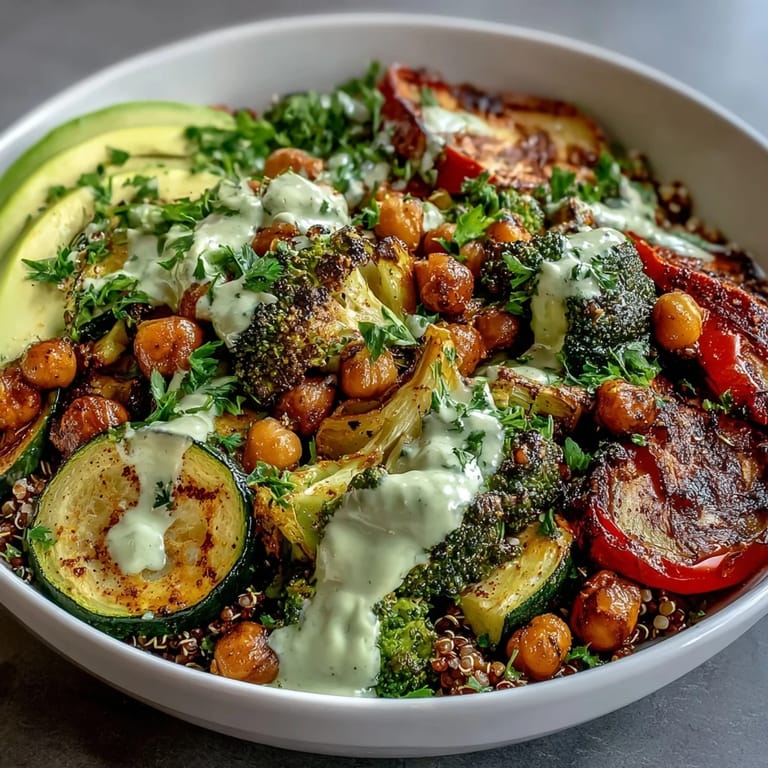 Save
Save This bowl has become one of those recipes I do not think about anymore, I just make it. It is there when I need something nourishing without a plan, and it never feels like I am settling.
Recipe Guide
- → What grains work best for this bowl?
Quinoa, brown rice, and farro all work beautifully. Quinoa cooks fastest at 15 minutes, while rice takes 40 minutes and farro 25 minutes. Choose based on your time preference and dietary needs.
- → Can I use different vegetables?
Absolutely. Sweet potato, cauliflower, carrots, or Brussels sprouts make excellent substitutes. Use whatever seasonal vegetables you have on hand, keeping pieces similar in size for even roasting.
- → How long do roasted vegetables keep?
Roasted vegetables stay fresh in the refrigerator for 3-4 days when stored in an airtight container. Reheat in the oven at 375°F for 10-15 minutes to maintain texture.
- → Is this bowl protein-rich?
Yes, each serving contains approximately 16 grams of protein from the chickpeas, lentils, and grains combined, making it a satisfying and nutritionally complete meal.
- → Can I make this gluten-free?
Simply use quinoa or certified gluten-free grains instead of farro or barley. Ensure all other ingredients, including seasonings and garnishes, are labeled gluten-free.
- → What can I substitute for tahini?
If you cannot use tahini, try Greek yogurt for a creamier dressing or a mixture of almond butter and lemon juice for a similar nutty flavor profile.