 Save
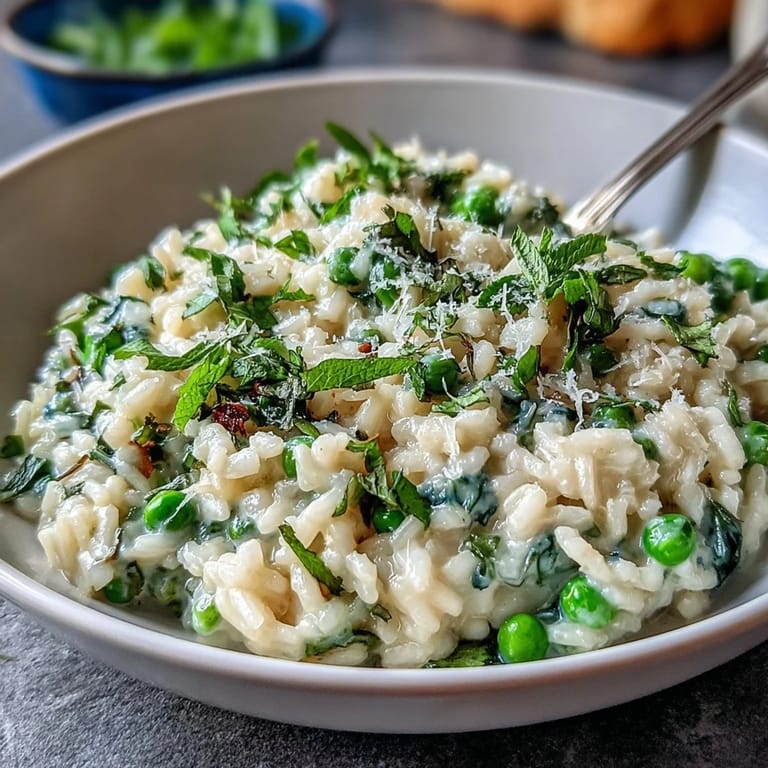
Save There's something about late April that makes me crave risotto, especially when the farmer's market suddenly overflows with tender peas still in their pods. I was standing in my kitchen one afternoon, holding a bag of the brightest green peas I'd seen all season, and I knew exactly what needed to happen. This risotto came together almost by accident that evening, a way to honor spring's arrival without overthinking it. The mint from my garden practically demanded to be part of the story. Before I knew it, I had invited friends over, and somehow this dish became the one they'd text about weeks later.
I made this for a small gathering last May, and what struck me most wasn't the compliments (though there were plenty) but how everyone slowed down to eat it. Nobody was rushing through their plate. My friend Sarah actually asked for seconds while the pasta water was still steaming on the stove, and that's when I realized risotto has this quiet power to make ordinary Tuesday nights feel a little bit special.
Ingredients
- Fresh or frozen green peas (1 cup): Fresh peas are magic if you can find them, but frozen ones honestly work just as well and sometimes taste fresher because they're picked at peak ripeness; I learned this the hard way after feeling snobbish about frozen vegetables for years.
- Arborio rice (1 1/2 cups): This short-grain rice releases starch as it cooks, which is what creates that creamy dreaminess without any cream involved; don't swap it for regular rice or you'll end up with something mushy and sad.
- Vegetable stock (4 cups): Keep it warm in another pot or a kettle nearby; cold stock will shock the rice and mess with your cooking time, which I discovered by ignoring this advice once.
- Dry white wine (1/2 cup): The acidity cuts through the richness beautifully, and yes, the alcohol cooks off; choose something you'd actually drink, because cheap wine tastes cheap in the finished dish.
- Unsalted butter (3 tbsp total): Split into two additions, the first for building flavor and the second for finishing creaminess; this matters more than you'd think.
- Freshly grated Parmesan cheese (1/2 cup plus extra): Always grate it yourself from a wedge; the pre-grated stuff contains cellulose that keeps it from melting smoothly into the risotto.
- Fresh mint leaves (1/4 cup): Chop this just before serving so the color stays vibrant and the flavor doesn't fade into green dust.
- Lemon zest (1 zest): This single ingredient is the secret weapon that makes people ask what's different about your risotto; it adds brightness without tasting acidic.
- Salt and freshly ground black pepper: Taste constantly as you cook because the stock's saltiness varies, and you're seasoning the whole journey, not just the end.
Tired of Takeout? 🥡
Get 10 meals you can make faster than delivery arrives. Seriously.
One email. No spam. Unsubscribe anytime.
Instructions
- Soften the aromatics in butter:
- Melt 2 tablespoons of butter over medium heat and add your finely chopped onion, letting it turn soft and translucent while you listen to it sizzle gently. Add the minced garlic and let it bloom for just a minute until your kitchen smells incredible.
- Toast the rice:
- Stir the Arborio rice into the butter and onion, coating every grain until it looks slightly translucent at the edges and smells toasty. This step takes about 2 minutes and it's worth not rushing because it seals in the rice's structure.
- Deglaze with wine:
- Pour in the white wine and keep stirring as it bubbles and reduces; you'll know you're ready to add stock when most of the wine has been absorbed. This moment always smells like a fancy restaurant kitchen.
- Build the creaminess with stock:
- Add your warm stock one ladle at a time, stirring fairly constantly as the rice drinks in each addition before you add the next. This is the part that takes patience, but it's also meditative if you lean into it instead of fighting the time; you're not making risotto, you're having a conversation with it.
- Add the peas at the right moment:
- About 5 minutes before the rice finishes cooking (around the 18-minute mark), stir in your peas so they stay bright green and tender instead of turning olive-drab. They'll warm through gently without any effort.
- Finish with butter, cheese, and herbs:
- Remove the pan from heat and stir in the remaining tablespoon of butter, then the Parmesan, mint, lemon zest, and a pinch of salt and pepper. The risotto should flow on the plate like lava; if it seems stiff, loosen it with a splash of warm stock.
- Taste and serve immediately:
- Always taste before serving because you're the only one who knows how salty your stock was; adjust the seasoning and get it to the table while it's still creamy and warm. Finish with extra Parmesan and fresh mint leaves scattered on top.
 Save
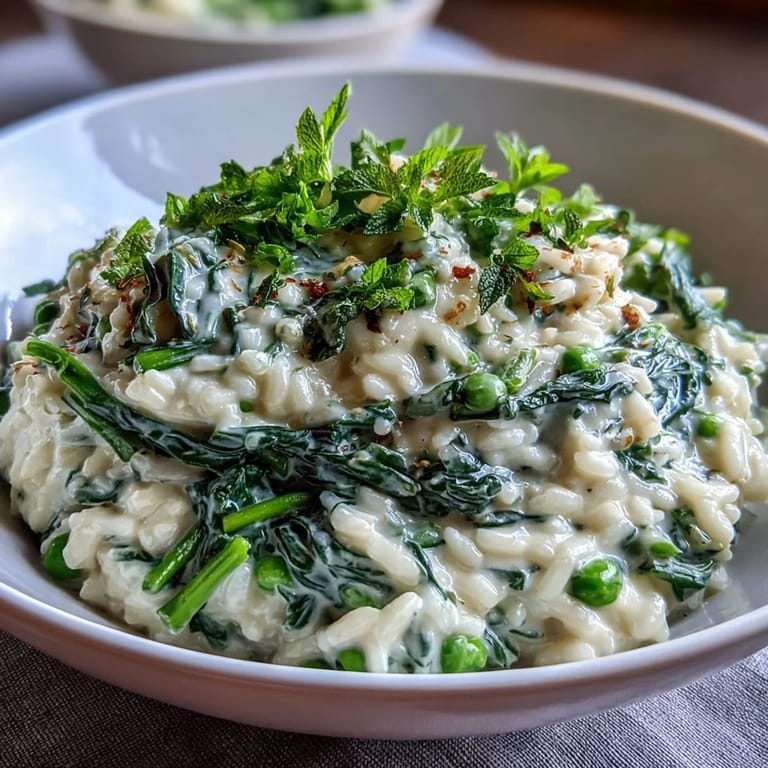
Save I served this to my neighbor once when she was going through a rough time, and she called me three days later just to tell me she'd made it again at home. That's when food stops being about technique or ingredients and becomes something that reaches people in a quieter way. This risotto does that.
Why Fresh Mint Matters So Much
Dried mint tastes like something old and dusty, nothing like the bright green whisper that fresh mint brings to a dish. I learned this by trying to make risotto in winter with the only mint I had available, which was the sad dried version from my spice drawer, and the whole thing tasted muted and wrong. Now I plan my risotto around when I know I can get fresh mint, which means spring, or I grow a pot on my kitchen windowsill just for moments like this. The difference is genuine.
Pairing Ideas and Wine Suggestions
This risotto sings alongside a crisp white wine like Sauvignon Blanc or Pinot Grigio, something with enough acidity to cut through the creaminess without overwhelming the delicate flavors. A simple green salad with a sharp vinaigrette afterward clears the palate beautifully, and for a spring dinner party, this is honestly all you need alongside crusty bread for soaking up every last bit of sauce.
Making It Ahead and Storing Leftovers
Risotto is honestly best eaten the moment you finish cooking it, when it's creamy and alive and perfect. If you do have leftovers, store them in an airtight container in the refrigerator for up to three days, and when you're ready to eat them, warm them gently in a saucepan with a splash of water or stock stirred in until they loosen back up. You can even turn leftover risotto into crispy cakes by chilling it, forming it into patties, and pan-frying them until golden, which is its own kind of magic.
- Make your vegetable stock ahead of time so you're not scrambling on dinner day.
- Chop your onion and garlic while the stock heats up; mise en place is your friend during the cooking process.
- Have your mint chopped and Parmesan grated and ready to go before you even start cooking the rice, because those last few minutes happen fast.
 Save
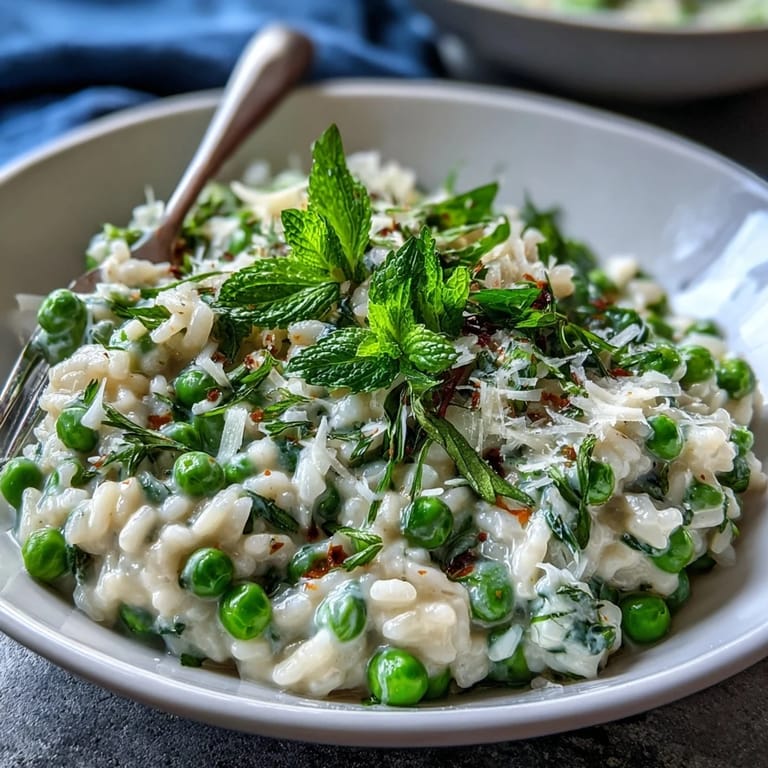
Save This risotto taught me that cooking doesn't have to be complicated to be memorable, and that sometimes the simplest dishes made with genuine care are the ones people remember longest. Make this when spring arrives, and watch how something so straightforward becomes an occasion in itself.
Recipe Guide
- → Can I use frozen peas for this dish?
Yes, frozen peas work well and can be added directly during the final stages of cooking to retain their sweetness and color.
- → What type of rice is best for this creamy texture?
Arborio rice is ideal as its high starch content creates the classic creamy consistency without becoming mushy.
- → How do I ensure the risotto stays creamy without becoming dry?
Gradually add warm stock one ladle at a time, stirring constantly and allowing each addition to absorb before adding more.
- → Can I substitute white wine with another liquid?
Vegetable stock or a mild lemon juice splash are good alternatives if you prefer to omit wine, contributing subtle acidity.
- → What herbs complement the mint in this dish?
Fresh flat-leaf parsley adds brightness and depth without overpowering the mint’s delicate flavor.