 Save
Save I'll never forget the evening I discovered that wine-soaked cheese could be more captivating than any centerpiece I'd attempted before. A friend brought over a wedge of drunken goat cheese to a dinner party, and the moment I tasted that delicate tang mingling with subtle wine notes, I knew I had to build an entire board around this concept. That night, as guests circled the table, I watched them pause, curious about what made these ingredients so different. The answer was simple: they'd all been kissed by red wine, transformed into something unexpectedly elegant and unforgettable.
I made this board for my sister's engagement celebration, and I still remember her face when she walked into the dining room. The way the light caught the jewel tones of the jelly and poached grapes, how the prosciutto ribbons seemed to dance around those wine-stained cheeses—it became the backdrop for toasts and laughter that lasted well into the evening. People kept returning to it, each time discovering something new they hadn't noticed before.
Ingredients
- Drunken Goat Cheese (200g, sliced): This is the soul of the board—creamy, slightly tangy, and infused with red wine that makes it taste like autumn itself. The wine softens its natural sharpness into something almost honeyed. I learned to slice it when it's still cool but not cold, so each piece holds its shape but feels impossibly tender.
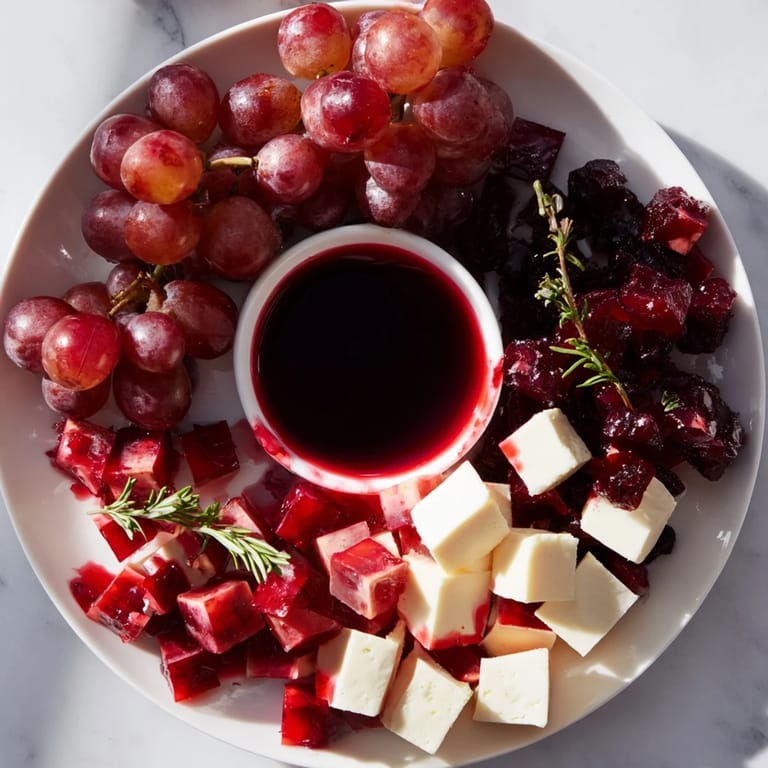
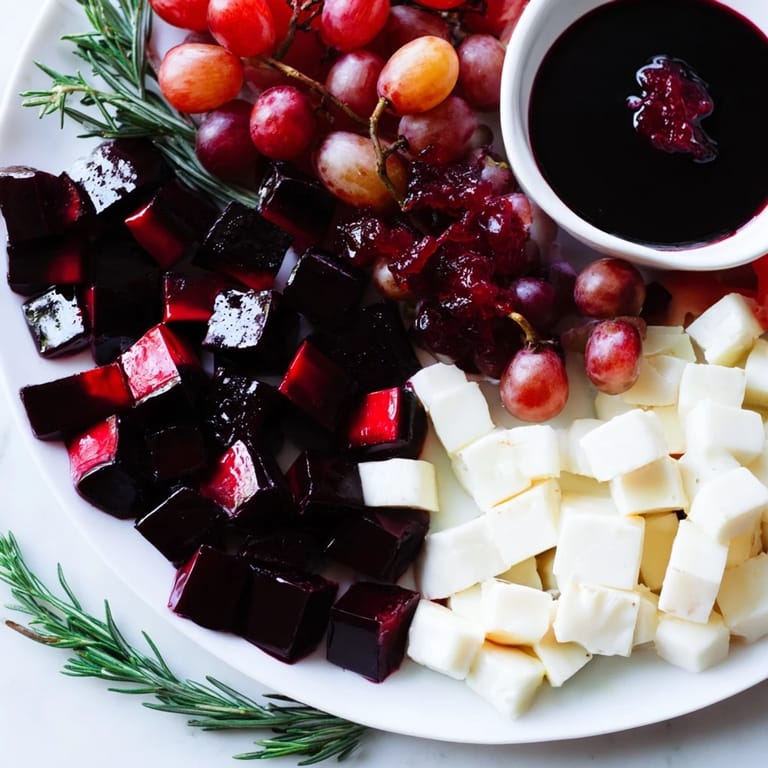
- Red Wine BellaVitano (150g, cubed): A hard cheese that's been aged in red wine, giving it deep burgundy streaks and a complexity that makes people pause mid-conversation. I always cube rather than slice it because those little pieces catch the light beautifully and are perfect for popping into your mouth whole.
- Red Wine-Cured Salami (100g, thinly sliced): The weight and richness here balances the delicate cheeses. I fan these out deliberately, overlapping them like playing cards, because the presentation matters as much as the taste.
- Prosciutto (80g, torn into ribbons): These delicate ribbons add an ethereal quality to the board. The way they catch light makes the whole arrangement feel more romantic. I tear rather than cut mine because rough edges feel more inviting.
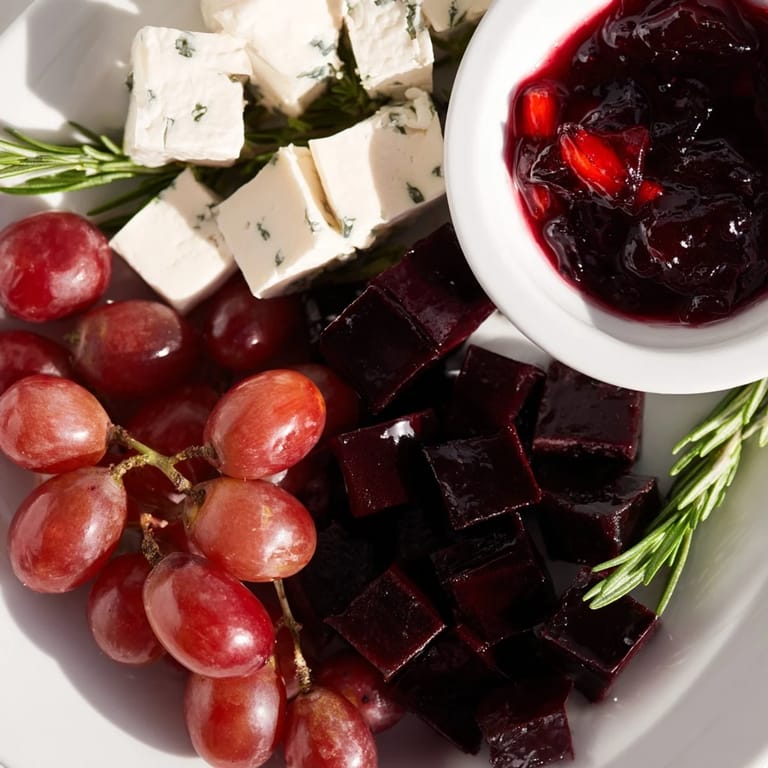
- Red Wine Jelly (1/2 cup): This is your glossy jewel—jewel-like, wobbling slightly in its bowl, it catches every eye. It's sweet with an elegant wine undertone and serves as both a flavor element and visual punctuation.
- Red Wine-Poached Grapes (1/2 cup): Soft, wine-drunk, and concentrating all that red flavor into jeweled orbs. These teach you a lesson about patience—the slower they cool, the more the wine flavor sets in.
- Red Wine-Infused Dried Cherries (1/4 cup): Chewy, deep, and intensely flavored. I learned to soak mine an extra hour before serving if I have time, letting them plump up and become almost fresh again.
- Red Wine-Marinated Olives (1/3 cup): Whether you choose kalamata or green, marinating them in wine rounds out their edges and makes them taste less like a condiment and more like a considered choice. The brine mingles with wine to become something greater than either alone.
- Baguette (1 small, sliced): Your vehicle for everything else. I slice mine diagonally so each piece feels more elegant, and I arrange them in gentle arcs that echo the curves of the board itself.
- Red Wine and Rosemary Crackers (1 cup): Store-bought is absolutely fine here—they echo the wine theme and add a textural contrast to the soft cheeses. Their herbiness bridges everything together.
- Fresh Rosemary Sprigs: A whisper of aroma that hangs around the board, reminding everyone what they're tasting. I tuck these in strategically, using them to create little pockets of visual interest.
- Edible Flowers (optional): These are purely for those moments when you want to feel like you're hosting in a garden. I use pansies or violas for their mild flavor and stunning colors.
Tired of Takeout? 🥡
Get 10 meals you can make faster than delivery arrives. Seriously.
One email. No spam. Unsubscribe anytime.
Instructions
- Set Your Stage:
- Start with a large wooden board or platter—something with presence. Remove the label from a clean wine bottle or choose one that's decorative on its own. This bottle isn't just a centerpiece; it's an anchor, a statement that says everything here is intentional. Place it right in the center, standing proud.
- Build Your Cheese Foundation:
- Now comes the satisfying part—arranging those sliced drunken cheeses in concentric circles around the bottle's base. Let some pieces lean casually against the glass; this isn't about perfection, it's about creating little moments of visual interest. Notice how the wine-staining looks almost intentional, like watercolor that got slightly out of hand in the best way.
- Introduce Your Proteins:
- Fan out the salami and prosciutto in small piles, positioning them where they'll catch light. These aren't obstacles between the cheeses; they're complements, adding depth and richness. I like to create little focal points—three or four piles distributed around the board rather than one concentrated mass.
- Nestle Your Jelly:
- Spoon the red wine jelly into a small, beautiful bowl—something ceramicware or stoneware that feels intentional. Nestle this among the cheeses. That wobbling surface will catch every light source in your dining room and make people lean in closer.
- Scatter Your Jewels:
- Now for the magic—distribute the poached grapes, wine-infused cherries, and marinated olives in small clusters. Think in threes and fives, odd numbers that feel more natural to the eye than even arrangements. Leave some breathing room; negative space makes everything else feel more precious.
- Create Your Pathways:
- Arrange baguette slices and crackers in gentle arcs or flowing lines that guide guests toward the cheeses and meats. These aren't just vehicles; they're part of the visual story. I arrange mine in curves rather than straight lines, creating a sense of movement and invitation.
- Final Flourishes:
- Tuck fresh rosemary sprigs into gaps, positioning them so they frame the cheeses without hiding them. If you're using edible flowers, scatter just a few where they'll be noticed—perhaps near the jelly, or nestled between the grapes. Step back. Breathe in that herb-and-wine aroma. You've created something beautiful.
- Serve with Intention:
- Bring this board to the table and watch your guests. Encourage them to mix flavors—the sharp olives with creamy cheese, the wine jelly on a cracker topped with prosciutto. This is meant to be explored, not picked at. Refill the jelly bowl if needed, rearrange grapes as they disappear. Be present with your creation.
 Save
Save What I remember most isn't just how beautiful it looked or how delicious everything tasted. It was watching two strangers at a dinner party discover they both loved the combination of wine jelly and prosciutto, and then spending the next hour talking about their travels through wine country. That board became a conversation starter, a reason people lingered longer, and a gentle reminder that food is always about more than sustenance—it's about creating moments that linger in memory.
The Wine Selection Secret
I've made this board with every red wine from bargain-friendly to splurge-worthy, and here's what I discovered: the cheeses and cured meats do the heavy lifting flavor-wise, so don't feel pressured to buy an expensive bottle just for the board. What matters far more is choosing something with real fruit character—something where you can taste the grapes rather than just oak and tannins. A medium-bodied wine lets the delicate wine-infused cheeses shine rather than overwhelming them. Think of the wine as a conversation partner to your board, not a solo performance.
Making This Your Own
The beauty of this board is that it's endlessly adaptable to what you find and love. I've made versions in winter with pomegranate seeds instead of grapes, summer versions where I added fresh figs, and one memorable autumn board where I scattered candied walnuts between the cheeses. The formula stays the same—wine-infused elements creating harmony—but the specific ingredients can shift with seasons and what your local cheese shop is excited about that week.
Storage and Make-Ahead Magic
Most elements of this board can be prepped the day before, which is one of the reasons I love serving it for entertaining. The poached grapes actually taste better after sitting overnight; the flavors deepen and settle. The marinated olives similarly improve with time. Even the cheese, when wrapped properly and kept cool, feels fresher the next day because the wine flavoring continues to penetrate. Here's my strategy for perfection:
- Prepare poached grapes, marinated olives, and wine-infused cherries up to two days in advance; store in glass containers where you can admire them while they sit in the refrigerator
- Slice your baguette no more than four hours before serving so it doesn't dry out; keep it wrapped in a clean kitchen towel
- Assemble the entire board no more than two hours before guests arrive, then cover it loosely with plastic wrap and refrigerate; remove from the fridge fifteen minutes before serving so cheeses can warm to their optimal, creamy state
 Save
Save This board taught me that sometimes the most impressive entertaining happens when you trust in the quality of simple elements arranged with intention. It's a reminder that beauty and deliciousness often come from thoughtfulness rather than complexity.
Recipe Guide
- → How do you prepare the red wine-poached grapes?
Simmer seedless red grapes in dry red wine with sugar and cinnamon for 10 minutes, then cool before serving to enhance sweetness and infuse wine flavors.
- → Can the board be made vegetarian?
Yes, simply omit the meats and increase cheese or add roasted nuts for extra texture and flavor while maintaining richness.
- → What cheeses work best soaked in red wine?
Soft to semi-hard cheeses like drunken goat and BellaVitano absorb wine flavors well, providing a harmonious balance of acidity and creaminess.
- → How should the board be arranged?
Place an empty wine bottle at the center and layer cheeses, meats, fruits, and crackers around it in small clusters for visual appeal and easy access.
- → What accompaniments complement the wine-infused ingredients?
Red wine jelly, poached grapes, wine-marinated olives, and rosemary crackers enhance the wine notes and add contrasting textures and flavors.