 Save
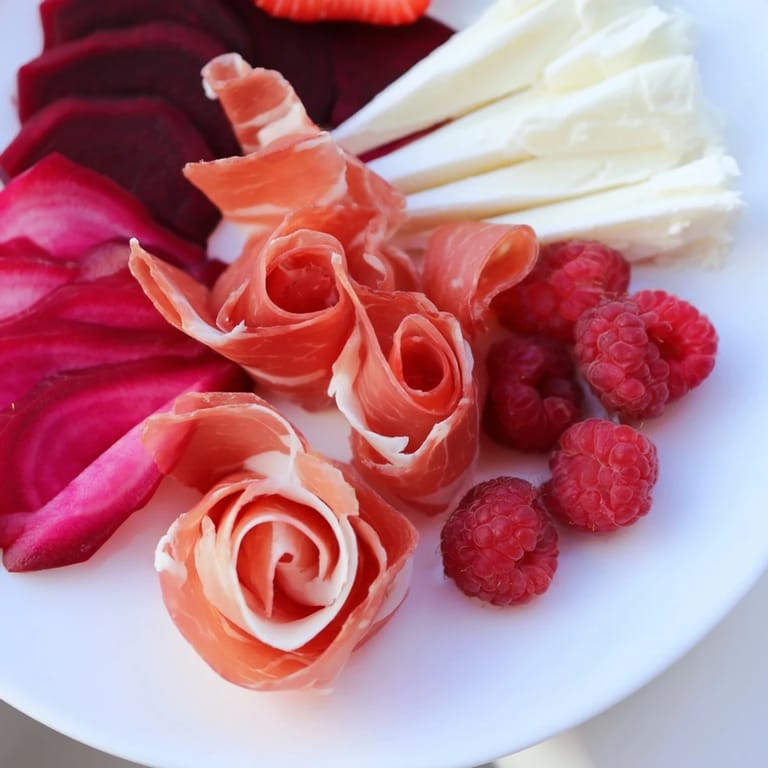
Save I'll never forget the spring afternoon when I discovered that food could be art. I was preparing for an intimate brunch when a friend casually mentioned she'd love something that felt both elegant and playful. That's when it hit me—why not create a platter that looked like a watercolor painting? I spent the next hour arranging thin slices of pink radishes, creamy brie, and delicate prosciutto roses, and the moment I stepped back to admire it, I realized I'd created something that made people gasp before they even tasted it. This Pink Petal Watercolor Wash became my signature move for springtime gatherings.
My favorite memory with this platter happened at my sister's baby shower last May. I arranged it on her grandmother's antique white porcelain platter, and watching three generations of women lean in to admire it before diving in—that was pure magic. It wasn't just food anymore; it was a moment we all shared together, passing around raspberries and trading bites of different cheeses like we were telling stories with flavor.
Ingredients
- Prosciutto: Use the thinnest slices you can find—they'll fold beautifully into delicate roses that catch the light. Ask your deli counter to slice it paper-thin; it makes all the difference in how elegant each rose looks.
- Mortadella: This Italian specialty meat adds a softer texture and subtle sweetness. Slice it thin enough to drape gracefully, but thick enough that it doesn't tear.
- Pink radishes: These are your watercolor brushstrokes. A mandoline slicer makes them uniformly thin, but a sharp knife and a steady hand work just fine—embrace the slight imperfections.
- Watermelon radish: This hidden gem reveals a stunning pink and white interior when sliced. It's what makes people lean in and ask, 'What is that?'
- Cooked beet: The deeper red tones provide contrast and richness. Roast or steam it until just tender, then let it cool completely before slicing.
- Pink-hued cheese: Port wine Derby, rosé goat cheese, or any berry-washed rind cheese brings sophistication. These cheeses taste as beautiful as they look—creamy, tangy, and utterly memorable.
- Brie or camembert: The classic soft cheese provides a creamy anchor and mild flavor that lets other ingredients shine. Cut into wedges so guests can serve themselves generously.
- Baguette: Slice at an angle for visual interest. Toast lightly if you like, or keep it soft—both work beautifully.
- Rice crackers: These add crunch without overwhelming delicate flavors. Their neutral taste lets the meats and cheeses be the stars.
- Strawberries and raspberries: Fresh berries add brightness, sweetness, and that final pop of color. Buy them the day before and store them in the fridge; they'll be at their peak texture and flavor.
- Edible rose petals or microgreens: These are your finishing touch—the detail that transforms 'beautiful platter' into 'breathtaking centerpiece.'
Tired of Takeout? 🥡
Get 10 meals you can make faster than delivery arrives. Seriously.
One email. No spam. Unsubscribe anytime.
Instructions
- Choose your canvas:
- Select a large platter or board that's neutral in color—white, cream, or soft gray works best. This is your watercolor paper, and everything you arrange will shimmer against it.
- Create the prosciutto roses:
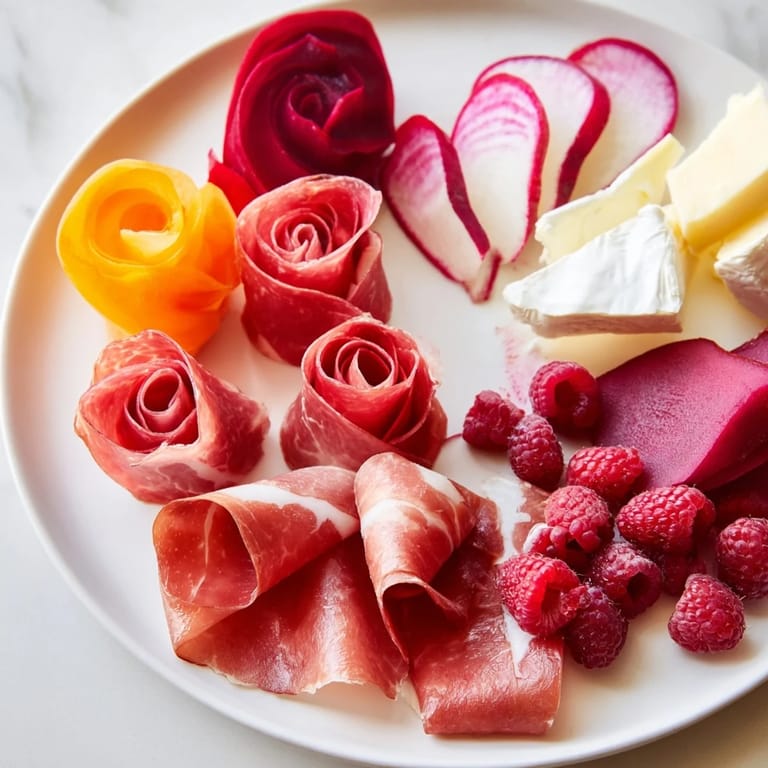
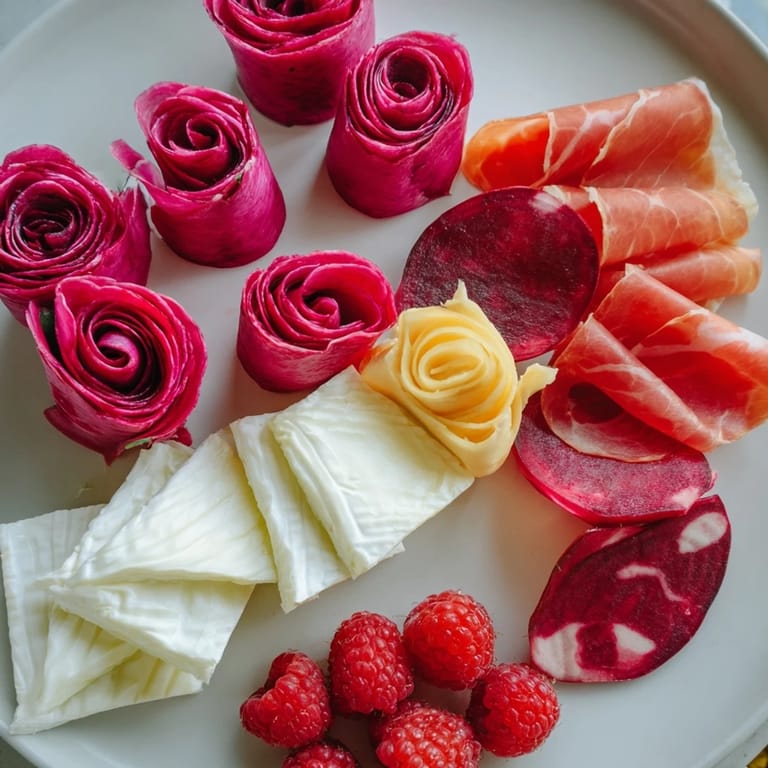
- Take a slice of prosciutto and gently fold or roll it into a loose rose shape. Don't overthink it—some roses will be tight, some loose, and that's exactly what you want. The imperfection is what makes it look like actual watercolor. Arrange these in small clusters around your platter, leaving room for the other elements to breathe.
- Layer the mortadella:
- Place mortadella slices in loose folds next to your prosciutto roses. Let them overlap slightly, creating soft shadows and depth. Think of how fabric drapes; that's the feeling you're after.
- Paint with vegetables:
- This is where the magic happens. Arrange your pink radish, watermelon radish, and beet slices in overlapping, slightly fanned layers. Let them flow across the platter like brush strokes, with some slices lying flat and others catching the light at angles. The goal is to mimic that soft blending of watercolor washes where colors meet and mingle.
- Nestle the cheeses:
- Place your pink-hued cheese slices and brie wedges in clusters, allowing them to touch and blend visually with the meats and vegetables. The creaminess of the cheese should seem to merge with the vegetables around it, just like watercolor pigments bleeding into one another.
- Add bread and crackers:
- Arrange baguette slices and rice crackers in gentle curves along one edge or interspersed throughout, like they're floating across a canvas. They're functional and beautiful—guests will use them, but they also fill space with visual interest.
- Crown with berries:
- Scatter strawberry halves and whole raspberries in small piles throughout the platter. These jewel-like fruits enhance the pink palette and provide sweetness. Place them intentionally, not randomly—each one should feel like it belongs exactly where you put it.
- Final flourish:
- Just before serving, scatter edible rose petals or microgreens across the platter for an extra touch of elegance. This is the moment your creation transforms from beautiful to unforgettable.
- Serve with intention:
- Bring the platter to the table and pause for just a moment before inviting people to eat. Let them admire it. Let them take a photo. Then, encourage them to mix and match flavors and textures—every bite should feel like a small discovery.
 Save
Save There's something almost spiritual about creating food that's beautiful enough to pause for. A few months after that baby shower, my sister sent me a photo of the platter arrangement printed and framed in her nursery. She'd paired it with a quote about the beauty of everyday moments. That's when I understood—this platter had become more than a recipe. It was permission to celebrate the small gatherings, the intimate brunches, the moments when we slow down and really look at the people in front of us.
Building Your Color Palette
The secret to this platter's visual impact is understanding color as a ingredient. Think of yourself as a painter mixing hues on a canvas. The deep reds of cooked beets and watermelon radish centers provide warmth and depth, while the pale pinks of prosciutto and rose goat cheese create softness and elegance. The pure whites of brie and cream crackers act like highlights, making everything around them glow. When you're arranging, step back frequently and look at the overall composition. Are you creating visual flow? Do the colors seem to blend and merge like actual watercolor? Trust your eye—if it feels right, it is right.
Timing and Preparation Strategy
The beauty of this recipe is that it's entirely make-ahead friendly, with just a few strategic timing considerations. You can prep your baguette slices, slice your sturdy vegetables like beets and watermelon radish, and arrange your cheeses and cured meats hours in advance. Cover the platter loosely with plastic wrap and refrigerate. About 30 minutes before guests arrive, remove it from the fridge and add your berries and delicate radish slices. The cool, crisp vegetables will taste better at closer to room temperature, and the raspberries won't get crushed if you add them last. This timing strategy lets you enjoy your guests instead of rushing around like a stressed chef.
Variations and Personal Touches
This platter thrives on adaptation and personalization. I've made vegetarian versions by omitting the prosciutto and mortadella and doubling down on unusual cheeses and pickled vegetables. I've added pink peppercorns for a subtle floral spice, created a layer of finely minced red onion mixed with a touch of acid for brightness, and even arranged everything on a bed of soft microgreens for extra texture. The formula stays the same—create a color gradient from deep pink to pale blush—but the specific ingredients shift based on what's at the market or what I'm craving. Some versions get a drizzle of aged balsamic, others get a sprinkle of fleur de sel and fresh cracked pepper. Experiment, taste as you go, and remember that the best platter is the one that feels authentically yours.
- Try adding pickled onions or pink peppercorns for extra flavor dimensions
- Rosé wine pairs beautifully with this platter and enhances the color theme
- For a vegetarian version, increase cheese and vegetable variety while maintaining the color harmony
 Save
Save This platter taught me that cooking is about more than nourishment—it's about creating moments that linger in people's hearts. Every time someone tells me they made the Pink Petal Watercolor Wash and their guests loved it, I smile, knowing that the magic continues.
Recipe Guide
- → How do I shape the meat slices into rose forms?
Roll or fold thinly sliced prosciutto gently to form small rose-like shapes, then arrange them in clusters on your serving board for a delicate presentation.
- → What cheeses work best for the pink-hued sections?
Cheeses such as port wine Derby, rosé goat cheese, or berry-washed rind cheeses add a subtle pink tone and complement the platter's flavor profile beautifully.
- → Can I prepare this platter ahead of time?
For the freshest appearance and texture, it’s best to assemble shortly before serving. Keep sliced ingredients refrigerated and arrange just before guests arrive.
- → What garnishes enhance the visual effect?
Edible rose petals or fresh microgreens add elegance and a pop of color that enhances the watercolor-inspired arrangement.
- → Is there a vegetarian option for this platter?
Yes, omit the meats and increase the variety of cheeses and vegetables to maintain flavor depth and visual appeal.