 Save
Save I'll never forget the dinner party where I first attempted a monochrome cheese board, inspired by a minimalist art gallery I'd visited that afternoon. Standing in my kitchen with only gray and black ingredients spread before me, I realized I was creating edible art. The challenge of working within a single color palette transformed what could have been a simple appetizer into something that felt intentional and sophisticated, earning more compliments than boards I'd spent hours fussing over.
My friend Maria actually gasped when she saw this board. She'd been convinced that beautiful food required bright colors and rainbow presentations, but watching her taste the creamy Humboldt Fog against the charcoal cracker, then reach for the blackberries, she understood what I meant about restraint and elegance. That moment when she said, "This feels fancy but somehow calm," is exactly what this board achieves.
Ingredients
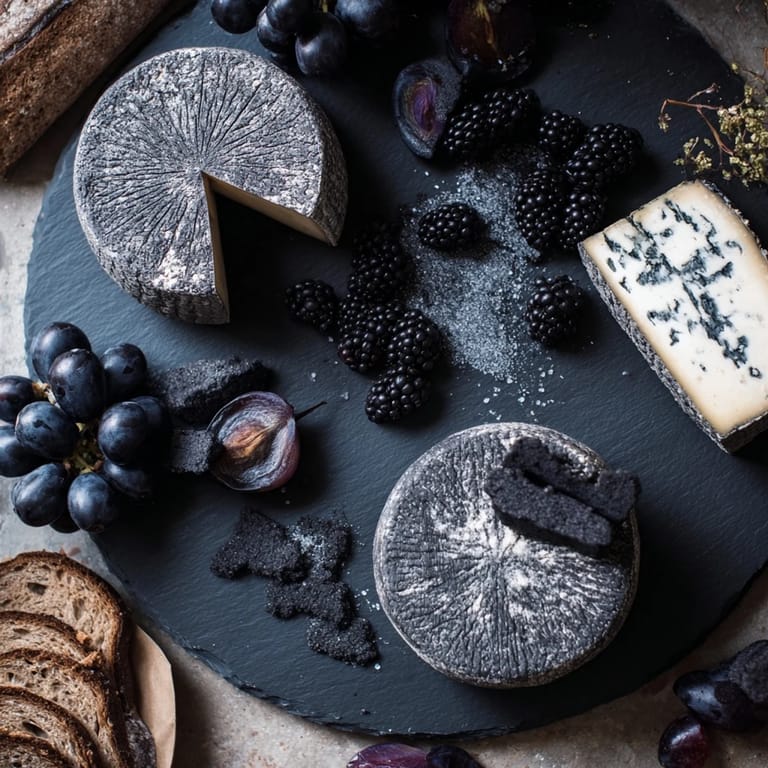
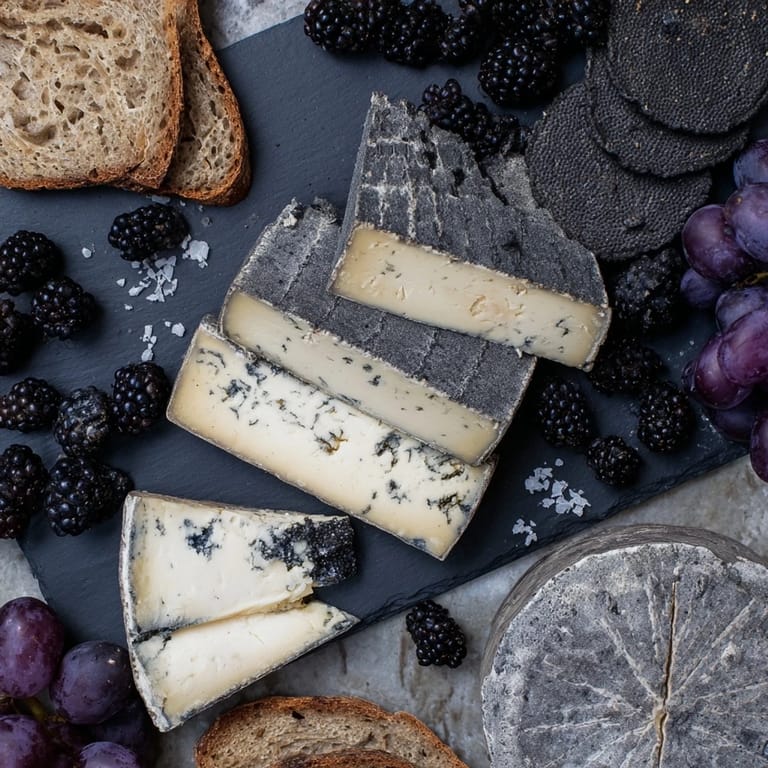
- Morbier or ash-rinded semi-soft cheese (150 g): This is your centerpiece cheese—that distinctive gray ash line running through it isn't just decorative, it's a sign of intentional cheesemaking. The subtle, slightly vegetal notes anchor the board with sophistication, and the soft texture means it spreads beautifully on crackers.
- Humboldt Fog or ash-ripened goat cheese (120 g): Creamy, tangy, and blessed with that gorgeous ash coating on the outside. I learned to slice this while it's slightly cold—it cuts cleaner and the ash doesn't smudge all over the board. Let it sit at room temperature for a few minutes before serving so people actually experience how lush it is.
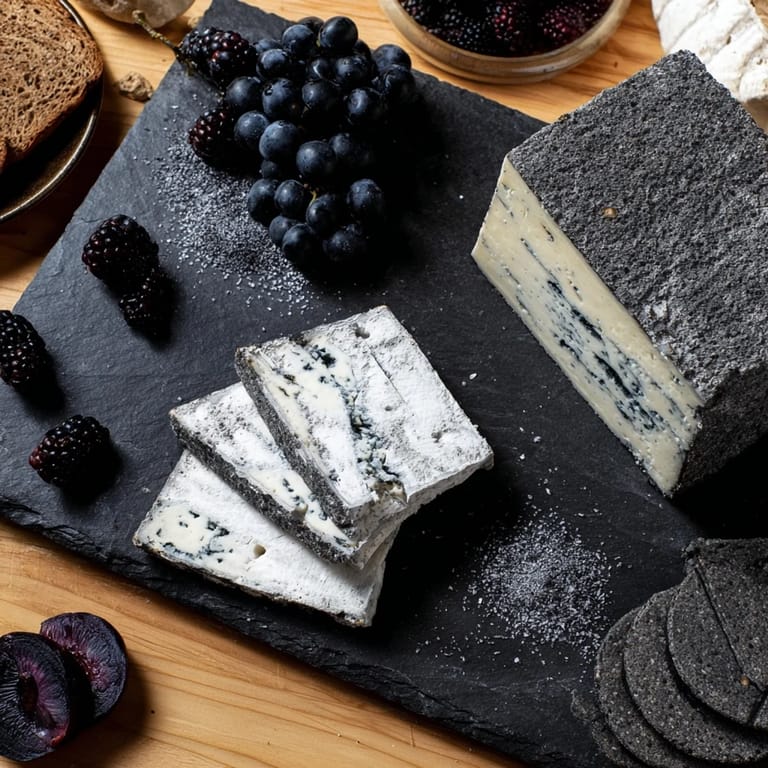
- Valdeon blue cheese with gray veining (100 g): This is the bold whisper on your board. Blue cheese brings depth and that assertive funk that makes people pause and appreciate real flavor. The gray-blue veining keeps everything chromatic.
- Slate-colored charcoal crackers (8–10 pieces): Hunt these down at specialty stores—they're worth the effort. They taste subtly smoky and look intentional, not accidental. I've used black sesame crackers in a pinch and they work beautifully if you can't find true charcoal ones.
- Dark rye or pumpernickel bread (6–8 slices): Stack these slightly fanned so people can grab them easily. The dense, earthy flavor is perfect counterpoint to creamy cheese, and the color commitment is everything.
- Black grapes or dark plums, sliced: These provide juicy bursts that cleanse the palate between cheeses. I slice them just before serving so they stay fresh and don't weep dark juice all over everything.
- Blackberries or blueberries: A handful scattered across the board adds texture and those precious dark jewel tones. They're nature's confirmation that monochrome was the right choice.
- Black olive tapenade (2 tbsp): This is your umami anchor. Spoon it into a small dark bowl or serve it directly on the board—either way, it gives people something briny and bold to return to.
- Edible charcoal salt: Just a whisper of this across the cheeses elevates them from nice to intentional. It adds visual depth and a subtle mineral note that nobody can quite identify but everyone notices.
- Fresh rosemary or thyme sprigs (optional): Use these sparingly—they're contrast, not decoration. Their green will pop against all that gray, so make sure that's the look you want. I usually use just two or three sprigs.
Tired of Takeout? 🥡
Get 10 meals you can make faster than delivery arrives. Seriously.
One email. No spam. Unsubscribe anytime.
Instructions
- Prepare your canvas:
- Set out your dark stone or slate board on a clean, steady surface where it can stay the entire meal. Clean it first so there are no crumbs or dust—the whole point is visual clarity. Feel the weight of it, appreciate the texture. This board will carry your creation.
- Slice and position your cheeses:
- Cut each cheese into pieces that show off their character: the Morbier into thin wedges to showcase that ash line, the Humboldt Fog into creamy wedges, the Valdeon into modest chunks so its bold flavor doesn't overwhelm. Arrange them in separate sections across the board, leaving breathing room. Think about balance and flow, not crowding.
- Create your cracker landscape:
- Fan out the charcoal crackers in small stacks, positioning them so they're easy to grab but still part of the composition. Do the same with rye or pumpernickel slices, slightly overlapping them. This arrangement matters—it guides people's eyes and hands around the board.
- Scatter your fruit elements:
- Cluster the black grapes and plum slices strategically, filling visual gaps without looking random. Scatter the blackberries or blueberries across the board like they're natural stones. The fruit isn't filler—it's an intentional part of the palette.
- Add your savory anchor:
- Pour the black olive tapenade into a small dark bowl if you have one, or place a small spoonful directly onto the board. This gives people a savory, briny element that complements the cheeses perfectly and serves as a reset between flavors.
- Finish with intention:
- Sprinkle just a tiny pinch of edible charcoal salt over the cheeses—not everywhere, just where it catches the light and makes people notice the detail. If you're using fresh herbs, add just two or three sprigs, positioned to draw the eye.
- Serve with ceremony:
- Place cheese knives on the board or beside it, set out small serving plates, and step back. Let this moment exist for a second before anyone touches it. This is your art.
 Save
Save I learned what a monochrome board really meant when my mother—a woman who loves every color loudly—went quiet looking at this one. Then she said softly, "It's like you're respecting the food." That hit me. By removing distraction, by honoring restraint, you actually make people pay attention to what's really there. The cheese, the flavors, the textures. That's when food becomes more than nutrition.
The Monochrome Philosophy
There's something powerful about choosing a single color story. In a world of rainbow platters and Instagram maximalism, this board whispers instead of shouts. The gray and black palette naturally draws attention to flavor and texture because your eyes have nowhere else to wander. Every element here earns its place through taste, not visual competition. This is restraint as luxury.
Cheese Selection as Art
These three cheeses were chosen not just for their colors but for how they tell a story together. The ash-rinded Morbier speaks of technique and tradition, the creamy Humboldt Fog offers gentle earthiness, and the Valdeon brings honest boldness. When you arrange them this way, you're creating a conversation between different cheesemaking philosophies. People taste that conversation, even if they can't name it. The ash rind isn't decoration—it's terroir you can see.
The Details That Matter
This board lives and dies by the details. The charcoal crackers aren't just dark—they taste intentionally smoky. The pumpernickel isn't filler—it's earthy and substantial. The black olive tapenade isn't garnish—it's a moment of briny reset. Even the edible charcoal salt, a tiny touch, changes how people perceive the cheeses beneath it. Nothing is accidental here.
- Quality matters more than quantity—four perfect cheeses beat eight mediocre ones every single time
- Your stone board is as important as any ingredient; it's the frame that holds the painting
- Black sesame crackers work beautifully if charcoal ones aren't available in your area; the point is intention, not perfection
 Save
Save This board teaches you something about cooking and presentation: sometimes less is absolutely more. When you step back and look at what you've created, you'll understand that this quiet beauty took just as much thoughtfulness as the fanciest dish. That's the real luxury.
Recipe Guide
- → What types of cheeses are ideal for this board?
Cheeses with ash rinds like Morbier or Humboldt Fog, and blue cheeses with gray veining such as Valdeon, provide the desired color and flavor profiles.
- → Which breads and crackers pair well with this presentation?
Slate-colored charcoal crackers and dark rye or pumpernickel bread complement the monochrome palette and enhance texture variety.
- → How can the monochrome theme be maintained with garnishes?
Using dark fruits like black grapes, blueberries, and blackberries along with edible charcoal salt preserves the subdued color scheme while adding flavor.
- → Are there vegetarian-friendly considerations in this arrangement?
Most cheeses used are suitable for vegetarians, though checking labels for animal rennet is recommended. The board itself contains no meat.
- → What serving tools are recommended for this setup?
Use cheese knives and small plates for convenience, along with a small bowl for black olive tapenade to keep components tidy.
- → Can the flavors be enhanced with beverage pairings?
Pairing with a smoky pinot noir or a glass of malbec complements the bold flavors and deep color tones of the spread.