 Save
Save My niece turned seven last spring, and instead of buying a generic sheet cake from the grocery store, I decided to bake something that felt as special as she is. I wanted each guest to feel celebrated with their own tiny, beautiful cake—something delicate enough to make them pause before taking that first bite. The combination of vanilla and lemon came to me while I was thinking about what tastes like spring itself, and when I topped them with edible flowers from the farmer's market, I knew I'd found something worth making again and again.
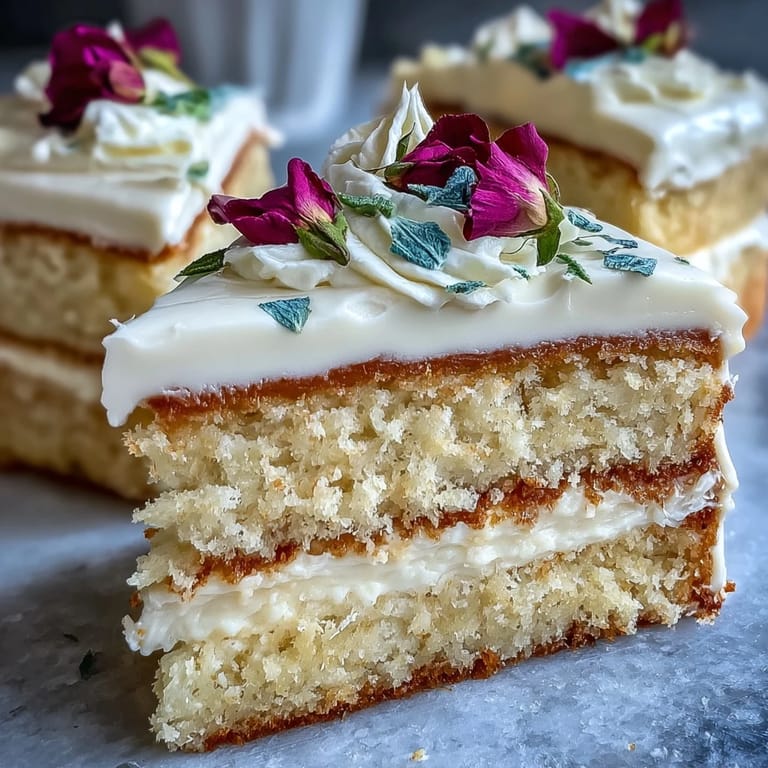
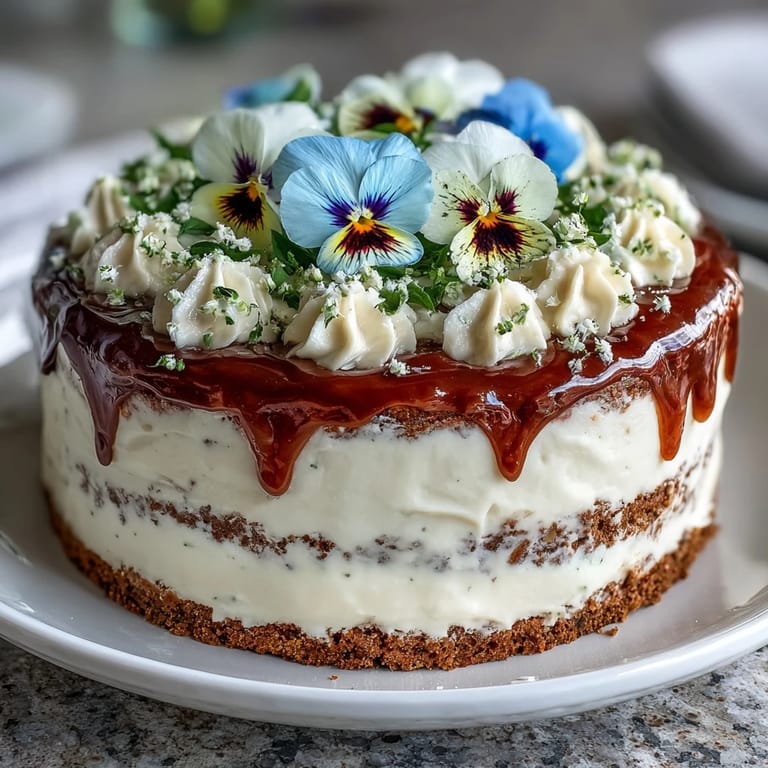
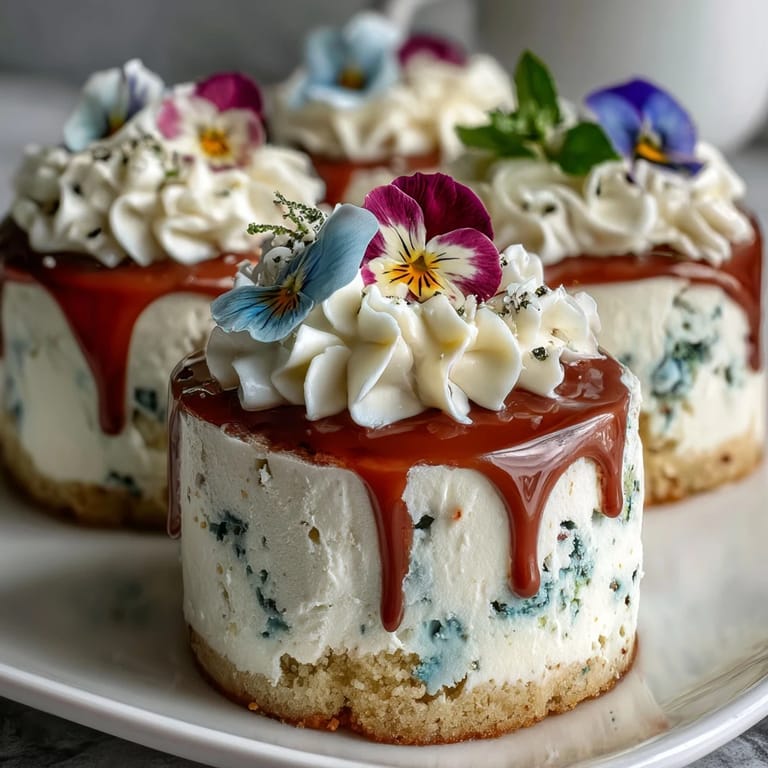
I'll never forget watching my niece's face light up when she saw six perfect little cakes lined up on the table, each one different—some with purple violas, others with orange nasturtiums. Her friends gathered around like they were discovering treasure, and suddenly the kitchen didn't feel quiet anymore. That's when I realized these weren't just cakes; they were edible invitations to feel special.
Ingredients
- All-purpose flour (1 1/4 cups): The foundation that keeps these cakes tender and delicate—don't sift it before measuring or you'll end up with something dense.
- Baking powder (1 tsp): This gentle leavening agent creates the perfect crumb structure without making the cakes too airy or fragile.
- Salt (1/4 tsp): A pinch that rounds out the sweetness and makes the lemon flavor sing.
- Unsalted butter (1/2 cup for cakes, 3/4 cup for frosting): Room temperature is non-negotiable here—cold butter won't cream properly and you'll lose that light, fluffy texture.
- Granulated sugar (3/4 cup): The sweetness that balances the bright lemon without drowning it out.
- Large eggs (2, room temperature): Cold eggs won't incorporate smoothly, so pull them out of the fridge while you're prepping everything else.
- Pure vanilla extract (1 tsp for cakes, 1 tsp for buttercream): The quality here matters more than you'd think—cheap vanilla tastes thin and hollow.
- Lemon zest (1/2 tsp): Fresh zest from an unwaxed lemon gives you that bright, real lemon flavor that bottled juice can never replicate.
- Whole milk (1/2 cup): Room temperature milk incorporates into the batter without shocking the delicate emulsion you've created.
- Powdered sugar (2 cups, sifted): Lumpy powdered sugar ruins buttercream smoothness, so take the time to sift it.
- Heavy cream or milk (1-2 tbsp for buttercream): This adjusts the consistency to exactly what you need—some days you'll want more, some less.
- Food coloring (pastel shades, optional): A tiny drop goes a long way, so add it slowly and watch the color bloom into the buttercream.
- Edible flowers (1 cup): Source these from a reputable supplier or grow them yourself—store-bought flowers are often treated with pesticides that aren't meant for eating.
Tired of Takeout? 🥡
Get 10 meals you can make faster than delivery arrives. Seriously.
One email. No spam. Unsubscribe anytime.
Instructions
- Heat your oven and prepare:
- Preheat to 350°F (175°C) and line a 9x13 inch rimmed baking sheet with parchment paper, then give it a light grease so nothing sticks. Having everything ready before you start mixing keeps the batter from sitting around too long and losing its lift.
- Combine your dry ingredients:
- In a medium bowl, whisk together the flour, baking powder, and salt—this distributes the leavening evenly throughout and prevents lumps. Set it aside and don't skip this step even though it feels repetitive.
- Cream the butter and sugar:
- Beat them together for about three minutes until the mixture looks pale, fluffy, and slightly lighter in color than when you started. This process incorporates tiny air bubbles that will make your cakes tender, so don't rush it.
- Bring the eggs in one at a time:
- Add each egg individually and beat well after each addition so it fully incorporates before the next one arrives. Then mix in the vanilla and lemon zest, beating just until combined.
- Alternate wet and dry ingredients gently:
- Add half the flour mixture first, then the milk, then the remaining flour, mixing gently after each addition until the batter just comes together. Over-mixing at this point creates tough cakes, so stop as soon as you don't see streaks of flour.
- Spread and bake:
- Pour the batter evenly onto your prepared sheet and bake for 18-22 minutes until a toothpick inserted in the center comes out clean or with just a few moist crumbs. The cake should spring back lightly when you touch it.
- Cool completely before cutting:
- Let the cake cool all the way to room temperature on the baking sheet—this prevents crumbly layers that fall apart during assembly. Trying to cut warm cake is a frustrating experience you only need to learn once.
- Cut your cake circles:
- Using a 2.5-3 inch round cutter, cut out 12 circles from the cooled cake, re-rolling scraps gently if needed. You'll have exactly 6 mini layer cakes with two rounds each.
- Make the buttercream:
- Beat the softened butter until creamy, then gradually add the sifted powdered sugar a bit at a time, scraping down the bowl as you go. Add the vanilla, salt, and milk, beating until light and fluffy—this takes patience but makes all the difference.
- Tint if you're feeling festive:
- Add food coloring drop by drop, mixing well after each addition so you don't accidentally create a shade too bold. Pastel colors look elegant and less artificial than bright hues.
- Assemble your mini cakes:
- Place one cake round on a serving plate, spread with buttercream, top with another round, and add another thin layer of buttercream on top. Repeat until you have 6 individual cakes standing proud.
- Decorate with flowers:
- Spread a final layer of buttercream on top of each mini cake and arrange edible flowers in whatever pattern feels right to you. Some people create neat circles; I prefer a scattered, just-picked-from-the-garden look.
- Chill before serving:
- Give the cakes 15 minutes in the refrigerator so the buttercream sets and the whole thing holds together beautifully when eaten. This also lets the flavors meld in a way that tastes more intentional.
 Save
Save What surprised me most wasn't how impressive these cakes looked—it was how they tasted. The crumb was surprisingly tender despite being so delicate, and the subtle lemon background made the vanilla feel fresher than it ever does on its own. By the time the kids had finished their cakes, my sister was already asking when I'd make them again.
The Magic of Mini Cakes
There's something psychologically satisfying about having your own perfect little cake instead of fighting for a decent-sized slice from a larger dessert. Each person feels celebrated individually, and the presentation automatically looks fancy without requiring any advanced decorating skills. I've noticed people eat more slowly and mindfully when they have their own special portion, which somehow makes the whole experience feel more luxurious.
Working with Edible Flowers
The first time I used edible flowers, I bought them from a standard florist without thinking twice, and my mom gently pointed out that they'd been sprayed with preservatives. Now I source them from specialty food stores, farmers markets, or I grow a few varieties myself in a small corner of my garden specifically for cooking. Violas have a delicate floral taste that doesn't overpower, nasturtiums bring a slight peppery note that's surprising, and pansies are mostly decorative but feel velvety on your tongue.
Making These Cakes Your Own
Once you've mastered the basic recipe, the variations become endless and exciting. You could brush each cake layer with a light citrus syrup before frosting to add extra moisture and depth, or experiment with different buttercream tints to match your color scheme. The scraps left over from cutting circles are perfect for crumbling into cake pops or layering into a humble trifle that tastes just as good as the fancy individual cakes.
- Try adding a tiny pinch of almond extract to the buttercream for a subtle flavor upgrade that nobody can quite identify.
- If edible flowers aren't available, candied violets or a simple dusting of edible pearl dust creates elegance just as effectively.
- These cakes keep beautifully in an airtight container in the refrigerator for up to two days, making them perfect for advance party prep.
 Save
Save These mini layer cakes have become my go-to celebration dessert because they're equal parts impressive and approachable. Every time I make them, I remember my niece's birthday and how something homemade and thoughtful tastes so much better than anything store-bought ever could.
Recipe Guide
- → What kind of flowers can be safely used for decoration?
Use only verified edible flowers like violas, pansies, and nasturtiums, ensuring they are food-safe and pesticide-free.
- → How can I make the buttercream smooth and fluffy?
Beat softened butter until creamy, then gradually add powdered sugar and liquids, beating enough to incorporate air for a light texture.
- → Can the mini cakes be prepared ahead of time?
Yes, you can bake the layers and make the buttercream in advance, then assemble and decorate right before serving for best freshness.
- → What is the best way to achieve even cake layers?
Spread the batter evenly on a rimmed baking sheet and bake until a toothpick comes out clean, then use a round cutter for consistent layers.
- → How do I add flavor without overpowering the delicate cake?
Use subtle additions like vanilla extract and lemon zest in the batter, and consider brushing layers with a light citrus syrup before assembly.