 Save
Save My neighbor brought over a container of mango sticky rice one humid afternoon, and I watched her plate it with the kind of casual confidence that only comes from making something a hundred times. The way the rice clung together in that creamy coconut embrace, the mango slices arranged like they were meant to be admired—I was sold before I even tasted it. That evening, I decided this wasn't just a dessert to master, it was a meditation in patience and coconut milk.
I made this for my book club once, and nobody touched the actual desserts I'd also brought—they just kept going back for more rice and mango. One friend asked if I'd learned this from a Thai grandmother, which made me laugh so hard I nearly dropped the coconut milk. That's when I realized this dish has a kind of magic that makes people assume you're far more sophisticated than you actually are.
Ingredients
- Glutinous (sticky) rice: This is the non-negotiable foundation—regular jasmine or basmati rice will betray you, so hunt down the proper stuff at an Asian market where they know what you need.
- Full-fat coconut milk: Don't reach for the lite version; the richness is what makes this sing, and those extra grams of fat are doing essential work here.
- Granulated sugar: Dissolves cleanly into the coconut milk without any grainy texture lingering, which matters more than you'd think.
- Salt: A small amount balances the sweetness and makes the coconut flavor deepen, almost like it's calling to something in your mouth.
- Ripe mangoes: Choose ones that smell sweet and yield gently to pressure—underripe mangoes will taste like you're eating a perfumed rock, and overripe ones fall apart.
- Cornstarch slurry: Optional but useful if you want a sauce that clings instead of pooling, though some prefer the looser version.
- Toasted sesame seeds or mung beans: These are the final garnish that transforms a simple plate into something that looks intentional.
Tired of Takeout? 🥡
Get 10 meals you can make faster than delivery arrives. Seriously.
One email. No spam. Unsubscribe anytime.
Instructions
- Rinse and soak the rice:
- Run cold water over the sticky rice, stirring gently with your fingers until the water runs almost clear—it takes longer than you'd expect but makes the final texture much better. Let it soak for at least four hours, though overnight is when you really taste the difference.
- Steam until translucent:
- Line your steamer basket with cheesecloth, add the drained rice, and let it sit over boiling water for 25 to 30 minutes until each grain turns slightly see-through and tender. You'll know it's done when a grain breaks open easily but still holds its shape.
- Prepare the coconut sauce:
- Pour coconut milk into a saucepan with sugar and salt, then warm it gently while stirring—never let it boil or the coconut can separate and turn grainy. The moment the sugar dissolves completely, you're done.
- Marry the rice and sauce:
- Transfer your hot rice to a bowl, pour the warm coconut mixture over it, stir everything together, then cover it and let it sit for 15 minutes. This resting time is when the magic happens; the rice absorbs all that coconut flavor and becomes something more than the sum of its parts.
- Make the topping:
- Combine the smaller amount of coconut milk with sugar, salt, and cornstarch slurry if using thickness appeals to you. Heat gently over medium heat, stirring often, until it reaches the consistency you want—thin and pourable or silky and coating.
- Assemble and serve:
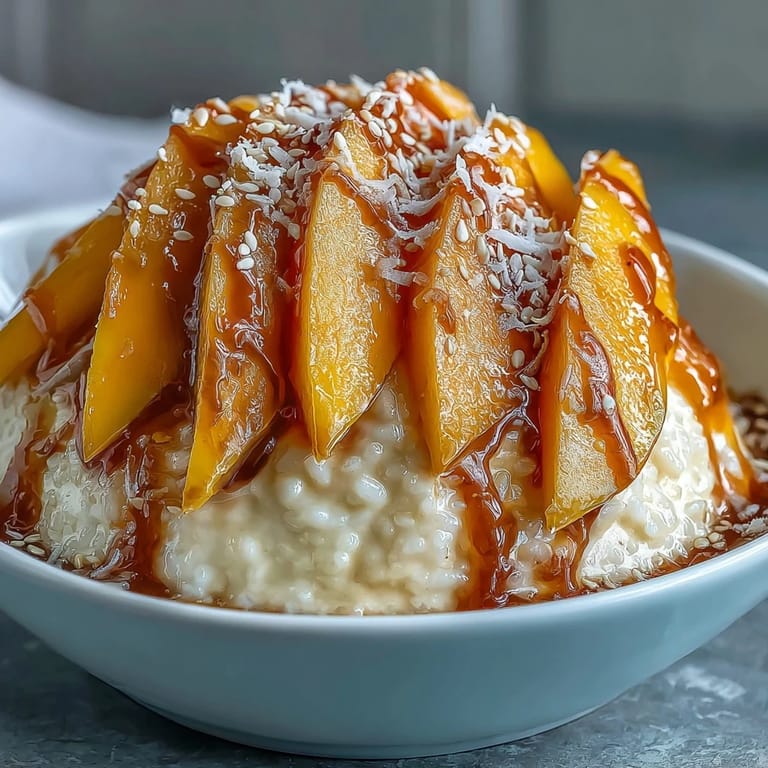
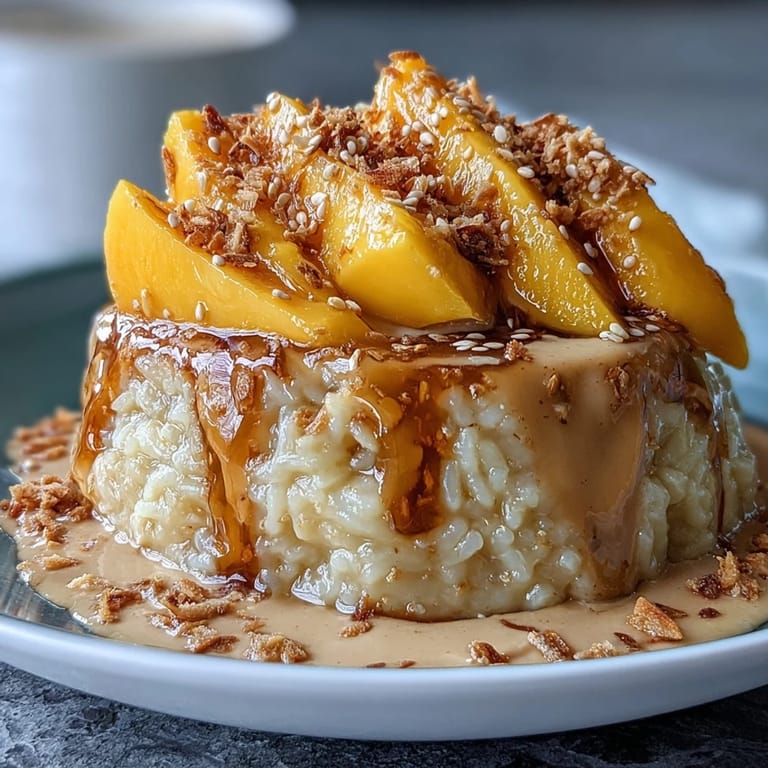
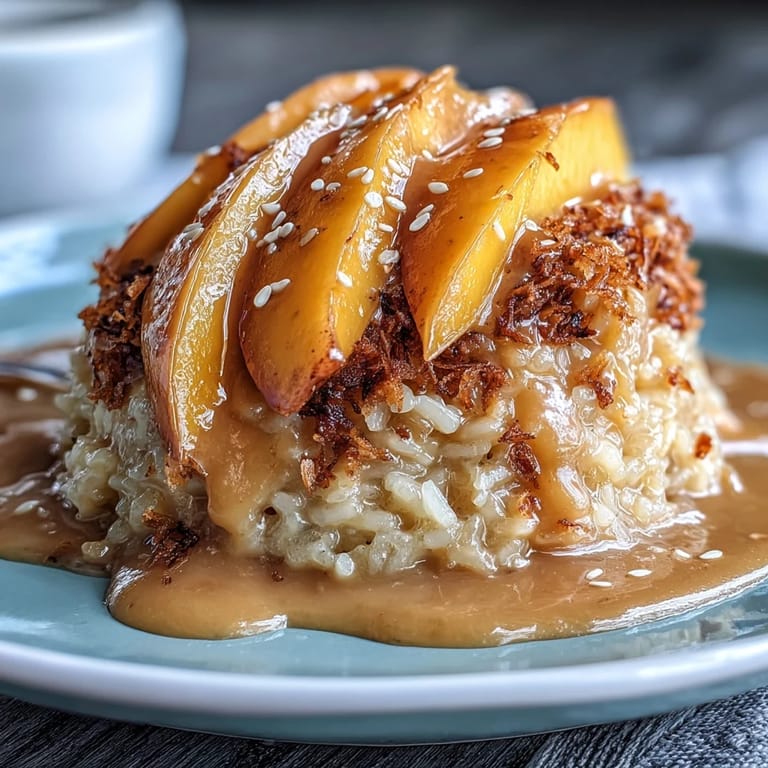
- Mound the sticky rice onto plates, arrange fresh mango slices beside it, then drizzle the coconut topping over everything. Finish with a sprinkle of toasted sesame seeds or mung beans if you want that final flourish.
 Save
Save There's a moment when you pour that coconut sauce over hot rice, and the steam rises up carrying that fragrant coconut smell, and you realize you've just created something that tastes like someone who loves you cooked it. That's the moment I understood why this dessert shows up at celebrations and quiet weeknight dinners alike.
Why Mangoes Matter Here
The mango isn't just a topping; it's the whole reason you'd make this instead of something else. Its cool sweetness and slight tartness cut through the richness of the coconut in a way that feels almost necessary, like they were meant to exist on the same plate. The best ones smell floral and slightly honeyed, and when you slice into them, the flesh should be creamy enough to feel luxurious but firm enough to hold its shape.
Timing and Temperature
This dish lives in a sweet spot between warm and room temperature, which is why plating while the rice is still steaming but the mango is cool works so well. Serve it all at once while everything is at its intended temperature—the contrast is what makes your mouth remember it. If you make this ahead, let everything come back to room temperature before assembling, rather than reheating and losing that delicate balance.
Small Touches That Elevate Everything
The optional pandan leaf in the coconut milk adds a subtle vanilla-like fragrance that makes people ask what you did differently. Toasting your own sesame seeds rather than using store-bought ones changes the flavor from faint to genuinely present, though it's a small detail most people won't consciously notice. The real secret is letting each component do its job without overcomplicating anything—simplicity here is actually sophistication.
- Toast your sesame seeds in a dry pan over medium heat for just two minutes, then use them immediately for the best flavor.
- If you can't find ripe mangoes, underripe ones can be gently warmed with a touch of honey to coax out more flavor.
- Make the rice a few hours ahead and let it sit covered at room temperature—it actually firms up slightly and becomes easier to mound.
 Save
Save This is the kind of dessert that makes people feel cared for without requiring you to be in the kitchen all day. Once you've made it once and tasted how everything comes together, you'll find yourself making it again and again.
Recipe Guide
- → What type of rice is ideal for this dish?
Glutinous or sticky rice is essential to achieve the desired chewy and tender texture.
- → How is the coconut sauce prepared?
Coconut milk is gently heated with sugar and salt until the sugar dissolves, avoiding boiling to keep a smooth texture.
- → Can the coconut topping be thickened?
Yes, mixing cornstarch with water before adding to the coconut sauce helps thicken it slightly for a creamier finish.
- → How long should the rice soak before cooking?
Soaking for at least 4 hours or overnight softens the rice for even steaming.
- → What garnishes complement this dish?
Toasted sesame seeds or mung beans add a nutty crunch enhancing the creamy and sweet flavors.