 Save
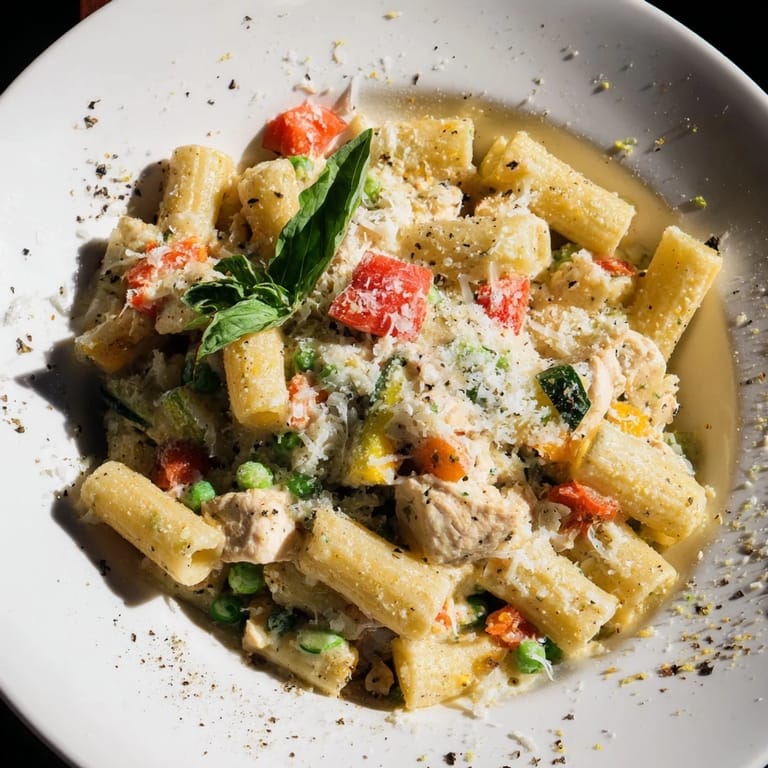
Save I discovered this pasta while staring at my fridge one Tuesday evening, surrounded by half-empty containers and the nagging feeling that something good was hiding in there. My roommate had left some cream, there was a lone chicken breast, and the pantry held odds and ends—exactly the kind of culinary puzzle that either becomes dinner or becomes regret. That night, I invented the 5-4-3-2-1 formula without meaning to, just grabbing five vegetables, four pantry basics, three cheeses, two garnishes, and one final flourish. What came out was so comforting and deliberately imperfect that I've made it dozens of times since, each version slightly different depending on what needs using up.
The first time I served this to friends, I almost didn't—I was embarrassed by how simple it looked, how it seemed like I'd just thrown everything together. But the moment they tasted it, something shifted; people started asking for seconds before finishing their first plate. My friend Marcus said it tasted like someone had been cooking all afternoon, which made me laugh because I'd spent less time on it than the wine was chilling. That's when I realized this dish does something special: it tastes intentional even when it's born from improvisation.
Ingredients
- 1 large chicken breast, diced: Dicing instead of leaving it whole means every bite has protein, and it cooks faster in the skillet—about five to six minutes if you keep the heat medium-high.
- 300 g dried pasta: Penne or fusilli holds onto the creamy sauce beautifully, but use whatever shape you have; just cook it a minute under al dente since it'll finish cooking with the sauce.
- 5 vegetables (cherry tomatoes, peas, bell pepper, zucchini, spinach): These aren't fixed—swap in what you have, keeping roughly half a cup of each so the ratio stays balanced and nothing overwhelms the dish.
- 2 tbsp olive oil: This is your foundation for flavor; don't skip it or substitute with something neutral, as the fruity notes build complexity.
- 2 cloves garlic, minced: Mince it fine so it distributes evenly and doesn't burn; add it right before the bell pepper so it stays fragrant without turning bitter.
- 1 tsp dried Italian herbs: This ties everything together, but if you only have oregano or basil on hand, either works—just use a bit less since they're stronger.
- 1/2 cup canned diced tomatoes: Canned actually works better than fresh here because the acidity cuts through the cream and prevents the sauce from feeling heavy.
- 1/2 cup Parmesan cheese, grated: Grate it fresh if you can; pre-grated versions have anti-caking agents that make the sauce feel gritty.
- 1/2 cup shredded mozzarella: This adds stretch and mild flavor; if you only have cheddar, it'll taste different but still delicious.
- 1/3 cup heavy cream: Pour it in at the end off heat to keep it from breaking, and save some pasta water to adjust the consistency if needed.
- Fresh basil and cracked black pepper for garnish: These finish what the cream started, adding brightness that prevents the dish from tasting too rich.
- Lemon zest as the final touch: Zest it over the plate just before eating so it stays sharp and doesn't get lost in the heat.
Tired of Takeout? 🥡
Get 10 meals you can make faster than delivery arrives. Seriously.
One email. No spam. Unsubscribe anytime.
Instructions
- Boil your pasta until just underdone:
- Get a large pot of salted water rolling, then add your pasta a minute before the package says it's done. You want it with just a tiny bit of resistance in the center because it'll keep cooking in the skillet with the sauce.
- Sear the chicken until golden:
- Heat olive oil in a large skillet over medium-high heat until it shimmers, then add the diced chicken with a pinch of salt and pepper. Let it sit for two minutes without stirring so it gets a golden crust, then turn and cook another three to four minutes until cooked through.
- Build the vegetable base:
- Leave the chicken to rest on a plate, then add minced garlic and diced bell pepper to the same skillet. The garlic hits the hot pan and blooms almost immediately, filling your kitchen with that signal that something good is happening.
- Layer in the softer vegetables:
- After the bell pepper softens, add cherry tomatoes, zucchini, and Italian herbs, stirring occasionally for three to four minutes so nothing sticks or browns too hard.
- Add the tomatoes and greens:
- Stir in your canned tomatoes, frozen peas, and spinach, then simmer for three to four minutes while the spinach wilts and the peas warm through. Taste a vegetable; it should be tender but not falling apart.
- Bring it all together with cream and cheese:
- Turn the heat low, return the chicken to the skillet, then pour in the cream and half your cheese, stirring gently until everything melts into a silky sauce. If it feels too thick, splash in some reserved pasta water a little at a time.
- Marry the pasta with the sauce:
- Drain your pasta and add it to the skillet, tossing everything together with tongs so every strand gets coated. If it looks dry, add another splash of pasta water and keep tossing until it flows like a light cream.
- Finish and serve:
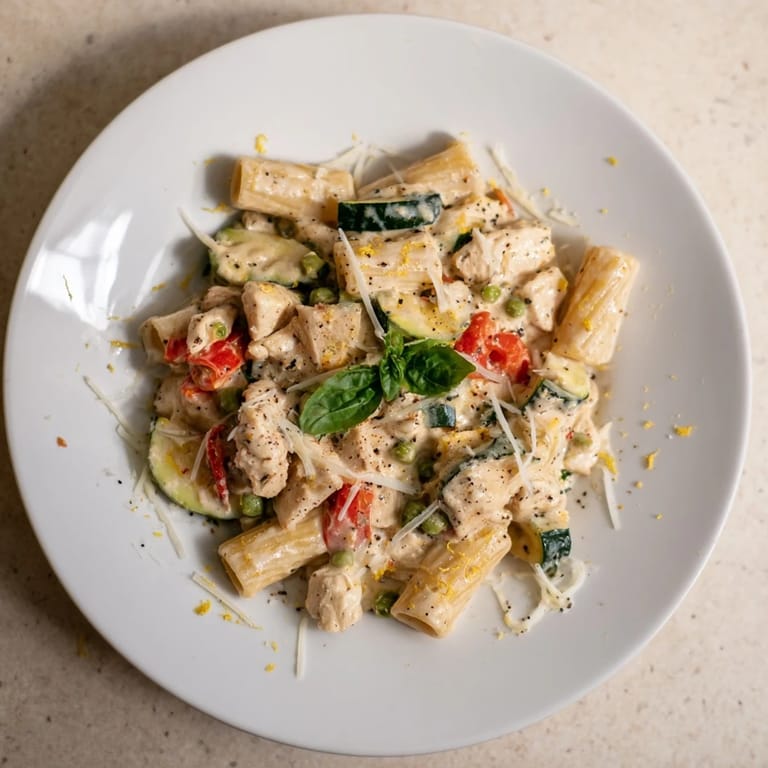
- Taste it and adjust salt, pepper, or herbs, then divide into bowls and top with remaining cheese, fresh basil, cracked pepper, and a generous shower of lemon zest.
 Save
Save I made this for my mom on a night when she'd had a rough day at work, and she sat down and didn't say anything for the first minute except to keep eating. Later she told me it reminded her of Sunday dinners we used to have, except better because there was no stress—just food that tasted like someone cared. That's when I realized this dish does something beyond nourishment; it wraps you in a moment of realness.
The 5-4-3-2-1 Formula Explained
This recipe works because it follows a simple math: five vegetables for color and texture, four pantry items for depth, three cheeses for richness and complexity, two garnishes for finish, and one final accent that ties it all together. The formula isn't rigid—it's a rhythm that lets you improvise without losing the plot. Once you understand why each category matters, you can swap freely and never make the same dish twice, yet every version feels purposeful.
Flexibility and Swaps
Vegetarians can skip the chicken and add a can of chickpeas or double down on zucchini and mushrooms for substance. Sausage, shrimp, or ground turkey all work if you brown them the same way and season generously. If you don't have heavy cream, half-and-half makes it lighter, or you can use cream cheese thinned with pasta water for a different kind of richness. The beauty is that this dish meets you where you are, ingredient-wise, without asking for apologies.
Wine and Pairings
A crisp white like Pinot Grigio cuts through the cream and complements the lemon zest, making each bite feel brighter. If you prefer red, a light Pinot Noir won't overwhelm the dish. This pasta is hearty enough to anchor a meal without needing anything else, though a simple green salad with vinaigrette alongside it feels generous without being fussy.
- Pair with garlic bread if you want to extend the meal and feel indulgent.
- A sharp green salad with lemon dressing balances the richness perfectly.
- Finish with something light—fruit or sorbet—so the creaminess doesn't sit too heavy.
 Save
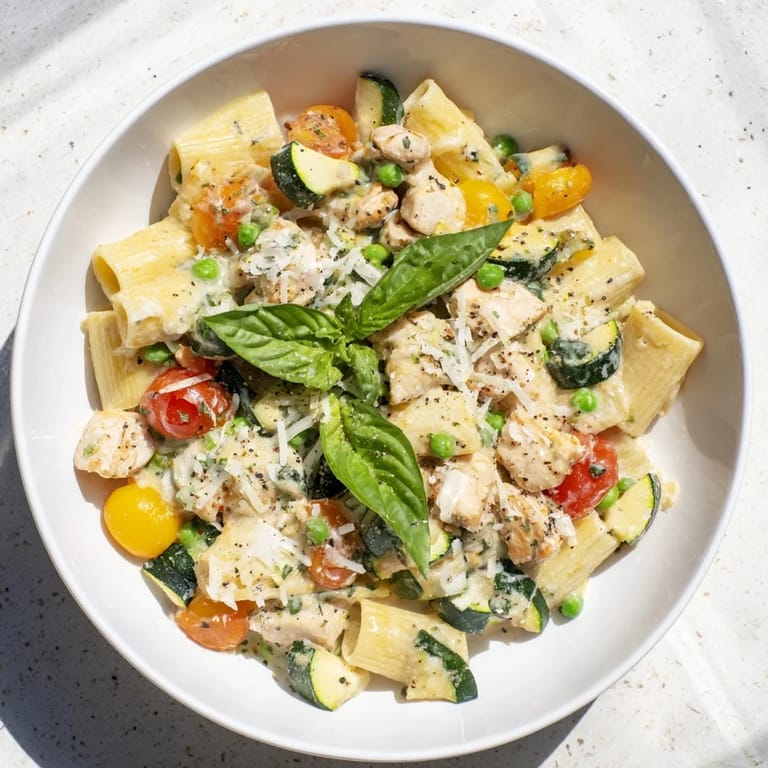
Save This dish lives in the space between control and chaos, where the best home cooking happens. Make it when you need comfort or when your fridge needs clearing, because either way, you'll end up with something that tastes like it took all afternoon.
Recipe Guide
- → Can I substitute the chicken with other proteins?
Yes, cooked sausage, shrimp, or even chickpeas make excellent alternatives, allowing flexibility based on preference or dietary needs.
- → What types of pasta work best in this dish?
Short pasta shapes like penne, fusilli, or similar varieties hold the sauce well and pair beautifully with the vegetables and chicken.
- → How can I lighten the creamy sauce?
Replacing heavy cream with half-and-half or a milk alternative can lighten the sauce while maintaining creaminess.
- → Is it possible to make this dish vegetarian?
Absolutely. Skip the chicken and add extra vegetables or protein-rich options like chickpeas to keep it hearty and satisfying.
- → What pantry staples are key to the flavor profile?
Olive oil, garlic, dried Italian herbs, and canned tomatoes form the flavorful base that enhances the fresh ingredients.
- → How do I achieve a creamy sauce consistency?
Adding cheeses like Parmesan and mozzarella along with cream and a splash of reserved pasta water creates a rich, smooth sauce that coats every bite.