 Save
Save My partner came home one November evening with a package of venison from a friend's hunt, and I stood there staring at it, wondering what on earth I'd do with game meat I'd never cooked before. A quick rummage through the cupboard turned up a bottle of sloe gin my mum had given me years ago, and something clicked. That night, as the stew simmered and filled our kitchen with the most incredible deep, almost wild aroma, I realized I'd stumbled onto something special. The kind of dish that tastes like autumn and effort and countryside all at once.
I made this for four friends on a cold Sunday, and watching them go quiet when they took their first spoonful was genuinely satisfying. One of them asked if I'd made it in a restaurant kitchen, which was hilarious because I was wearing an old sweatshirt covered in flour. That afternoon felt like proof that sometimes the most memorable meals come from barely knowing what you're doing but trusting the process anyway.
Ingredients
- Venison shoulder or stewing venison (800 g), cut into 3 cm cubes: Buy from a good butcher or online game supplier and don't skip the browning step, as it locks in flavor and creates depth.
- Olive oil (2 tbsp): Use a robust one you don't mind tasting, as it builds the base flavor.
- Onion (1 large), finely chopped: This is your flavor foundation, so take time to chop it evenly so it cooks at the same rate.
- Carrots (2), sliced: Cut them on a slight angle so they look intentional and cook more evenly.
- Celery stalks (2), diced: The holy trinity of aromatics matters here, and celery adds subtle earthiness that anchors the game.
- Garlic cloves (2), minced: Fresh garlic makes a real difference, so don't use the pre-minced kind.
- Tomato paste (2 tbsp): This deepens the color and adds umami that makes the stew feel savory and complete.
- Sloe gin (150 ml): It's tart, slightly herbal, and slightly sweet all at once, which is exactly what venison needs to feel balanced.
- Beef or game stock (400 ml): Use homemade if you have it, or a good quality one with minimal additives.
- Redcurrant jelly (1 tbsp): This adds subtle sweetness without being obvious and helps glaze the meat.
- Bay leaves (2) and fresh thyme sprigs (2): These are your gentle herbs that infuse without overpowering.
- Juniper berries (1 tsp), lightly crushed: They taste almost piney and are the secret that makes people ask what your special ingredient is.
- Salt and freshly ground black pepper, to taste: Season as you go, not just at the end.
- Whole milk (750 ml) and water (250 ml): The combination keeps polenta from becoming gluey.
- Polenta (150 g): Quick-cooking saves time but regular polenta has better texture if you're patient.
- Unsalted butter (40 g) and grated Parmesan (50 g): These finish the polenta with richness and salty depth.
Tired of Takeout? 🥡
Get 10 meals you can make faster than delivery arrives. Seriously.
One email. No spam. Unsubscribe anytime.
Instructions
- Brown your venison like you mean it:
- Heat oil in a large casserole over medium-high heat until it shimmers, then add venison in batches, giving each piece room to brown properly. Don't crowd the pan or you'll steam it instead of sear it, which changes everything.
- Build your flavor base:
- In the same pot, soften the onion, carrots, and celery for 5-7 minutes, then add garlic and tomato paste and cook for another minute until it smells like home. This slow beginning is where the depth comes from.
- Deglaze with sloe gin:
- Pour in the sloe gin and let it bubble for about 2 minutes, scraping up all those golden bits stuck to the bottom. Those bits are pure flavor.
- Build the stew:
- Add stock, redcurrant jelly, bay leaves, thyme, and juniper berries, then season with salt and pepper. Bring it to a simmer, cover, and let it cook gently on low heat for 2 hours, stirring occasionally.
- Cook the polenta while you wait:
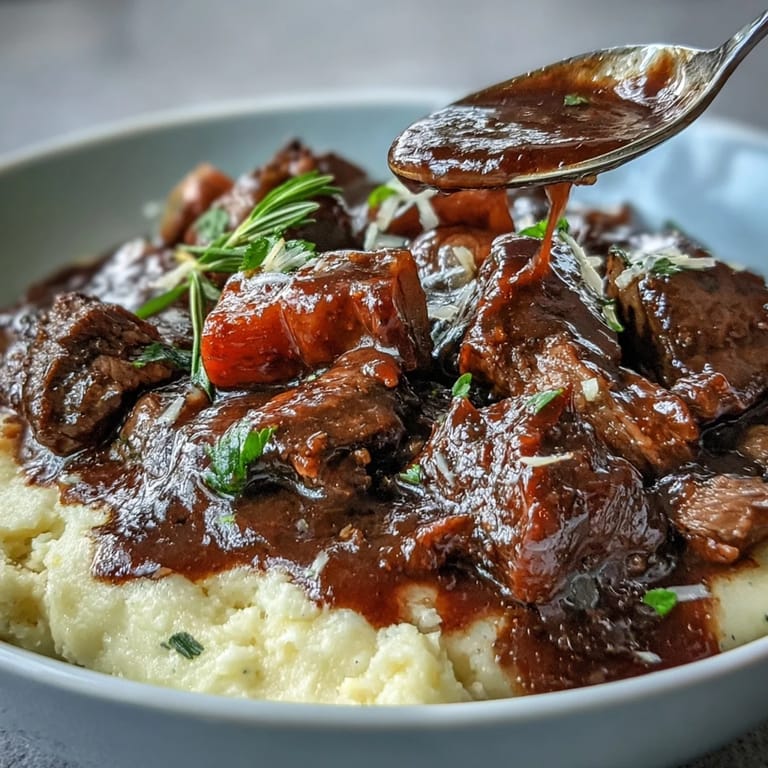
- Heat milk and water in a saucepan until just simmering, then whisk in polenta gradually so it doesn't clump. Stir constantly over low heat for 5-10 minutes until it's thick and creamy, then finish with butter and Parmesan.
- Bring it all together:
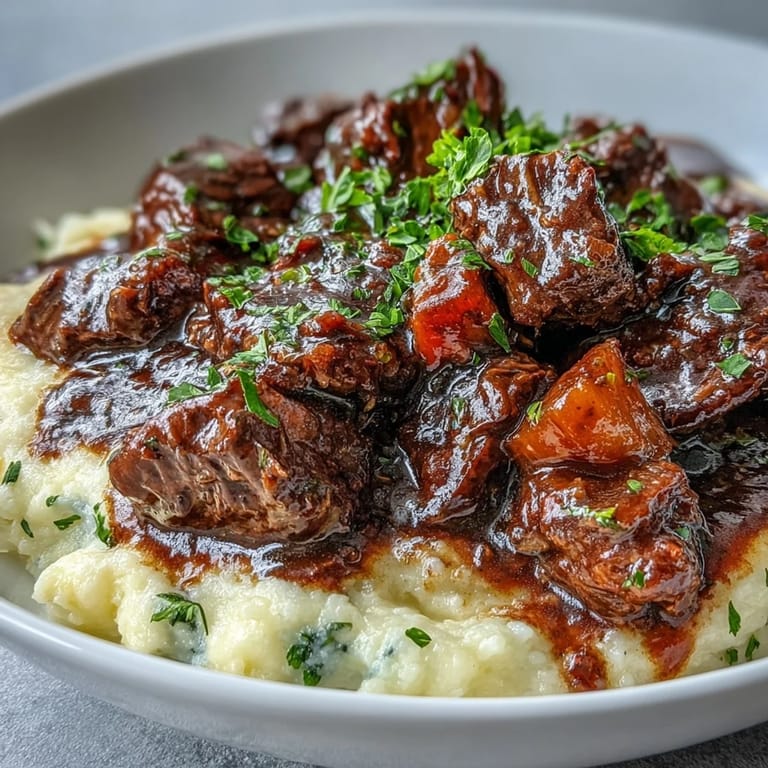
- Remove the bay leaves and thyme from the stew, then serve it hot over the polenta and watch people fall quiet when they taste it.
 Save
Save There's something about cooking with sloe gin that feels like you're in on a secret, like you know something about flavor that most people don't. And venison, which could taste wild and off-putting if you didn't respect it, becomes this tender, almost melancholic thing when you give it time and the right companions.
Why This Stew Works So Well
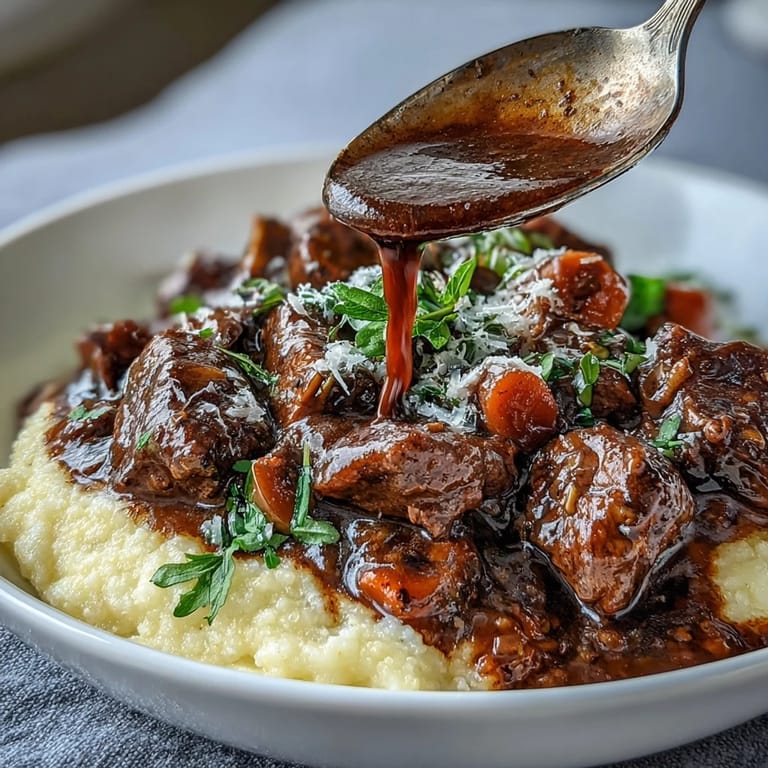
Game meat is lean, which means it needs fat and acidity to taste good, and this recipe has both. The sloe gin handles the acidity while the browning and butter handle the fat, and together they transform venison from something that might taste gamey into something that tastes intentional and elegant. The polenta underneath isn't just a vehicle, it's part of the harmony, soaking up all that glossy sauce so nothing goes to waste and every spoonful feels complete.
The Power of Slow Cooking
Two hours might feel like a long time, but that's when the real magic happens. The venison goes from firm and suspicious-looking to so tender it almost dissolves on your tongue, and all those flavors stop being separate ingredients and start being one thing. You could rush it in a pressure cooker if you really needed to, but the stove-top version gives you something richer, something that smells like home for hours.
Variations and Substitutions
This recipe is flexible enough to bend without breaking. If sloe gin feels too fancy or you can't find it, port or berry liqueur works beautifully, giving you similar sweetness and depth. Red wine added alongside the sloe gin makes it even richer, and some people swear by a splash of red currant juice if they want less alcohol. You can also serve it over mashed potatoes or buttered egg noodles instead of polenta, or even with crusty bread for soaking up the sauce.
- Add a splash of red wine with the sloe gin for extra richness and color.
- Try port, berry liqueur, or red currant juice if sloe gin isn't available.
- Serve over mashed potatoes, egg noodles, or crusty bread instead of polenta.
 Save
Save This is the kind of dish that makes you feel like you've done something worthwhile, like you've cooked something that matters. Serve it with a robust red wine and watch people remember this meal for longer than seems fair for something that started with a package of venison and a bottle of sloe gin.
Recipe Guide
- → Can I substitute the venison with another meat?
Yes, beef chuck or lamb shoulder work well as substitutes. Adjust cooking time as needed to ensure the meat becomes tender.
- → What can I use instead of sloe gin?
Port, berry liqueur, or a combination of red wine with a tablespoon of blackcurrant jam makes an excellent alternative.
- → Can I make this stew ahead of time?
Absolutely. The stew tastes even better the next day as flavors develop. Reheat gently and prepare fresh polenta when serving.
- → How do I know when the venison is properly cooked?
The venison should be fork-tender and easily pull apart after the full cooking time. If still tough, continue simmering for another 30 minutes.
- → Can I use instant polenta instead of regular?
Yes, quick-cooking polenta works perfectly and reduces preparation time significantly. Follow package instructions for cooking times.
- → What wine pairs best with this dish?
Full-bodied red wines like Shiraz, Cabernet Sauvignon, or a robust Côtes du Rhône complement the rich venison and berry notes beautifully.