 Save
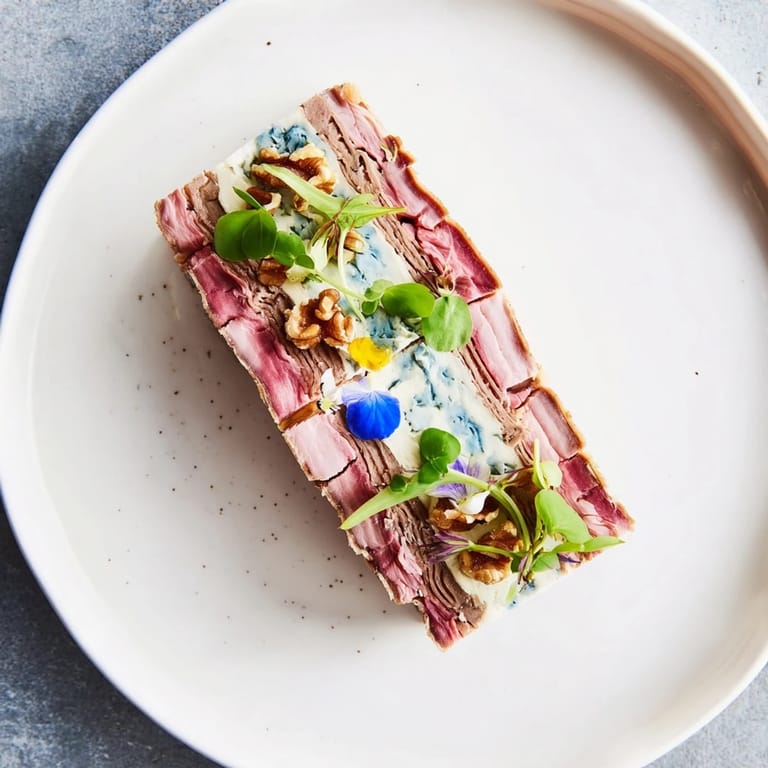
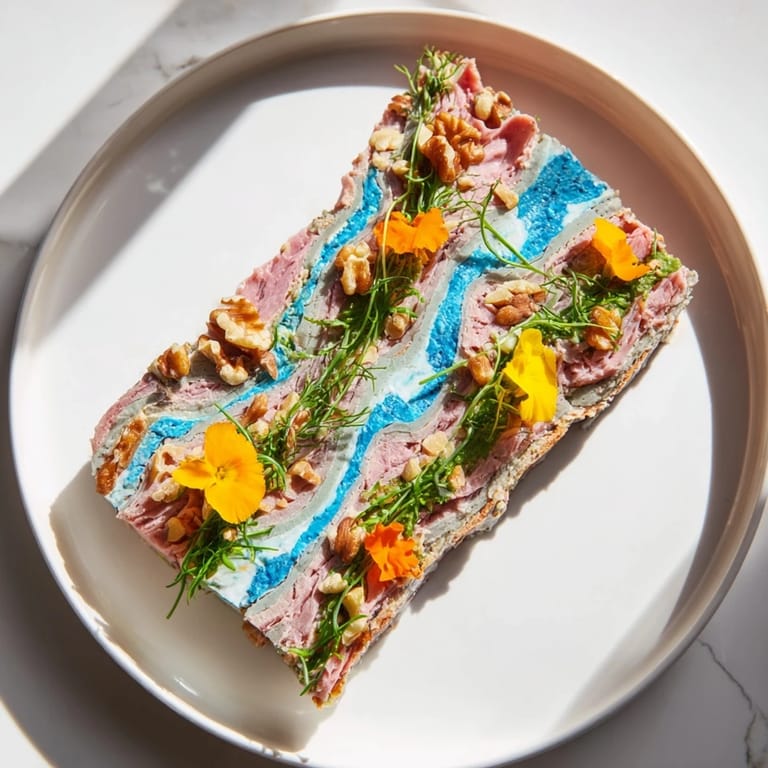
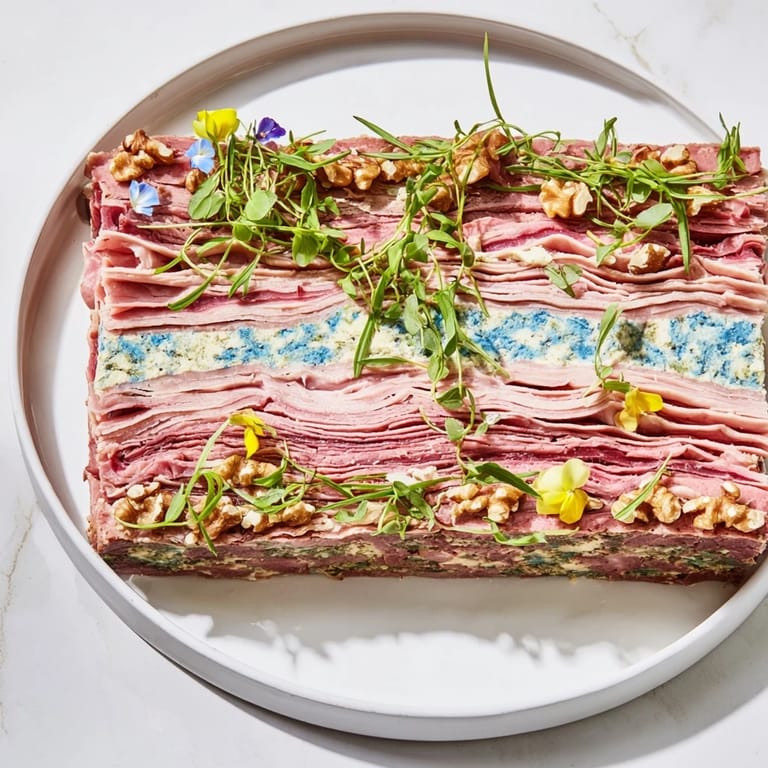
Save I stumbled upon the idea for this dish while standing at the edge of the South Rim, watching how the afternoon light caught the rust and bronze striations of the canyon walls. It struck me that food could tell that same geological story—layers of time, color, texture, all stacked to create something bigger than any single ingredient. That evening, back in my kitchen, I started experimenting with meats, imagining how to recreate that visual drama on a plate. The blue cheese mousse came later, almost by accident, when I was looking for something bold enough to be that striking river of color flowing through the center.
I made this for a dinner party last fall when I wanted to do something that felt both ambitious and personal. My friend Marcus arrived early and watched me unmold it, and the moment those layers revealed themselves—he actually gasped. That reaction, seeing people connect with something you've built layer by layer, became the whole reason I keep making it.
Ingredients
- Beef sirloin, thinly sliced (300 g): This is your foundation meat—choose good quality and slice it as thin as you can manage, almost transparent if possible, so the layers feel delicate rather than heavy.
- Turkey breast, thinly sliced (250 g): Turkey adds lightness and a subtle sweetness that prevents the terrine from becoming one-note; it's the palate cleanser between richer meats.
- Smoked ham, thinly sliced (200 g): The smoke adds depth and keeps things interesting; this is where you get those savory whispers that linger.
- Pork loin, thinly sliced (200 g): Pork brings tenderness and richness; make sure your butcher slices it consistently or it will fight you during layering.
- Blue cheese, crumbled (150 g): This is your river, so choose one you genuinely love—the strength of the blue cheese will set the whole tone, so taste it first.
- Cream cheese, softened (100 g): This tempers the blue cheese's sharpness and creates a mousse that stays creamy even when chilled; don't skip the softening step.
- Heavy cream (30 ml for mousse, 60 ml for binding): Heavy cream is what transforms the cheese mixture from grainy to silky, so measure it carefully.
- Fresh chives, finely chopped (1 tbsp): These add a whisper of onion without overpowering anything; they're essential for brightness.
- Fresh parsley, finely chopped (1 tbsp): Parsley is your green note, keeping things fresh and herbaceous.
- Eggs (4 large): These bind the layers together as everything cooks, creating a gentle custard that holds the structure—don't use room temperature eggs or the mixture won't emulsify properly.
- Whole milk (120 ml): Milk keeps the custard tender and prevents it from becoming rubbery; this ratio matters.
- Salt and black pepper: Season to your taste, but remember the blue cheese and ham are already salty, so go easy at first.
Tired of Takeout? 🥡
Get 10 meals you can make faster than delivery arrives. Seriously.
One email. No spam. Unsubscribe anytime.
Instructions
- Set your stage:
- Preheat your oven to 160°C and line your loaf pan with plastic wrap, leaving generous overhang on all sides—you'll fold this over at the end to seal everything in. Cold hands and a steady hand help here; don't rush this step because loose plastic will create air pockets.
- Make the binding custard:
- In a bowl, whisk together the eggs, milk, heavy cream, salt, and pepper until it's completely smooth and pale, about a minute of whisking. This mixture should feel like liquid silk; if you see flecks of egg white, keep whisking.
- Blend your river:
- Combine the blue cheese, cream cheese, heavy cream, chives, parsley, and black pepper in another bowl and blend or stir until you have a smooth, spreadable mousse with no lumps. Taste it now and adjust the pepper if needed; this is your moment to get it right.
- Begin the canyon walls:
- Start arranging your first meat layer—beef is a good beginning because it's mild—along one side of the pan, overlapping the slices slightly like roof shingles. The overlapping creates that natural cliff effect you're after.
- Build your layers:
- Add turkey over the beef, then ham, then pork, angling each layer slightly so they slope downward like canyon walls do. After every 2 or 3 meat layers, brush lightly with the egg custard—just enough to bind, not enough to soak, or everything becomes heavy.
- Insert the river:
- When you're roughly halfway up the pan, spoon your blue cheese mousse in a thick line down the center, then continue layering meats around and over it, keeping that cliff-like pattern going. The mousse should be visible if you look from the side, creating that river-through-the-canyon effect.
- Seal and prepare for the bath:
- Finish with a final meat layer, then fold the overhanging plastic wrap over the top to seal it completely. Cover the entire thing tightly with foil; any steam that escapes will dry out your terrine.
- Cook gently:
- Place your loaf pan into a larger roasting dish and fill the roasting dish with hot water halfway up the sides of the loaf pan—this bain-marie keeps everything cooking evenly and gently. Bake for 1 hour 15 minutes; the terrine will be set but still tender when you press it gently.
- Cool and chill:
- Remove from the oven and let it cool to room temperature on the counter—this takes about 30 minutes and is crucial because you don't want condensation forming when you refrigerate. Then refrigerate for at least 4 hours, preferably overnight, so the custard fully sets and the flavors marry.
- Unmold and reveal:
- Run a thin knife around the edges, then carefully tip the terrine onto a serving platter, peeling away the plastic wrap slowly and checking that everything holds together. If it seems fragile, chill it a bit longer before attempting this.
- Slice and serve:
- Use a sharp, warm knife—wipe it between cuts—and slice thickly so you can see all those layers and that beautiful blue cheese river. Each slice should feel like you're revealing something precious.
 Save
Save The first time someone cut into this at a table, I watched their fork move from plate to mouth, and I saw their face shift—that moment when food becomes an experience instead of just sustenance. That's when I understood why the visual part mattered so much; it's not about being fancy for its own sake, it's about creating a memory.
Why This Works as a Main Event
This terrine exists in this interesting space where it's undeniably impressive but also quietly humble. It's made of familiar meats and simple techniques—no foams, no tweezers, no pretension—but the result feels like something from a restaurant kitchen. You're not doing anything magical; you're just respecting your ingredients, layering them with intention, and giving them time to become something greater than they were individually. That's a lesson that extends far beyond cooking.
Serving Suggestions That Make Sense
Serve this thickly sliced, at room temperature or just slightly cool, so the flavors are fully awake. Toasted brioche or crusty bread is the only accompaniment you need—something to catch the flavors and the texture. A light red wine works beautifully, or if you prefer white, choose something crisp that won't compete with the blue cheese.
Variations and Substitutions
This recipe is structured enough to hold together but flexible enough to adapt to what you love. If you want smokier flavors, swap some of the regular meats for smoked duck, prosciutto, or even smoked salmon. If blue cheese feels too aggressive, a herbed goat cheese mousse creates a milder, earthier center while maintaining that visual drama. The beauty of understanding the technique is that you can then bend it without breaking it.
- Try a truffle-infused cream cheese layer for a luxurious variation, stirring in finely minced black truffle or truffle oil into the cream cheese before blending.
- Add a thin layer of pistachios or crushed walnuts between meat layers for texture and visual interest, pressing them gently into place.
- Make individual terrines in small loaf pans or ramekins if you prefer portion control or want to serve multiple variations at once.
 Save
Save Make this when you want to cook something that feels like love made edible, when you have time to breathe and layer and wait. It's worth it.
Recipe Guide
- → How is the blue cheese river made?
It's a smooth blend of blue cheese, cream cheese, heavy cream, fresh chives, parsley, and freshly ground black pepper, creating a creamy and flavorful center layer.
- → What is the purpose of baking in a bain-marie?
Baking in a bain-marie gently cooks the terrine, preserving moisture and ensuring even cooking without drying out the layers.
- → Can I substitute the meats used in the layers?
Yes, smoked duck or prosciutto can replace some meats to introduce a smoky depth, enhancing the layered effect.
- → How long should the terrine chill before serving?
Chilling for at least 4 hours, preferably overnight, helps the terrine firm up and develop its layered structure for clean slicing.
- → What garnish complements this layered meat terrine best?
Microgreens, edible flowers, and toasted walnuts add visual appeal and textural contrast, enhancing the dish’s presentation and flavor.
- → What sides pair well with this dish?
Toasted brioche or crusty bread and a light salad complement the rich layers and creamy center, balancing the overall meal.