 Save
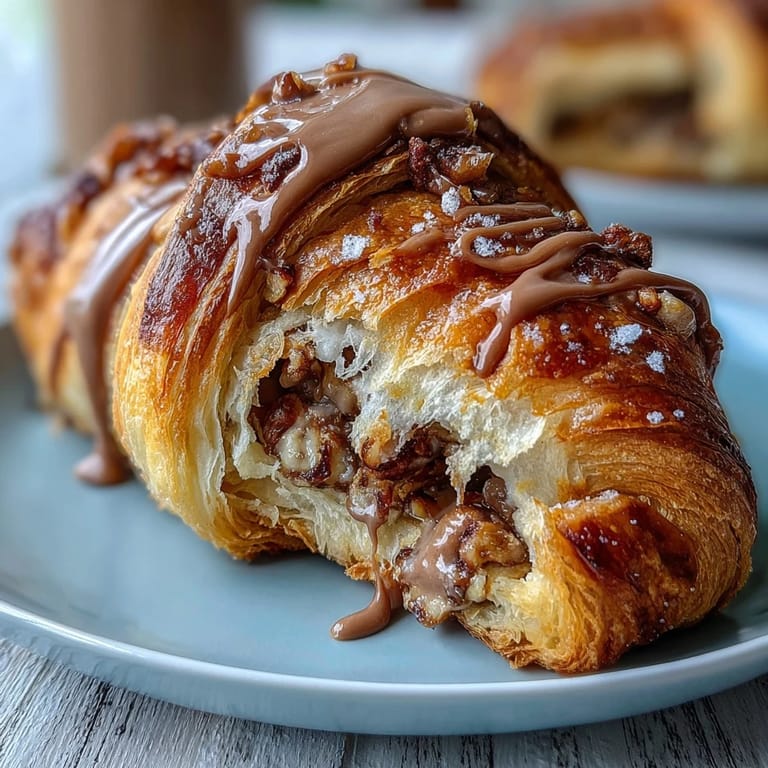
Save My sourdough starter had been sitting neglected in the back of my fridge for weeks when I decided to resurrect it by making something ambitious: croissants. The idea seemed ridiculous at first—why complicate the laminated dough with fermentation?—but that first bite convinced me otherwise. The tang crept in so subtly beneath the butter and flake, transforming something I'd made a hundred times into something I'd never quite tasted before.
I brought a batch to a weekend brunch and watched my partner tear into one without even waiting for it to cool properly, steam rising into their face. They looked at me sideways and asked if I'd bought them from the French bakery down the street. That's when I knew the sourdough had done its job.
Ingredients
- Bread flour: The protein content matters here—it gives your dough the structure to hold all those butter layers without tearing or becoming greasy.
- Granulated sugar: Feeds your starter and helps with browning, so don't skip it or reduce it thinking you're being healthier.
- Fine sea salt: Strengthens the gluten network and balances the tang from your sourdough perfectly.
- Cold whole milk: Keep it genuinely cold straight from the fridge; it slows fermentation and makes lamination easier.
- Active sourdough starter: This is where the personality comes from—at 100% hydration, it incorporates smoothly without making your dough too wet.
- Unsalted butter, softened (for dough): The small amount in the dough itself keeps things tender and begins the lamination process.
- Cold unsalted butter block: This is your star ingredient—250 grams of pure lamination magic that creates those shattered, golden layers.
- Egg wash: One egg mixed with milk gives you that mahogany shine without making them look overly glossy or artificial.
Tired of Takeout? 🥡
Get 10 meals you can make faster than delivery arrives. Seriously.
One email. No spam. Unsubscribe anytime.
Instructions
- Mix the foundation:
- Combine flour, sugar, and salt in a large bowl, then add your cold milk, sourdough starter, and softened butter. Mix until everything is moistened, then knead for about 8 minutes until the dough becomes smooth and elastic—you should feel it transform under your hands from shaggy to supple.
- First rest:
- Shape the dough into a neat rectangle, wrap it tightly in plastic, and refrigerate for at least 2 hours. This chilling period relaxes the gluten and gives your sourdough a chance to whisper its first notes into the dough.
- Prepare the butter block:
- While your dough chills, place 250 grams of cold butter between two sheets of parchment paper and pound it gently with a rolling pin, working it into a 20 x 15 cm rectangle that's pliable but still quite firm. Chill this until you're ready to laminate.
- First lamination:
- Roll out your rested dough to 40 x 20 cm, place your butter block on one half, fold the dough over it like a letter, and press the edges to seal everything inside. Rotate 90 degrees and roll into a 60 x 20 cm rectangle, then fold it into thirds (one side folds to the center, then the other side folds over it).
- Second and third turns:
- Wrap and chill for 1 hour, then repeat the rolling, turning, and folding process two more times, chilling 1 hour between each turn. Each fold multiplies your layers exponentially—by the end, you'll have hundreds of thin butter sheets waiting to steam and separate.
- Overnight proof:
- After your final fold, wrap the dough and refrigerate overnight, 8 to 12 hours, which develops flavor and makes the dough easier to shape in the morning.
- Shape the croissants:
- On a lightly floured surface, roll the dough into a 60 x 30 cm rectangle about 5 mm thick, then cut it into 12 long triangles using a sharp knife. Starting from the wide base of each triangle, roll toward the point, curving slightly as you go, and tuck the tip underneath to create that classic crescent shape.
- Final proof:
- Place the shaped croissants on parchment-lined baking sheets, cover them loosely, and let them rise at room temperature until they've roughly doubled in size, about 2 to 3 hours. You'll know they're ready when they jiggle slightly when you gently shake the pan.
- Egg wash and bake:
- Preheat your oven to 200°C (400°F), whisk together one egg and 1 tablespoon milk, and brush each croissant with a light, even coat. Bake for 18 to 22 minutes, watching them turn golden and crisp, then cool for a few minutes before eating because they'll be dangerously hot inside.
 Save
Save There's a moment on the second morning when you pull that dough out of the fridge and unfold it, seeing all those distinct layers revealed in the cross-section, that feels like mild magic. It reminded me why laminated dough exists at all—it's not fancy, it's honest work rewarded.
The Sourdough Difference
Adding sourdough starter to croissant dough sounds like it shouldn't work, but the fermentation actually extends the flavor development without making them taste sour in a mouth-puckering way. Instead, you get this subtle complexity that makes people pause mid-bite and wonder what you did differently. The tanginess sits in the background like a bass note, supporting the butter and the toast-like golden crust.
Temperature Control is Everything
The difference between croissants that shatter and ones that go dense comes down to butter management, which is really temperature management. If your butter gets too soft, it merges with the dough instead of creating distinct layers; too hard and it breaks through the dough layers instead of folding smoothly within them. I learned this the hard way by laminating in a warm kitchen and watching my butter seep out sideways.
Timing and Flexibility
The overnight chill is generous—it can stretch to 14 or even 16 hours if your morning is chaotic, and the croissants will only taste better for the extra fermentation time. The final proof in the morning is more forgiving than the chilling stages; as long as they're noticeably puffed and the dough feels airy when you touch it gently, you're ready to bake.
- If your kitchen is cold, the final proof might take 3 to 4 hours instead, so don't panic if they're moving slower than expected.
- You can make these over two days with minimal effort on day two, which makes them perfect for weekend entertaining.
- Stale croissants can be frozen and refreshed in a 160°C oven for about 5 minutes, bringing back most of the crisp.
 Save
Save These croissants proved to me that you don't need industrial precision or a 6 a.m. start to make something bakery-worthy. Sourdough croissants sit somewhere between effort and reward that feels genuinely sustainable for home baking.
Recipe Guide
- → How does the sourdough starter affect the dough?
It adds subtle tanginess and helps with natural fermentation, enhancing flavor and texture.
- → Why is the butter block chilled before folding?
Chilling keeps the butter firm, allowing it to create distinct flaky layers during rolling.
- → What is the purpose of the multiple folds and chills?
These steps develop layered structure and flakiness by evenly distributing butter within the dough.
- → How long should croissants proof before baking?
Allow about 2-3 hours at room temperature until they double in size for a light, airy texture.
- → Can I add flavors or fillings to the dough?
Yes, vanilla can be added to the dough, or croissants can be filled with cheese or ham before shaping.