 Save
Save I'll never forget the first time I created this platter for a winter dinner party. I was standing in my kitchen, holding a handful of pomegranate seeds and roasted yellow pepper strips, and suddenly it hit me—why not lean into color as a language? Deep reds against brilliant golds, arranged like opposing forces on a canvas. That evening, my guests didn't just taste the dish; they gasped at it first. That's when I realized that a cheese board could be so much more than casual grazing—it could be a moment of visual drama that made people smile before they even took a bite.
I made this for my sister's book club last spring, and I watched her face light up when I set it down. One of her friends, who usually reaches for the bread and butter first, actually paused to absorb the colors before filling her plate. That's when I knew this arrangement wasn't just pretty—it changed how people interact with food, making them slow down and really look.
Ingredients
- Fresh sweet cherries: These are your jewels—deep crimson orbs that anchor the whole color story. Pit them gently; I learned the hard way that juice stains are forever on apron sleeves.
- Wine-soaked cheese: Drunken Goat or Merlot BellaVitano brings an earthy sophistication and gorgeous marbling that catches the light. Slice it thick enough to taste, thin enough to feel delicate.
- Dried cranberries: These little rubies add a tart punch and chewy texture that makes people keep reaching back.
- Red grapes, halved: Halving them increases surface area, which means they catch light and look even more vibrant.
- Pomegranate seeds: The crown jewels—glossy, bright, and they pop in your mouth. Add these last so they don't dry out.
- Roasted yellow bell peppers: Roasting intensifies their sweetness and gives them a silky texture that wine-soaked cheese complements beautifully. The slight char adds depth.
- Aged cheddar or gouda: Cubing them rather than slicing creates visual texture and makes them easier for guests to grab. The age brings nutty notes that echo the golden theme.
- Gold leaf–topped crackers: These are your luxury touch—they don't add flavor so much as they add occasion. If you can't find them, plain water crackers work; the gold is really about the moment.
- Golden raisins: Softer and sweeter than regular raisins, they're like little pockets of concentrated sunshine.
- Yellow cherry tomatoes: Halved so their juicy sweetness is visible. They add freshness that cuts through the richness.
- Edible gold leaf: Optional, but I use it. It transforms ordinary crackers into something that feels celebratory.
- Fresh basil or microgreens: The green is crucial—it prevents the arrangement from feeling too heavy and adds brightness that makes colors pop.
- Olive oil and black pepper: Finishing touches that remind us that even beauty needs seasoning.
Tired of Takeout? 🥡
Get 10 meals you can make faster than delivery arrives. Seriously.
One email. No spam. Unsubscribe anytime.
Instructions
- Roast your yellow peppers until they're blistered and charred:
- Preheat your oven to 220°C (425°F). Place whole yellow bell peppers directly on a baking sheet and let them roast for 10 to 12 minutes, turning occasionally so they char evenly on all sides. You want the skins to look almost blackened—that's where the sweetness hides. When they're gorgeously charred, transfer them to a covered bowl and let them steam for 5 minutes. This is important: the steam loosens the skin and makes peeling almost effortless. Feel the pepper gently with your fingers, and the skin will slip right off. Remove the seeds and slice into strips. Drizzle with a little olive oil and crack fresh black pepper over them. Let them cool completely—warm peppers will wilt everything around them.
- Gild your crackers if you're feeling fancy:
- If you're using edible gold leaf, this is your moment. Follow the package instructions carefully—gold leaf is delicate and wants a light touch. I usually place each cracker on a small plate, use tweezers to pick up the gold, and gently lay it on top. It doesn't need to cover the whole cracker; in fact, small flecks look more intentional.
- Arrange your reds into a tight, dramatic block:
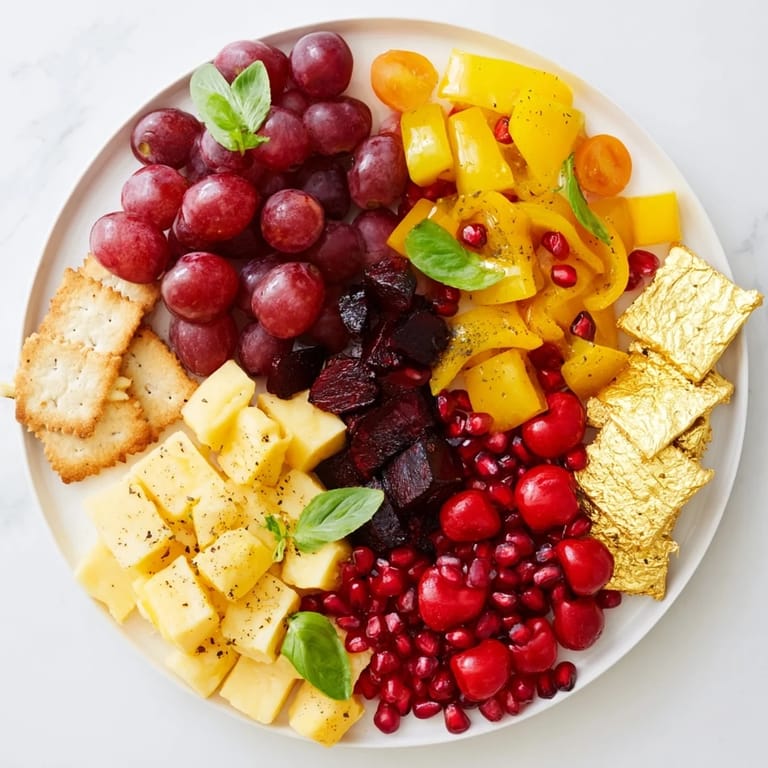
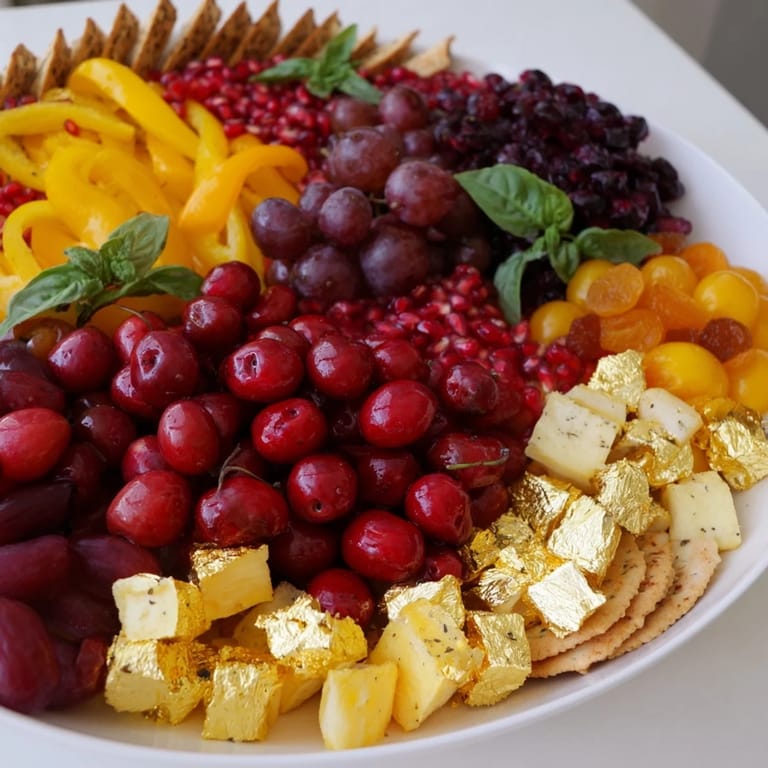
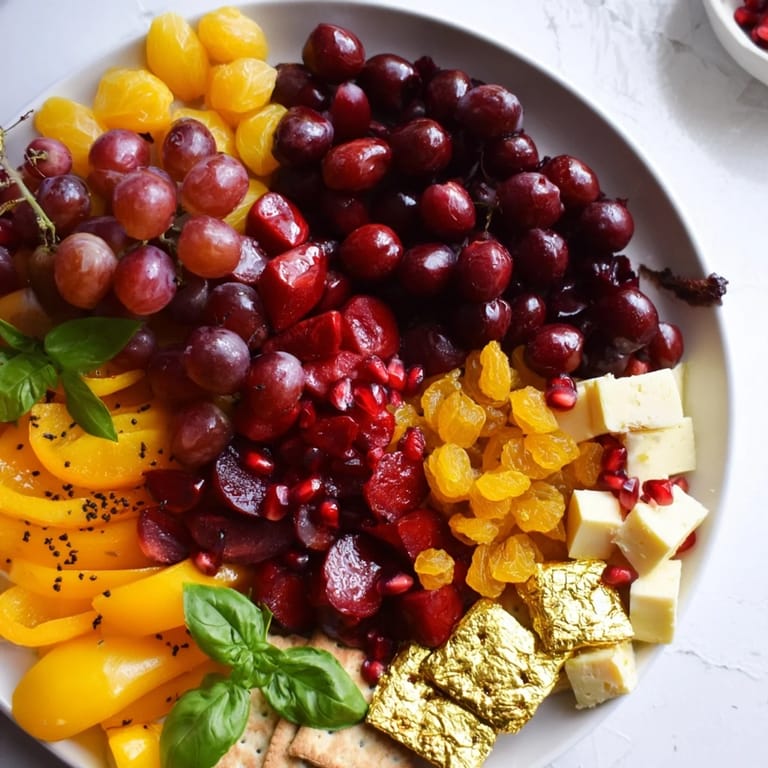
- On one half of your serving platter or board, create a unified block of deep reds. Start with your pitted cherries, then layer in slices of wine-soaked cheese, scatter the dried cranberries and halved red grapes, and finish with pomegranate seeds. Keep them close together, almost overlapping, so the color creates one unified impression. Think of it like a painting where the reds demand attention.
- Create your golden contrast on the opposite side:
- On the other half of the platter, arrange your golden elements with the same intention. Line up your roasted yellow pepper strips first, then add cubes of aged cheddar, the gold leaf crackers, golden raisins, and halved yellow tomatoes. Again, keep them close and deliberate. The contrast between the two sides should feel intentional, like they're in conversation with each other.
- Finish with green and serve immediately:
- Just before serving, scatter fresh basil leaves or delicate microgreens across the platter, mostly in the space between your two color blocks. This green acts like punctuation, breaking up the visual weight and adding a fresh, living quality. Serve immediately while everything is at its peak and the colors are most vivid.
 Save
Save I remember my grandmother watching me arrange this for the first time, and she said, 'You're making people happy before they even taste anything.' That comment stuck with me. Food is nourishment, yes, but it's also invitation. This platter is an invitation to pause, to notice, to feel a little special.
The Story Behind Color Blocking on the Board
Color blocking—the practice of grouping similar colors together for maximum impact—is something I borrowed from interior design and fashion. I started experimenting with it after visiting an art exhibition where opposing colors were positioned to make each other seem even more vibrant. It occurred to me that a cheese board could work the same way. When deep crimson sits directly opposite brilliant gold, each color makes the other look more intense, more alive. It's not just aesthetic; it's actually how our eyes work. This principle has become my favorite way to think about any platter I arrange now.
Why Wine-Soaked Cheese Matters Here
Wine-soaked cheese like Drunken Goat isn't just a fancy ingredient—it's a flavor bridge. It carries notes of the wine used in its creation, so it actually ties your red and gold sections together. The deep color and complex flavor profile also anchor the red side of the platter, making it feel substantial and intentional rather than just a collection of small bites. Plus, the visual marbling in these cheeses catches light beautifully, adding another layer of visual interest.
Serving and Pairing Ideas
This platter is incredibly versatile, which is part of its magic. It works as an elegant appetizer, a sophisticated lunch centerpiece, or even as part of a larger dinner spread. I've served it with light white wines that echo the gold side, with champagne that plays off the bubbles and brightness, and even with gin and tonic on a summer evening. The key is that whatever you pair it with should feel like a celebration, because that's the energy this platter brings to any gathering.
- For a lighter pairing, choose crisp white wines like Sauvignon Blanc or Albariño that won't overpower the delicate cheeses
- Drizzle a little raw honey over the gold section just before serving for added luxury and a subtle sweetness that elevates the whole experience
- If gold leaf is unavailable, a light sprinkle of turmeric or saffron threads gives that golden shimmer without breaking the bank
 Save
Save This platter has become my secret weapon for moments when I want to show someone they're worth the beauty. It's simple enough that anyone can make it, but it feels special enough to mark a moment as memorable. That's the real magic here.
Recipe Guide
- → How do I roast the yellow bell peppers for this dish?
Place whole yellow bell peppers on a baking sheet and roast at 220°C (425°F) for 10–12 minutes until skins are charred. Cover to steam, then peel, seed, and slice into strips before seasoning with olive oil and pepper.
- → What cheeses pair well with the deep red fruits?
Wine-soaked cheeses like Drunken Goat or Merlot BellaVitano, as well as aged cheddar or gouda, complement the sweet and tart flavors of cherries, cranberries, and pomegranate seeds.
- → Can I substitute edible gold leaf if unavailable?
Yes, turmeric or saffron threads can provide a golden color accent, offering a similar visual effect without gold leaf.
- → What garnishes enhance the flavor and appearance?
Fresh basil or microgreens add herbal brightness and a pop of green contrast, elevating both taste and presentation.
- → Is this platter suitable for vegetarians?
Yes, all ingredients are vegetarian-friendly. For a vegan option, plant-based cheeses and crackers can be used instead.
- → How should the platter be served for best experience?
Arrange crimson and gold blocks tightly side by side, encouraging guests to mix and match flavors and colors for a dynamic tasting experience.