 Save
Save I discovered Copper Penny Warmth on a crisp October afternoon while rummaging through my grandmother's kitchen cabinet. Those gleaming copper ramekins caught the afternoon light, and I suddenly remembered her telling me stories about autumn gatherings where simple vegetables transformed into something worthy of celebration. That memory sparked an idea: what if I layered roasted root vegetables with the sweetness of dried apricots and the richness of aged cheddar? The result was this stunning appetizer that tastes like a warm hug and looks like autumn itself.
I'll never forget the first time I made this for my book club. Sarah took one bite and closed her eyes, and I watched her face transform. She said it reminded her of Thanksgiving at her aunt's house, but elevated somehow. That's when I understood: the best recipes aren't just about technique, they're about creating moments that connect us to memories and to each other.
Ingredients
- Sweet potatoes: These are your foundation, offering natural sweetness and that gorgeous golden color. Slice them thin so they cook through while staying slightly tender in the center.
- Carrots: They add earthiness and vibrant color contrast. The thinness matters here—you want them to soften evenly with the sweet potatoes.
- Olive oil: Use good quality oil. It's not just a binder; it coats the vegetables so they caramelize beautifully and develop that nutty depth.
- Smoked paprika: This is your secret weapon. It adds a whisper of smokiness that elevates everything, making people wonder what mysterious spice you've used.
- Sea salt and black pepper: Season generously. Root vegetables absorb seasoning differently than other vegetables, so don't be shy.
- Dried apricots: Their natural sugars concentrate when heated, creating little pockets of jammy sweetness that balance the savory vegetables.
- Pecan halves: Toast them lightly yourself if you can—the aroma filling your kitchen is part of the magic. They add crunch and a sophisticated nuttiness.
- Aged cheddar: This is not the time for mild cheese. Look for something with real age and character. It should have a slight crystalline texture and bold flavor.
- Fresh chives: A optional but meaningful garnish that adds a fresh onion note and visual brightness at the very end.
Tired of Takeout? 🥡
Get 10 meals you can make faster than delivery arrives. Seriously.
One email. No spam. Unsubscribe anytime.
Instructions
- Heat your oven and prepare your stage:
- Preheat to 400°F. While it's warming, gather your copper ramekins—the copper actually conducts heat beautifully and brings warmth to the table. Have everything within arm's reach because this moves quickly once you start.
- Coat the vegetables with intention:
- In a bowl, toss your thin-sliced sweet potatoes and carrots with olive oil, smoked paprika, salt, and pepper. Use your hands if you need to. You want every slice glossy and evenly seasoned. This is where the flavor journey begins.
- Build your copper towers:
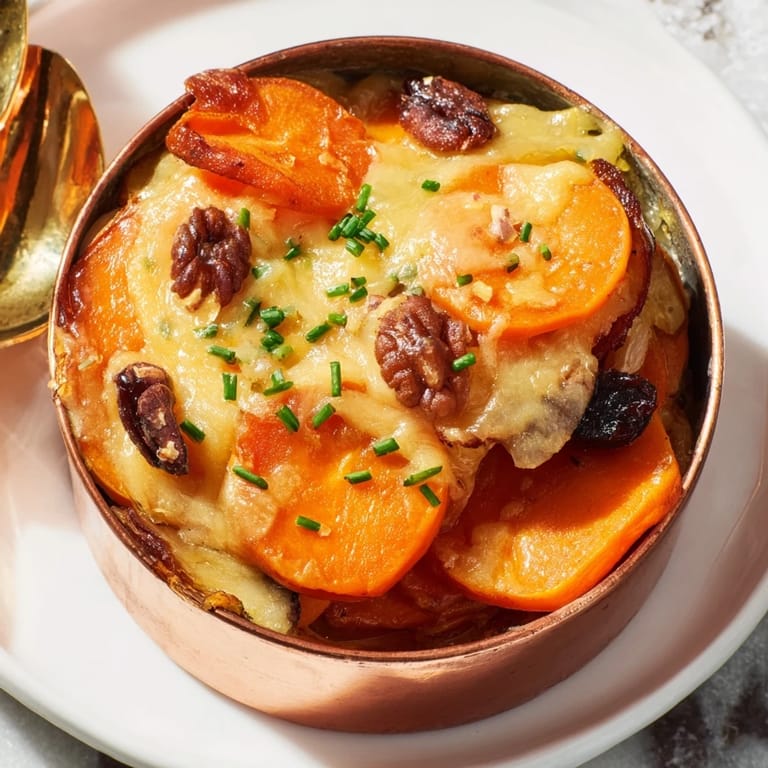
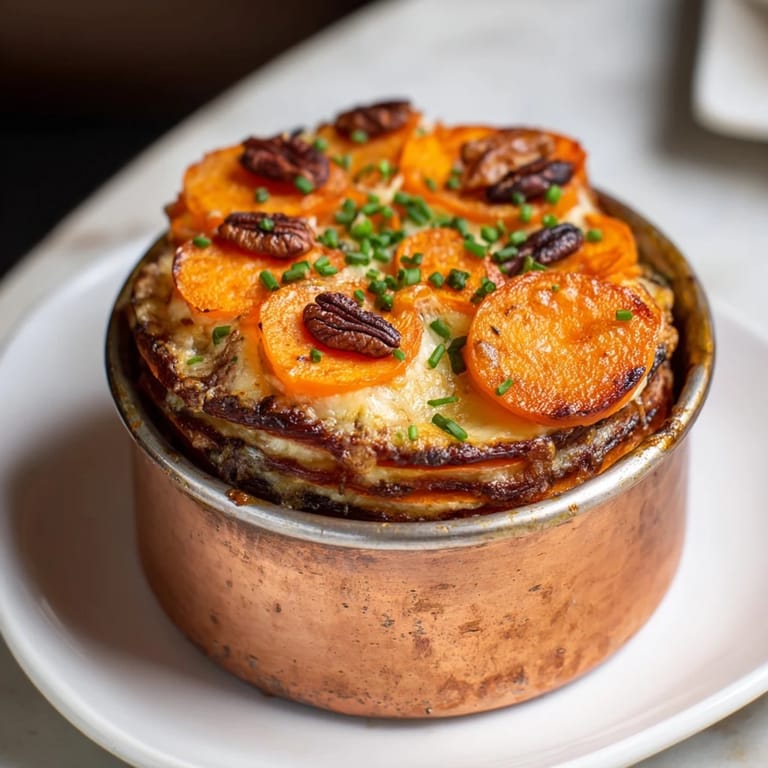
- This is the meditative part. Take a ramekin and begin arranging: a slice of sweet potato, slightly overlapped with a carrot slice, then a scattered piece of apricot, a few pecan pieces. Repeat, layering like you're creating edible art. Alternate colors as you go. The visual beauty is part of this dish's soul.
- Give them time to transform:
- Cover loosely with foil—the steam needs to escape slightly—and slide into the oven for 20 minutes. You'll know they're ready when the vegetables are fork-tender and the kitchen smells like toasted autumn spices.
- Unveil and crown with cheese:
- Remove the foil carefully, as steam will rise. Now crown each ramekin with your grated aged cheddar, distributing it evenly so every bite has cheese. Return to the oven for just 5 more minutes. Watch for that moment when the cheese turns golden and starts to bubble at the edges—that's your signal.
- The final flourish:
- Remove from the oven and let rest for just a minute or two. Scatter fresh chives over the top if using. Serve warm, right in those beautiful ramekins, and watch people's faces light up.
 Save
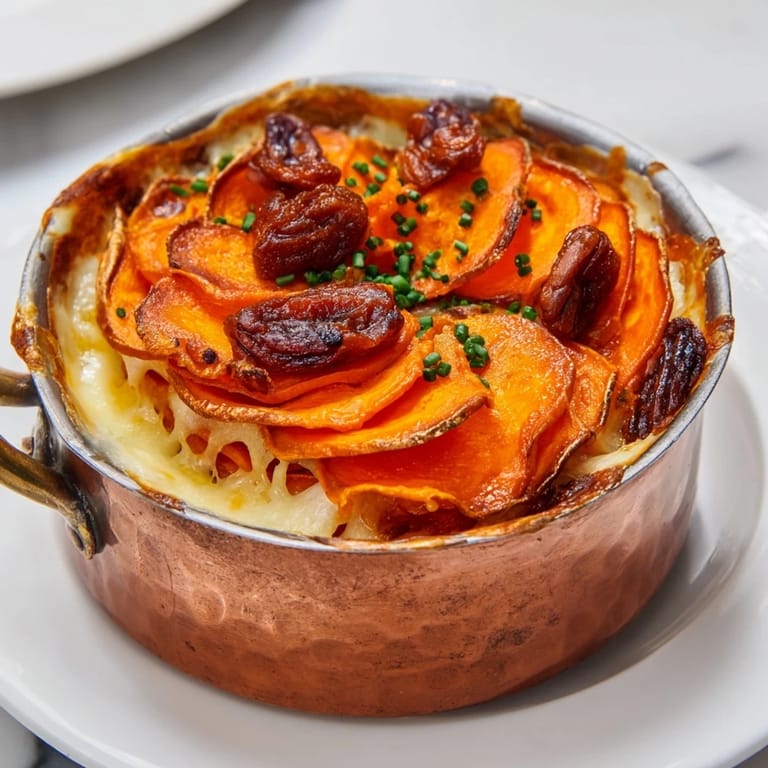
Save There's something about serving food in individual copper ramekins that makes people feel special. It says you've taken time, thought about presentation, cared about the experience. My neighbor brought her teenage daughter over for dinner, and the girl—normally glued to her phone—actually looked up and smiled when she saw her ramekin arrive, layers of vegetables and fruit creating a little work of art. That's when food becomes memory.
The Art of Layering
Layering isn't just about looks, though that gorgeous cross-section view is certainly a bonus. When you layer vegetables and apricots throughout, you ensure that every forkful has complexity. You'll get the earthiness of roasted carrot, the sweetness of apricot, the crunch of pecan, and the savory umami of aged cheddar all in one bite. It's the difference between eating separate ingredients and experiencing a symphony of flavors.
Timing and Temperature Matter
The two-phase cooking method—20 minutes covered, then 5 minutes uncovered—is intentional. The first phase steams the vegetables tender. The second phase allows the cheese to melt and brown without overcooking the layers beneath. If you bake everything at once without foil, your vegetables won't soften properly and the cheese will brown before the vegetables are ready. Trust the process. It's been refined through many kitchen experiments.
Variations and Pairings
While this recipe stands beautifully on its own, I've discovered wonderful variations. Dried figs bring an earthier sweetness than apricots. Dried cherries add tartness that plays beautifully against the cheddar. For vegans, quality plant-based cheddar works when you find one with real depth of flavor—not all of them do, so taste before you buy. Pair with a medium-bodied Chardonnay, spiced cider, or even a cold amber ale. For a fuller meal, serve alongside roasted chicken or crispy tofu.
- Consider making these ahead: assemble the ramekins completely the morning before, refrigerate, then add the cheese and bake when guests arrive
- If your apricots are very dry, soak them in warm water for 5 minutes before slicing to plump them slightly
- Pecan allergies are common, so always check with guests before serving, and consider sliced almonds as a substitute
 Save
Save This recipe has taught me that the simplest dishes—vegetables, fruit, cheese, heat—can become something that people remember and request again. It's a reminder that cooking isn't about complexity; it's about intention and care.
Recipe Guide
- → What vegetables are used in this dish?
Sweet potatoes and large carrots are thinly sliced and roasted with olive oil and smoked paprika to bring out natural sweetness and smoky notes.
- → Can the dried apricots be substituted?
Yes, dried figs or dates can replace apricots to provide a different fruity profile while maintaining sweetness.
- → How is the cheese incorporated?
Grated aged cheddar is added on top after initial baking, then broiled briefly to melt and create a golden crust.
- → Is this dish suitable for gluten-free diets?
Yes, using gluten-free aged cheddar ensures the dish remains gluten-free.
- → What makes the toasted pecans important?
Lightly toasted pecans add a crunchy texture and a rich, buttery flavor that complements the softness of the vegetables and apricots.