 Save
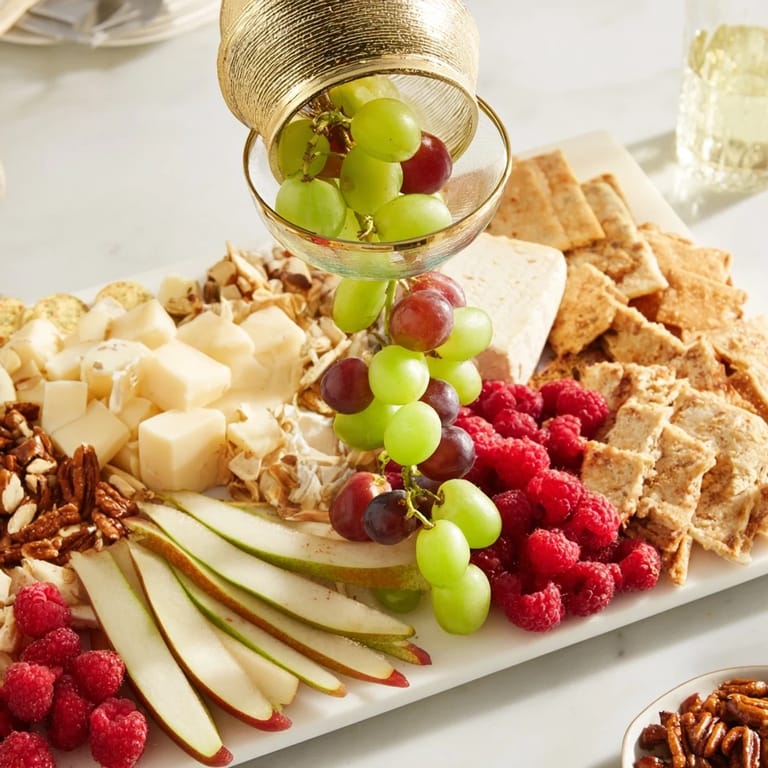
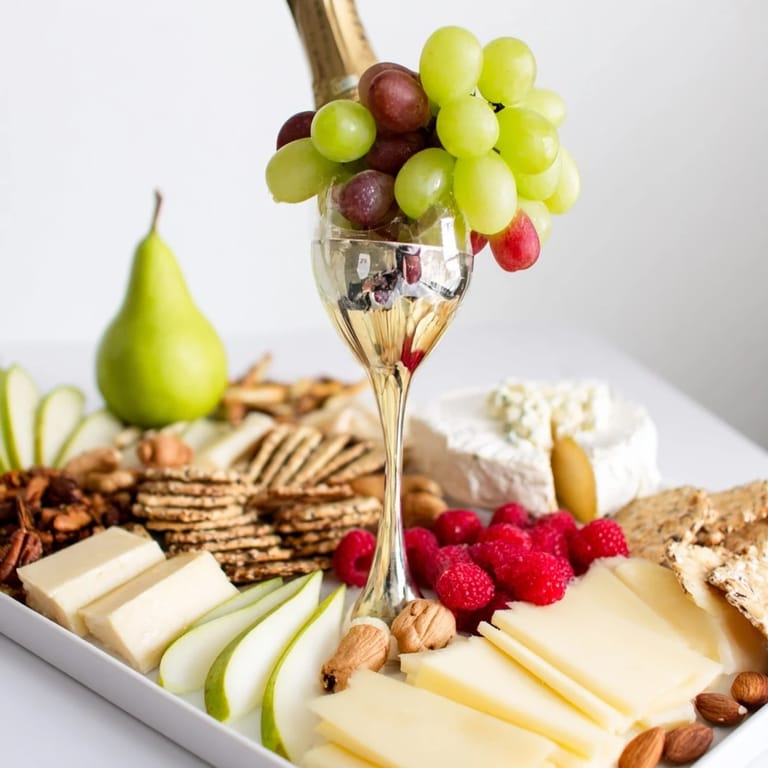
Save The first time I styled a champagne coupe glass as the centerpiece of a grazing board, I was genuinely nervous—would it actually look elegant, or would it topple over the moment someone reached for a grape? But as the fruit tumbled out in that gorgeous cascade, I realized I'd stumbled onto something magical. It's the kind of board that makes people stop mid-conversation to take a photo, yet it's surprisingly simple to pull together. This has become my go-to when I want to feel impressive without spending hours in the kitchen.
I made this for a friend's birthday dinner last spring, and watching everyone's faces light up when they saw the champagne waterfall was worth every minute of prep work. Someone joked that it was too pretty to eat, but that didn't stop anyone—the board was picked clean within the hour. It reminded me that the best entertaining isn't about fussy techniques; it's about creating something that feels both generous and a little bit ceremonial.
Ingredients
- Brie: Slice this just before serving so it stays creamy and glossy rather than drying out on the board.
- Aged cheddar: Cubes hold their shape beautifully and offer a sharp contrast to the soft cheeses.
- Goat cheese: Crumble it gently by hand rather than cutting; it looks more inviting and texturally interesting that way.
- Grapes (green and red): The stars of your waterfall—choose plump ones and keep them chilled until the last moment.
- Pear and apple: Slice these no more than fifteen minutes before serving, and toss gently with a little lemon juice to prevent browning.
- Raspberries: These add jewel-like color but are delicate, so nestle them in last and handle with care.
- Candied pecans and roasted almonds: The crunch factor that makes every bite interesting; if you can't find them, you can candy your own pecans quickly in a warm pan with a touch of honey.
- Assorted crackers: Choose a mix of textures—some thin and crispy, some seeded for earthiness.
- Baguette: Slice it on a slight angle so each piece is substantial enough to hold toppings without falling apart.
- Honey and fig jam: Swirl these together in small bowls so guests can combine them for depth of flavor.
- Edible flowers and mint: Optional, but they elevate the whole presentation and hint at the celebration you're creating.
Tired of Takeout? 🥡
Get 10 meals you can make faster than delivery arrives. Seriously.
One email. No spam. Unsubscribe anytime.
Instructions
- Stabilize your glass:
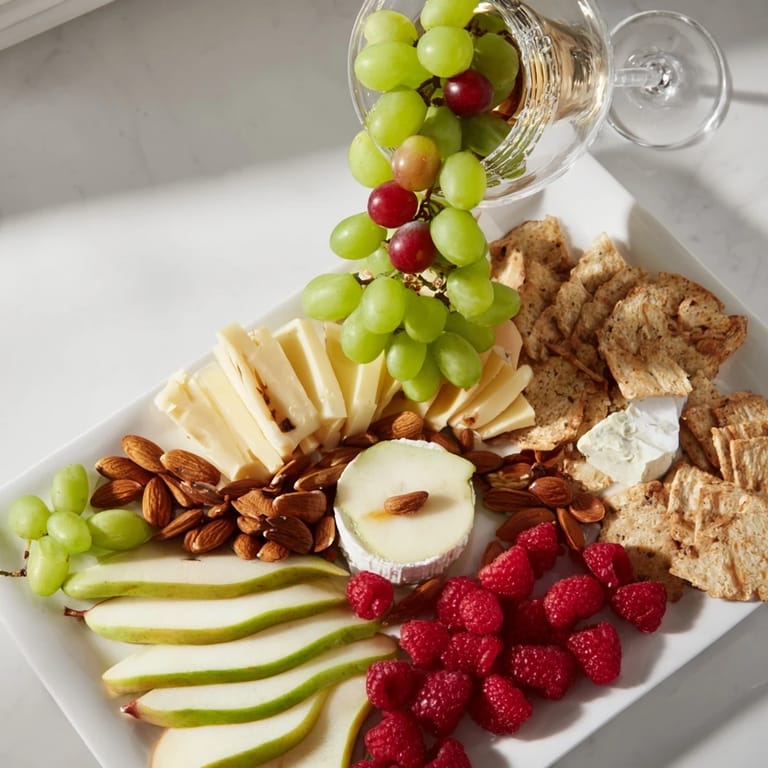
- Place the champagne coupe on your board and tilt it gently until it rests at a forty-five-degree angle, looking as if it's casually tipped over. Make sure it won't roll—this is your anchor point.
- Create the waterfall:
- Arrange your chilled grapes so they spill from the lip of the glass and cascade down the board in a natural-looking flow. The color contrast between green and red grapes creates visual rhythm that draws the eye.
- Add the fruit cascade:
- Fan out your pear and apple slices alongside the grapes to extend the waterfall effect down the board, creating depth and suggesting movement.
- Build with cheese:
- Cluster small piles of each cheese type around the base of the glass and along the fruit cascade, leaving breathing room so everything reads clearly.
- Add proteins (if using):
- Fold the prosciutto loosely and arrange it in a few decorative piles; slice the salami and layer it slightly for visual interest.
- Scatter texture:
- Distribute your candied pecans, roasted almonds, and fresh raspberries throughout the board in small groups rather than one scattered handful—this creates visual intention.
- Position bread and crackers:
- Arrange these around the outer edges of the board so they're accessible without crowding the center focal point.
- Finish with condiments:
- Nestle small bowls of honey and fig jam among the other ingredients, creating little treasure spots for guests to discover.
- Garnish and serve:
- Add edible flowers and fresh mint sprigs in the last moment before serving, then bring it straight to the table with chilled champagne ready to pour.
 Save
Save There's something genuinely special about watching people slow down and linger around a board like this, conversations flowing alongside the grazing. It stops feeling like just food and becomes a moment—the kind of moment that somehow sticks with people long after the last cracker is gone.
The Art of the Waterfall
The magic of this board lives in the visual storytelling, not in any complicated technique. The champagne coupe isn't just a pretty vessel; it's a narrative device that invites people to imagine abundance spilling generously across the table. When I first attempted this, I was so worried about the glass tipping that I barely tilted it at all, and it looked flat and uncertain. Once I committed to the angle and trusted the weight of the fruit to create the illusion of movement, everything clicked. The grapes actually help stabilize the glass while making it look precarious—it's a pleasant contradiction that's part of the charm.
Seasonal Flexibility
One of my favorite things about this board is how it shifts with the seasons, which means you can make it feel completely fresh every time. In autumn, I swap raspberries for dried figs and pomegranate seeds; in winter, candied citrus peels appear alongside the nuts. Summer calls for stone fruits—think peaches and plums. The structure stays exactly the same, but the ingredients tell you what time of year it is. This flexibility also means you're never bound to a specific shopping list; you work with what looks beautiful at your market that day.
Pairing and Presentation
The board deserves to be paired thoughtfully—a crisp brut champagne or dry sparkling wine is non-negotiable, as the bubbles and acidity balance the richness of the cheeses beautifully. I once made the mistake of pairing it with a sweet prosecco, and the combination felt heavy rather than celebratory. Since then, I always reach for something dry and chill the bottle well in advance. This is also the rare board that benefits from a moment of introduction; I like to actually invite people to notice the waterfall effect and suggest they start by trying one of each cheese with a cracker before they graze more freely. It transforms a simple spread into an experience.
- Chill every element except the condiments for at least thirty minutes before assembly.
- Set up the board no more than twenty minutes before serving to keep everything at peak freshness and visual appeal.
- Leave a small space on the board for guests to rest their napkins and small plates as they build bites.
 Save
Save This board has a way of making every gathering feel like an occasion, even a casual weeknight gathering with close friends. That's the real magic—not the effort, but the generosity of abundance that invites people to slow down and enjoy.
Recipe Guide
- → What type of glass is used to create the waterfall effect?
A champagne coupe glass is tilted on its side at the board’s center to create the cascading waterfall appearance.
- → Which fruits work best for the cascading element?
Green and red grapes, along with sliced pear and apple, offer fresh color and texture ideal for the waterfall flow.
- → How can I accommodate vegan dietary preferences?
Use plant-based cheeses and omit the charcuterie to create a vegan-friendly version of the board.
- → What garnishes add extra visual appeal?
Edible flowers and fresh mint sprigs enhance the board’s festive and fresh appearance.
- → Are there suggested pairings for this board?
This board pairs beautifully with brut Champagne or sparkling wines, enhancing celebratory moments.
- → How should nuts and condiments be presented?
Candied pecans, roasted almonds, honey, and fig jam are scattered or nestled in small bowls to add diverse flavors and textures.