 Save
Save The first time I arranged a cheese board in earnest, I was nervous about getting the design right. Then a friend mentioned Celtic crosses, and something clicked—the geometry, the balance, the way four distinct elements could come together around something central. That afternoon, I started building this platter and realized I wasn't just assembling cheese; I was creating a conversation starter. The Celtic Cross Cheese Platter became one of those dishes that makes entertaining feel effortless, even though the thoughtfulness behind it runs deep.
I made this for a dinner party last October, and what I didn't expect was how the platter became the centerpiece of the evening—literally and figuratively. People kept gravitating toward it, trying a bite of cheddar, then blue cheese, then brie, treating it like a tasting menu. My friend Sarah said it reminded her of an art installation, which made me laugh, but she wasn't entirely wrong. By the end of the night, the platter was mostly empty, the honey had drizzled down into unexpected corners, and everyone was satisfied.
Ingredients
- Irish cheddar, cubed: The sharpness keeps everything grounded; it's your flavor anchor in the cross.
- Brie, sliced: Creamy and approachable, it's the cheese everyone reaches for first—don't leave it out.
- Blue cheese, crumbled: This is where drama lives; use quality blue for complexity that makes people pause and take another bite.
- Manchego, sliced: Nutty and slightly firm, it adds texture contrast and a touch of Spanish elegance.
- Sour cream or Greek yogurt: Greek yogurt is tangier and lighter; sour cream is richer—choose based on your mood.
- Fresh chives: Don't skip them; they brighten the dip with a whisper of onion flavor without overpowering.
- Lemon juice: A small amount lifts everything, preventing the dip from feeling heavy.
- Seedless red grapes: Their sweetness and snap balance the savory cheeses beautifully.
- Dried apricots: Chewy and subtly sweet, they fill gaps with color and add complexity to each bite.
- Walnuts: Toasted would be even better; they add earthiness and crunch that makes textures interesting.
- Honey: A light drizzle over the blue cheese creates visual drama and softens its intensity with warmth.
- Rustic crackers and baguette: Mix textures—some hearty, some delicate—so guests have choices.
Tired of Takeout? 🥡
Get 10 meals you can make faster than delivery arrives. Seriously.
One email. No spam. Unsubscribe anytime.
Instructions
- Make the dip:
- Whisk your sour cream or yogurt with chopped chives and lemon juice until smooth, then taste and season generously with salt and pepper. This is your flavor foundation, so don't be timid.
- Center everything:
- Pour the dip into a small round bowl and place it dead center on your large platter—this is your visual anchor, the heart of the cross.
- Divide into quadrants:
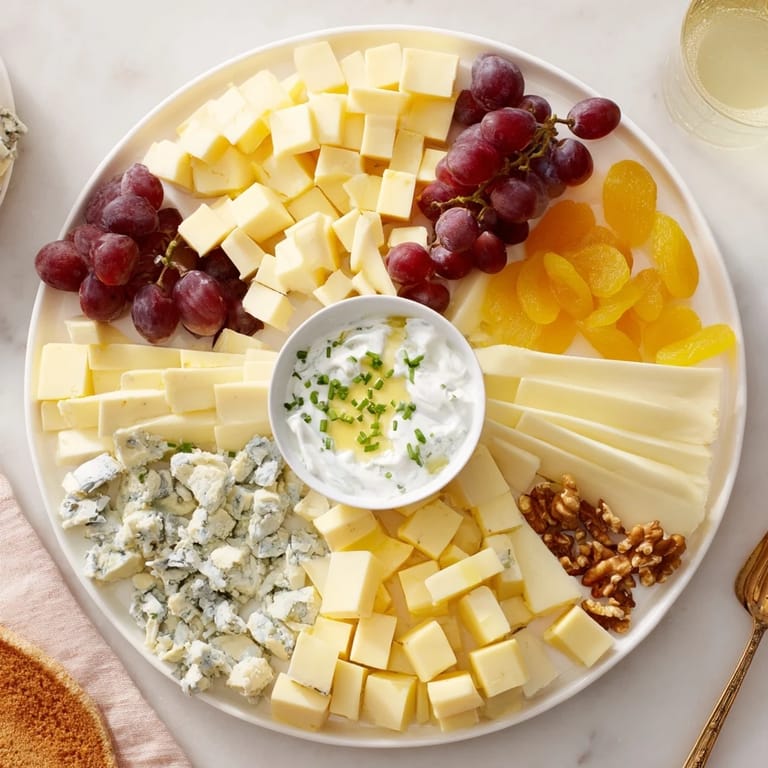
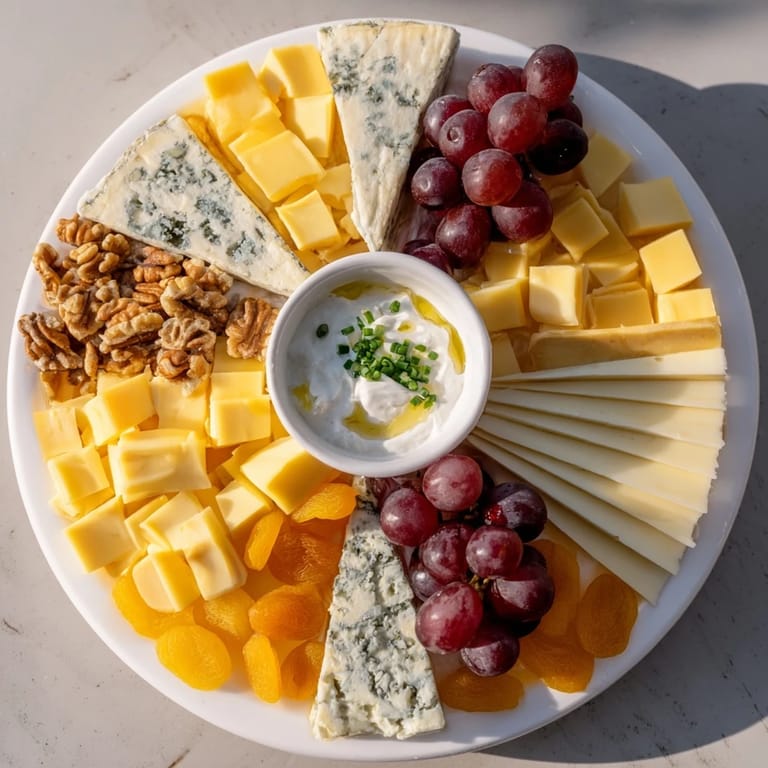
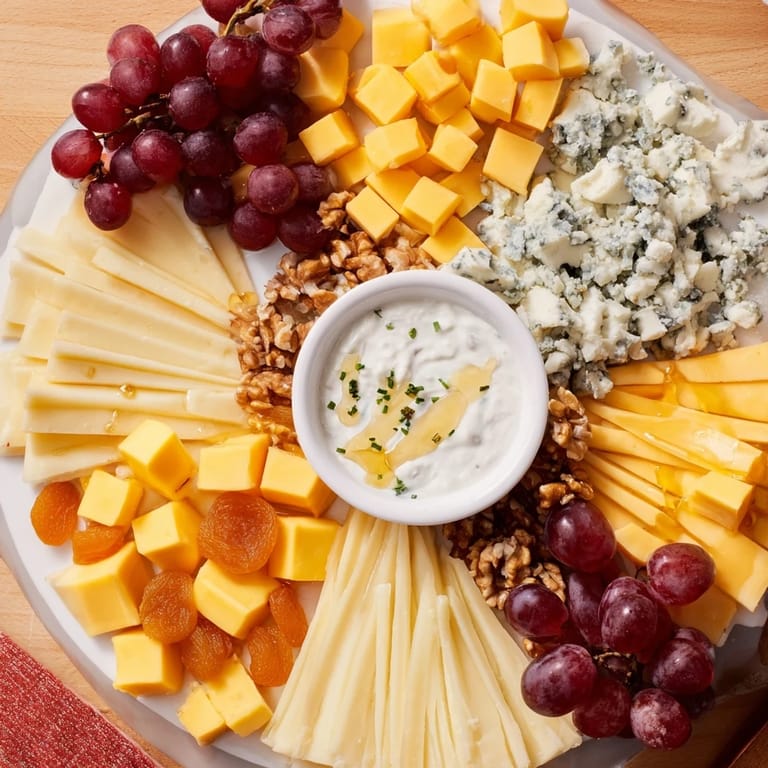
- Imagine the platter as a clock face with four sections: twelve to three, three to six, six to nine, nine to twelve. Each section holds one cheese type, arranged in its own way—some fanned, some grouped—whatever feels right.
- Layer in your cheeses:
- Start with cheddar in one quadrant, brie in another, blue cheese in the third, and manchego in the fourth. Work outward from the dip, creating clear visual separation between types.
- Fill the gaps:
- Scatter grapes, apricots, and walnuts between the quadrants, using their colors to create balance—reds, golds, and browns working together like a painter's palette.
- Add the honey:
- Drizzle honey over the blue cheese quadrant in thin lines; it catches the light and signals that section as special, plus it softens the intensity of the blue.
- Edge with crackers and bread:
- Arrange crackers and baguette slices around the outer perimeter, overlapping them slightly so they feel abundant and inviting.
- Bring to the table:
- Serve everything at room temperature so the cheeses are at their most flavorful and approachable; cold cheese is a missed opportunity.
 Save
Save There's a moment when you step back from a platter like this, before anyone touches it, and you see what you've made—not just food, but an invitation. It says, come sit with us, try something new, let's enjoy this together. That feeling is what keeps me making these.
The Celtic Cross Story
The Celtic cross has symbolized balance and wholeness for over a thousand years, with its four arms representing earth, air, fire, and water. Translating that into a cheese board felt like honoring both tradition and the present moment—taking something ancient and making it personal, something to share. When you arrange food in patterns rooted in meaning, suddenly it's not just about sustenance; it's about connection.
Wine and Drink Pairings
A crisp Sauvignon Blanc cuts through the richness of the creamy cheeses while complementing the fruit and nuts. If your guests prefer red, a light Pinot Noir won't overpower the delicate flavors—it sits alongside them respectfully. I've also found that a dry sparkling wine adds a festive note, and honestly, sometimes the best pairing is whatever your guests are already enjoying.
Making It Your Own
The Celtic Cross works because it's flexible. You can swap manchego for aged gouda, trade blue cheese for a peppery arugula-coated round, or add apple slices and fresh figs. The structure stays the same; the flavors shift with your taste and what's in season. I've made it with Irish cheeses only for a regional celebration, and I've made it with whatever looked good at the market. Both times, it felt exactly right.
- If you want extra visual impact, use lines of nuts or thin herbs to define the cross shape between quadrants.
- Prep the dip and crackers the morning of, then assemble the platter an hour before guests arrive—this gives the board time to settle while everything stays fresh.
- Keep small serving spoons and cheese knives nearby; your guests will need them, and it signals that you've thought through the details.
 Save
Save This platter has become my go-to for moments when I want to feed people without stress, and when I want to remind them that eating together is ritual. Make it with care, and it becomes more than cheese and crackers.
Recipe Guide
- → What cheeses are featured on this platter?
Irish cheddar, Brie, blue cheese, and Manchego are arranged to offer a variety of flavors and textures.
- → How is the central dip prepared?
Mix sour cream or Greek yogurt with finely chopped fresh chives, lemon juice, salt, and black pepper for a fresh, creamy dip.
- → What accompaniments enhance the cheese platter?
Seedless red grapes, dried apricots, walnuts, and a drizzle of honey add sweetness and crunch between cheese quadrants.
- → How should the platter be arranged for best presentation?
Cheeses are placed in four quadrants around the dip, with fruits and nuts filling the spaces, crackers and baguette slices framing the edge, forming a visual Celtic cross.
- → Are there any allergen considerations to keep in mind?
The platter contains milk, gluten (in crackers and bread), and tree nuts (walnuts). Check labels carefully for guests with allergies.
- → What is the best way to serve the cheeses for optimal flavor?
Allow cheeses to reach room temperature before serving to enhance their aroma and flavor profiles.