 Save
Save I discovered this platter concept at a gallery opening where the caterers had arranged everything in stark black and white—it felt less like food and more like edible art. The way the contrast caught the light as people circled the display made me realize how much drama you can create with just two colors and a little intention. What started as admiration became obsession, and I've been playing with geometric arrangements ever since, learning that simplicity and precision together can actually feel extravagant.
I made this for my sister's engagement party on a rainy afternoon when the light was coming through the kitchen window just right. She walked in, saw the platter, and actually stopped talking for a second—that moment of pure visual surprise is worth every careful knife cut and strategic olive placement.
Ingredients
- Pitted black olives (Kalamata or Niçoise): These are your anchor—they're darker and more flavorful than canned ones, and they hold their shape beautifully when arranged. I learned to drain them well so they don't weep onto the white elements.
- Dark rye bread: The density matters here because thin bread will break when you're cutting geometric shapes. Toast it lightly before slicing if you want extra crispness.
- Fresh mozzarella balls (bocconcini or ciliegine): Make sure they're truly fresh and properly drained, or they'll be slippery and your carefully planned lines will slide around.
- Large fresh mozzarella (for slicing): This should be room temperature before you slice it so the knife glides through cleanly without tearing.
- Black and white sesame seeds: These add texture and deepen the visual contrast—don't skip them thinking they're just decoration.
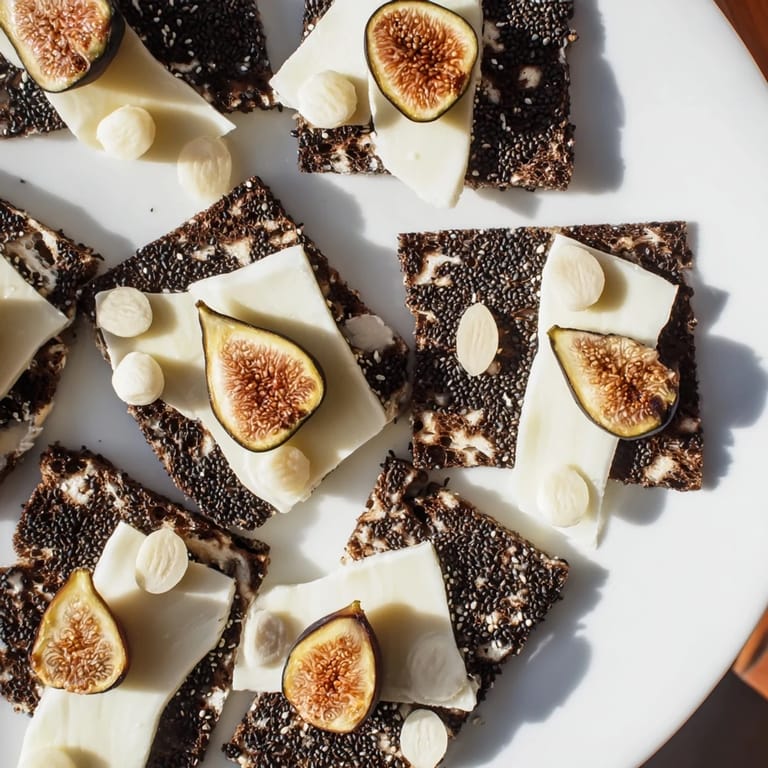
- Blanched almonds: Their pale white and simple oval shape work perfectly as minimalist accents in the design.
- Extra virgin olive oil: A good one makes a real difference here since it's one of only a few seasonings doing the work.
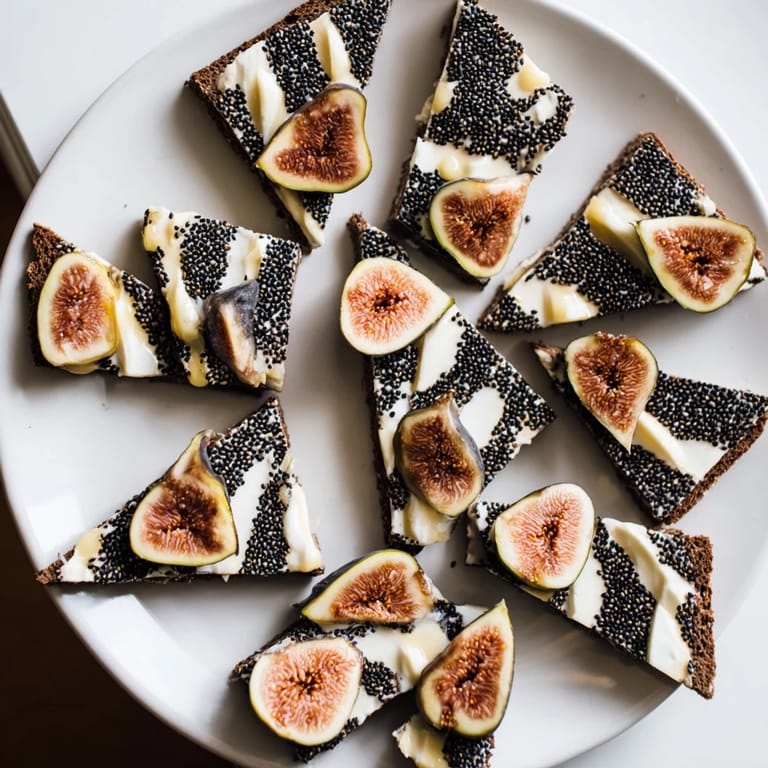
- Black mission figs (optional): They add unexpected sweetness and a hint of luxury if you want to elevate the platter further.
- Vanilla bean (optional): Just the seeds scattered on top give an aromatic whisper of elegance—it's subtle but memorable.
Tired of Takeout? 🥡
Get 10 meals you can make faster than delivery arrives. Seriously.
One email. No spam. Unsubscribe anytime.
Instructions
- Cut your bread base with intention:
- Use a sharp knife and clean cuts—squares, triangles, rectangles in whatever pattern feels right. Think of this as the foundation of your composition, so take a breath and let the knife do the work without rushing.
- Lay down your black and white lines:
- Alternate olives and mozzarella balls in straight lines or circles across your platter. You're creating a rhythm here, so step back occasionally and look at the balance.
- Arrange your mozzarella slices:
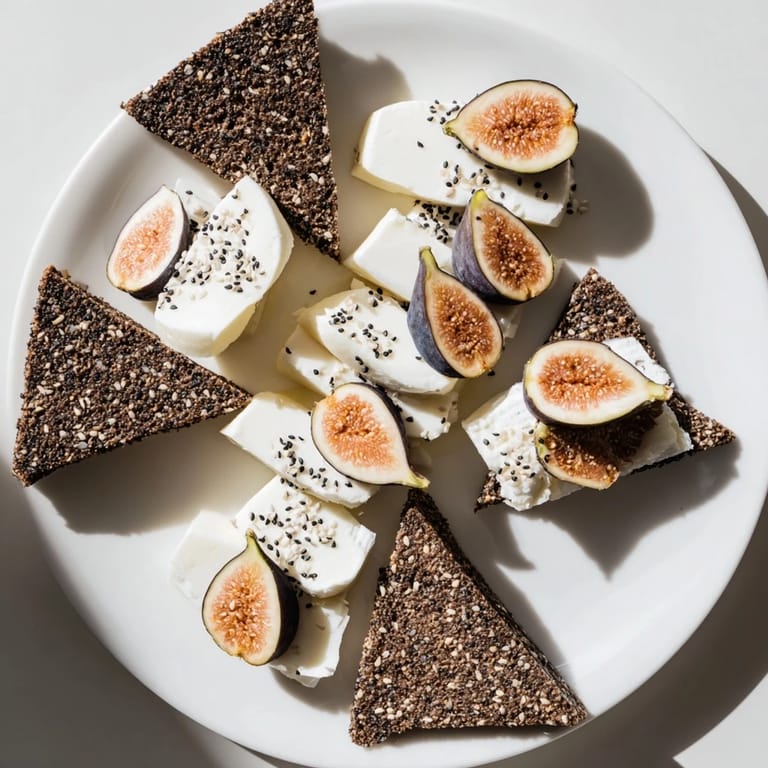
- Slice your large mozzarella ball and lay the rounds in geometric patterns—this is where the real visual drama happens. The whiteness against the bread is striking.
- Add the seeds with discipline:
- Sprinkle black sesame over the white cheese and white sesame over the bread. This tiny detail actually changes how the eye reads the whole platter.
- Place your figs for sweetness:
- If you're using them, halve the black mission figs and tuck them into your design where they feel balanced. They add both color depth and a hint of indulgence.
- Cluster your almonds minimally:
- Arrange the blanched almonds in small groups or lines—their simplicity is their strength, so don't scatter them randomly. Let them breathe in the design.
- Finish with oil and salt:
- Drizzle extra virgin olive oil carefully across the cheese and bread, then season with flaky sea salt. The oil makes the mozzarella glow.
- Add vanilla if you're feeling it:
- Scrape vanilla bean seeds and dot them artistically across the mozzarella—it's a whisper of something unexpected that makes people pause.
- Serve at the right moment:
- Everything tastes best fresh and room temperature, so assemble as close to serving time as possible. The bread stays crispest this way, and the flavors are clearest.
 Save
Save My friend brought her daughter to see the platter I'd made for a dinner party, and the little girl asked if it was okay to eat art. That question stuck with me because it's exactly what this is—permission to make food that stops people in their tracks before it nourishes them.
The Power of Constraint
Working with only black and white forced me to think differently about what makes food interesting. Without color variety to lean on, every texture and shape matters more, and I started noticing things I'd overlooked before—the subtle difference between matte olives and shiny cheese, the weight of a sesame seed against a slice of bread. Limitation became clarity.
Timing and Temperature Matter
The biggest revelation was that this platter lives in a specific window of time and temperature. Everything tastes best when it's been sitting at room temperature for just long enough—not so long the cheese gets rubbery, not so short it's still cold and closed off. I've learned to prep everything early but assemble late, which is a rhythm that lets me actually enjoy my guests' arrival instead of being stuck in the kitchen.
Making It Your Own
The original recipe called for vanilla seeds scattered on top, which felt daring and different—and it is, but only if vanilla speaks to you. I've made versions that lean into purely savory, versions with a whisper of lavender, versions where I changed nothing and loved them anyway. The real secret is that once you understand the geometry and the color story, you can let your instincts take over.
- Swap the vanilla for nothing and keep it purely savory, or add a tiny pinch of lavender seeds if you want something unexpected.
- Try adding paper-thin slices of daikon radish (white) or black garlic (if you can find it) for more flavor complexity without breaking the color rule.
- Make it gluten-free by using dark gluten-free bread, and the visual impact stays exactly as strong.
 Save
Save This platter taught me that elegance isn't about complexity—it's about knowing what to leave out and honoring what you keep. Every time I make it, I remember that gallery opening and how moved I was by something simple and intentional.
Recipe Guide
- → What types of bread work best for this platter?
Dark rye bread is ideal due to its deep color and firm texture, which holds shapes well and contrasts beautifully with white ingredients. Gluten-free dark bread can be substituted for dietary needs.
- → Can the black mission figs be omitted or replaced?
Yes, the figs add a subtle sweetness and visual interest but can be omitted or replaced with other black-hued fruits or vegetables like black garlic to maintain contrast.
- → How should the mozzarella be prepared for the best effect?
Use fresh mozzarella balls for softness and sliced large mozzarella for layering in geometric shapes. Draining excess moisture helps maintain crisp arrangements.
- → What garnishes enhance flavor and presentation?
Black and white sesame seeds sprinkled strategically bring texture and visual detail, while a touch of vanilla seeds adds aromatic elegance. Blanched almonds provide crunchy white accents.
- → How long can this platter be prepared in advance?
It’s best served immediately for optimal crispness, but can be covered and refrigerated for up to one hour without losing its visual appeal or freshness.
- → What beverage pairings complement this arrangement?
A dry sparkling wine or crisp Sauvignon Blanc pairs well, balancing the creamy mozzarella and savory bread with refreshing acidity.