 Save
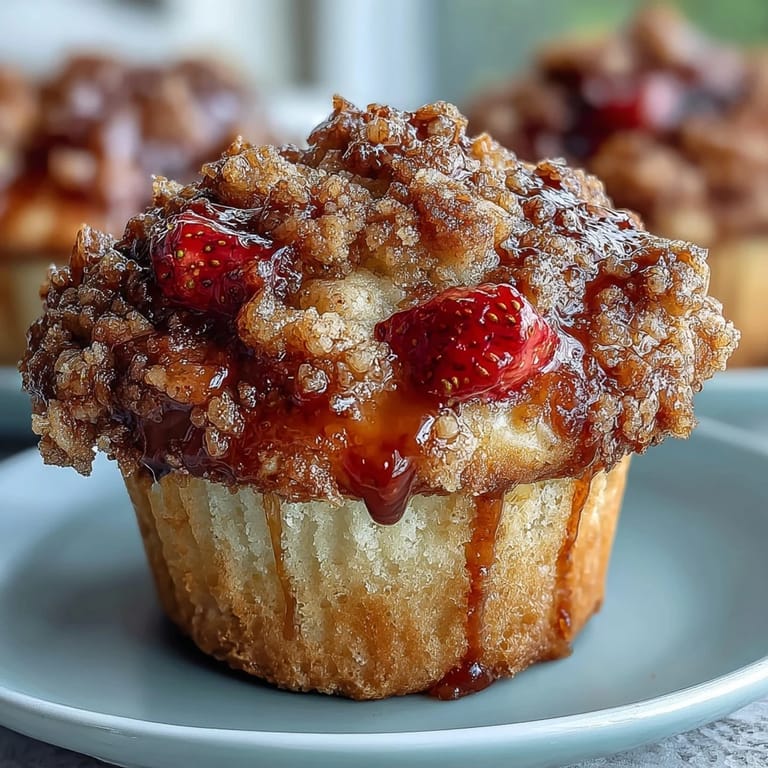
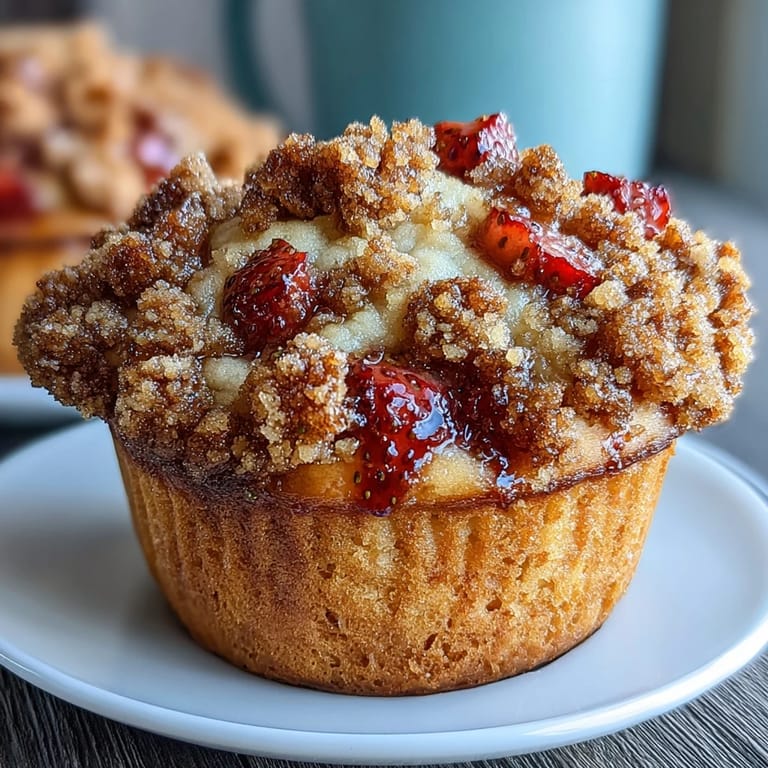
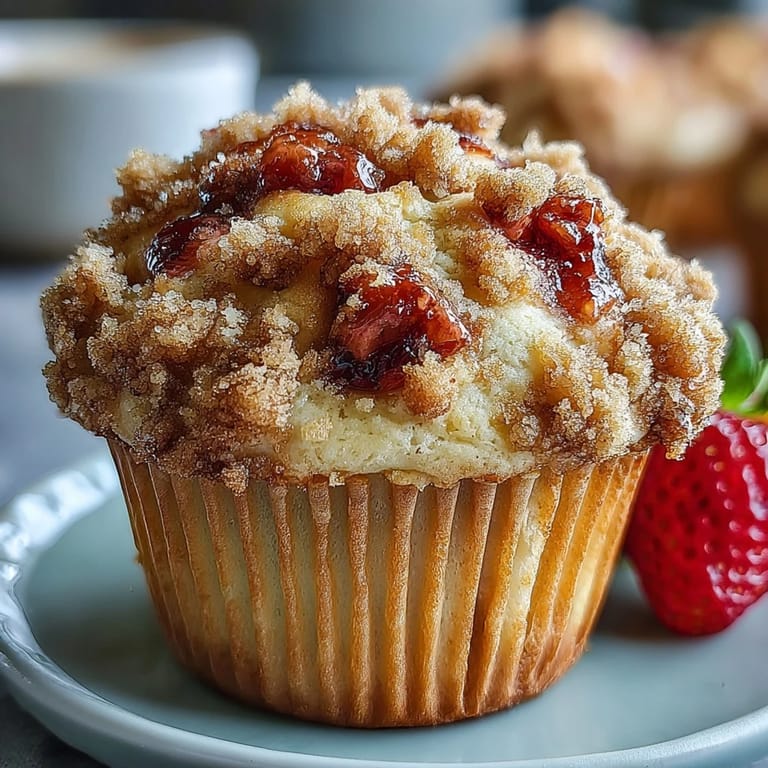
Save My sourdough starter had been sitting in the fridge for weeks, and I kept telling myself I'd feed it or find a use for it. One Saturday morning, I stumbled onto the idea of strawberry muffins and realized I could finally put that neglected discard to good use. The moment I mixed the tangy starter into the batter, something clicked—the muffins came out tender with this subtle, almost mysterious depth that regular muffins just don't have. Fresh strawberries burst through every bite, and the buttery crumb topping added just enough crunch to make them feel special without any fuss.
I brought a batch to my neighbor one morning, and she ate three right there at the kitchen counter before I could even set them down properly. She kept asking what made them different, and when I mentioned the sourdough starter, she looked at me like I'd invented something revolutionary. That's when I realized these weren't just muffins—they were the thing that finally made my sourdough starter feel worth keeping around.
Ingredients
- All-purpose flour (2 cups): This is your base, and measuring by weight keeps everything consistent—trust the grams if you have a scale.
- Sourdough starter (1 cup discard): Use whatever you have on hand, fed or unfed; the discard is perfect because you're not wasting good starter, and the tang is subtle enough to complement the strawberries.
- Baking powder and baking soda (1 tsp and 1/2 tsp): Together they create lift and a tender crumb; don't skip the soda, as it reacts with the acidity of the starter.
- Granulated sugar (1/2 cup): This sweetens the batter without overwhelming the delicate strawberry flavor.
- Vegetable oil or melted butter (1/3 cup): Oil keeps the muffins moister longer, but melted butter adds richness if that's your preference.
- Eggs (2 large): They bind everything together and create structure.
- Milk (1/2 cup): Any kind works—dairy or non-dairy—it just adds moisture to the batter.
- Vanilla extract (1 tsp): This rounds out the flavor profile and lets the strawberries shine.
- Fresh strawberries (1 1/4 cups diced): Pat them dry before folding in so they don't release too much liquid into the batter.
- Brown sugar (1/3 cup packed): For the topping, this adds moisture and a slight molasses flavor to the crumbs.
- Cold butter (1/4 cup diced): Keep it straight from the fridge so the topping stays crumbly and doesn't turn into clumps.
- Ground cinnamon (1/2 tsp): Just a whisper of warmth that plays beautifully with strawberries.
Tired of Takeout? 🥡
Get 10 meals you can make faster than delivery arrives. Seriously.
One email. No spam. Unsubscribe anytime.
Instructions
- Heat your oven and prep the pan:
- Set the oven to 375°F and line your muffin tin with paper liners—they peel off cleaner and let you see those golden, crumbly tops. If you're using a well-loved tin, a light grease works too, but liners are worth it here.
- Mix the dry ingredients:
- In a medium bowl, whisk together flour, baking powder, baking soda, salt, and sugar until everything is evenly distributed. This small step prevents pockets of baking soda later, which would taste bitter.
- Combine the wet ingredients:
- In another bowl, whisk the sourdough starter, oil, eggs, milk, and vanilla until smooth and pale. Don't rush this—it should take about 30 seconds of actual whisking to get it right.
- Bring it together gently:
- Pour the wet ingredients into the dry ingredients and fold until just combined—lumps are your friend here because overmixing makes tough muffins. Stop mixing as soon as you don't see dry flour anymore.
- Add the strawberries:
- Fold in the diced strawberries with a gentle hand, making sure they're distributed but not crushed. If they're whole, they stay juicier in the muffin.
- Fill the muffin cups:
- Divide the batter evenly, filling each cup about three-quarters full—this gives the crumb topping room to settle without spilling over. A small ice cream scoop makes this faster and more even.
- Make the crumb topping:
- In a small bowl, combine flour, brown sugar, cinnamon, and salt, then cut in the cold butter with a fork or your fingertips until the mixture looks like coarse breadcrumbs. It should hold together gently when squeezed but fall apart easily.
- Top each muffin:
- Sprinkle the crumb topping generously over each muffin, pressing it down just slightly so it doesn't blow off during baking. Don't be shy—people love the topping.
- Bake until golden:
- Bake for 22–25 minutes, until a toothpick inserted in the center comes out clean or with just a few moist crumbs. The tops should be golden brown, and the kitchen should smell incredible.
- Cool properly:
- Let them sit in the pan for 5 minutes to set up, then transfer to a wire rack so the bottoms don't get soggy. This waiting period is hard, but it's worth it.
 Save
Save I once gave these muffins to a friend who said she didn't really eat breakfast, and she texted me an hour later asking for the recipe. She'd had two muffins with her coffee and felt satisfied for hours, something she said never happens with store-bought pastries. That's the magic of these—they're not just tasty, they actually sustain you.
Why Sourdough Starter Belongs in Muffins
Regular muffins are sweet and straightforward, but sourdough starter adds this subtle, almost imperceptible tang that makes people pause and ask what's different about them. It's not sour like a pickle—it's more like a whisper that makes the strawberries taste brighter and the whole thing feel more grown-up. The starter also creates a more tender crumb because the acidity breaks down gluten slightly, and it gives you a reason to use that discard sitting in your fridge instead of throwing it away.
Timing and Temperature Matter More Than You Think
I've made these at 350°F and they stayed in the oven longer, coming out denser and slightly dry—375°F is the sweet spot where the outside sets quickly enough to trap moisture inside. Check them at 22 minutes because every oven runs a bit differently, and you want that toothpick to come out with just the tiniest hint of moisture, not completely clean. A minute or two of overbaking turns the tops from tender to tough, so set a timer and stick to it.
Customizing Without Losing the Magic
Once you nail this recipe, you'll want to experiment, and that's the best part about making the same thing twice. Blueberries and raspberries swap in beautifully for strawberries, and if you want to layer flavors, a tiny bit of lemon zest in the batter makes everything sing. Some people add a drizzle of vanilla glaze or a smear of jam on top once they've cooled, and while that's not necessary, it's also not wrong.
- If your strawberries are extra juicy, toss them in a tablespoon of flour before folding them in—it absorbs excess moisture.
- Make the crumb topping while the batter rests; this gives the dry ingredients time to fully hydrate and the topping more texture.
- These keep in an airtight container for three days, and they taste even better on day two when the flavors have settled.
 Save
Save These muffins have become my answer to the question what should I bring, and they've made me someone people actually want to bake for. There's something about serving something warm from your own oven that feels like the truest kind of sharing.
Recipe Guide
- → Can I substitute strawberries with other fruits?
Yes, blueberries or raspberries work well and provide a delightful variation in flavor.
- → What type of sourdough starter is best for these muffins?
Both fed and unfed (discard) sourdough starters can be used, with discard preferred for the mild tang.
- → How do I achieve the crumb topping texture?
Cut cold butter into the flour, brown sugar, cinnamon, and salt mixture until it resembles coarse crumbs.
- → What is the ideal baking time and temperature?
Bake muffins at 375°F (190°C) for 22–25 minutes until a toothpick inserted comes out clean.
- → Can I use oil instead of butter in the batter?
Yes, vegetable oil or melted unsalted butter can be used interchangeably for moistness.