 Save
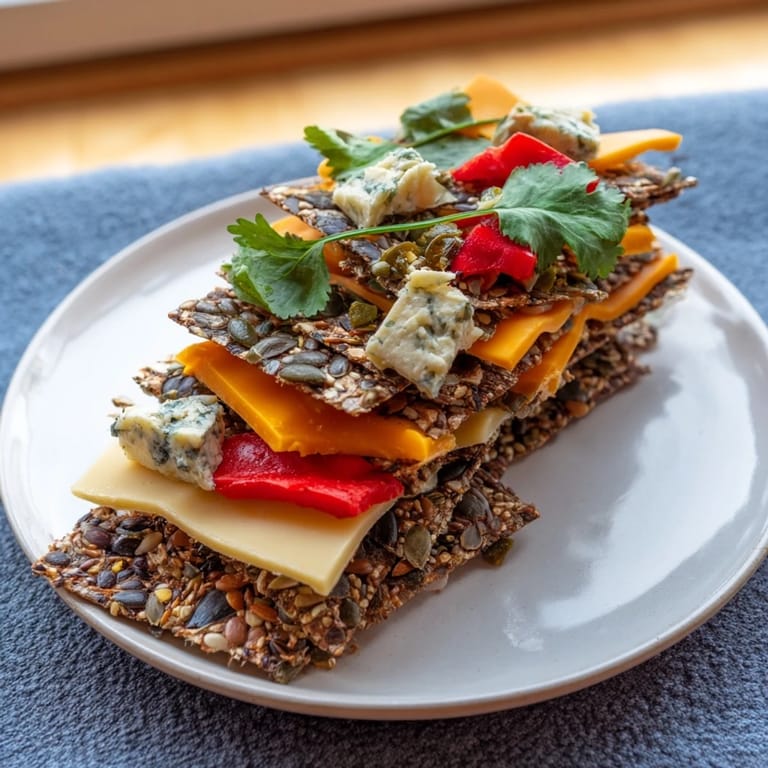
Save I first built these towers after a road trip through Arizona, sitting in my kitchen trying to recreate the feeling of those endless desert horizons. The mesas stuck with me—not just visually, but as a challenge: could I turn that bold, layered landscape into something you could actually eat? Turns out, stacking crackers and cheese is oddly meditative, and the result looks impressive enough that guests always assume you spent hours on them.
My brother showed up unannounced with his new partner, and I panicked for exactly two seconds before remembering these stacks. Watching them carefully deconstruct one tower, picking off layers like they were solving an edible puzzle, I realized this dish has a built-in conversation starter—everyone becomes a little more engaged when food looks like it requires assembly.
Ingredients
- Assorted crackers (24 pieces, various shapes and sizes): Mixing multigrain, wheat, rye, and seeded varieties keeps the visual interesting and gives you texture contrast; uneven shapes actually look more like natural rock formations.
- Cheddar cheese (100 g, sliced): This is your workhorse—sharp enough to taste but mellow enough to pair with everything else without competing.
- Pepper jack cheese (100 g, sliced): The heat here is subtle when layered with other cheeses, building flavor complexity rather than overwhelming.
- Monterey Jack cheese (100 g, sliced): Creamy and mild, it acts as a bridge between the bolder cheeses and keeps each layer cohesive.
- Smoked gouda (50 g, sliced): This is your secret weapon—a whisper of smokiness that ties the whole thing back to that desert landscape.
- Blue cheese (50 g, cubed, optional): Use this only if you want a sharp, tangy punch; it's divisive but absolutely worth the conversation it starts.
- Red bell pepper (1 small, thinly sliced): Beyond color, these add a fresh, slightly sweet crunch that breaks up the richness of the cheese.
- Fresh cilantro leaves (2 tablespoons): Trust me on this—cilantro brings a brightness that makes people stop and say, "What is that flavor?"
- Jalapeño (1 small, thinly sliced, optional): Slice these paper-thin so the heat distributes subtly rather than in sharp bursts.
- Toasted pumpkin seeds (1 tablespoon): The toasting is essential; raw seeds feel off, but toasted ones add nutty depth and visual texture.
Tired of Takeout? 🥡
Get 10 meals you can make faster than delivery arrives. Seriously.
One email. No spam. Unsubscribe anytime.
Instructions
- Slice and size your cheeses:
- Cut each cheese so it's slightly smaller than your largest crackers—this prevents overhang and keeps stacks stable. I learned this the hard way when a tower toppled at a dinner party.
- Start stacking on your platter:
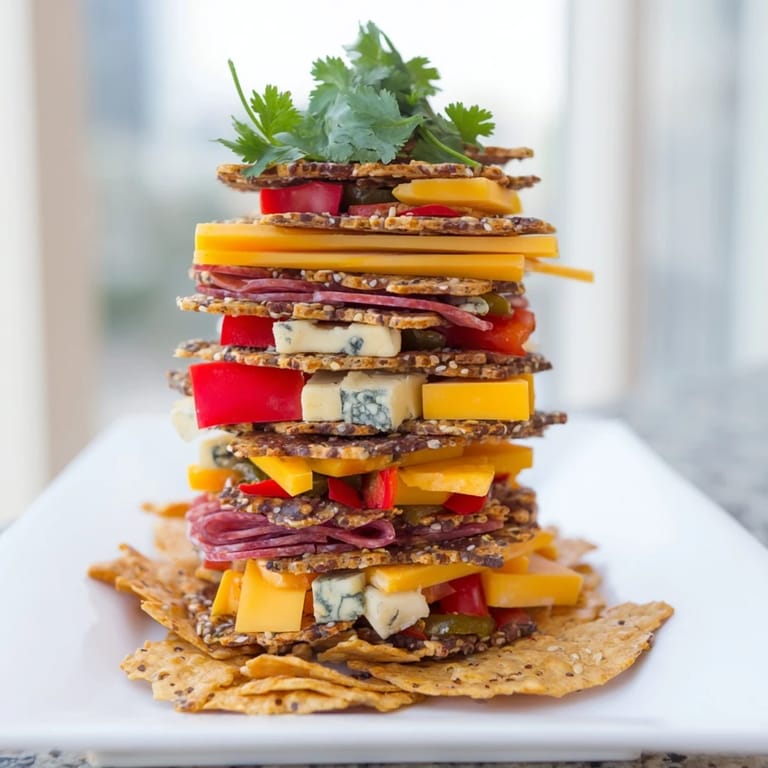
- Lay down a cracker as your base, then top it with a slice of cheese, then another cracker. The magic happens when you vary the heights of your stacks, making some three layers and others up to seven—it mimics how real mesas have different elevations.
- Mix your cheese varieties:
- Each stack should tell a different story by combining different cheeses; don't use the same pairing twice if you can help it. This keeps the tasting experience surprising.
- Layer in your vegetables:
- Tuck thin bell pepper slices, cilantro leaves, and jalapeño between the layers as you go, or position them on top like they're growing from the rock.
- Scatter seeds and finish:
- Sprinkle the toasted pumpkin seeds around the base of each tower, creating a desert floor effect that grounds the whole composition.
- Serve or hold until ready:
- These are best eaten fresh, but you can cover them loosely with plastic wrap and refrigerate for up to an hour if timing is tight.
 Save
Save The moment a guest picked up one of these stacks and ate it like an edible sculpture, I realized this appetizer is really about play. Food doesn't always have to be formal or fussy to impress people—sometimes it just needs to look a little unexpected and taste undeniably good.
Building Your Perfect Stack
The real art here is thinking about each stack as a mini composition. Don't overthink it, but do try to vary heights, cheese combinations, and colors across the platter so your eye has different things to land on. If one stack looks too heavy with cheese, the next one might be lighter with more vegetable peeking through.
Flavor Combinations That Work
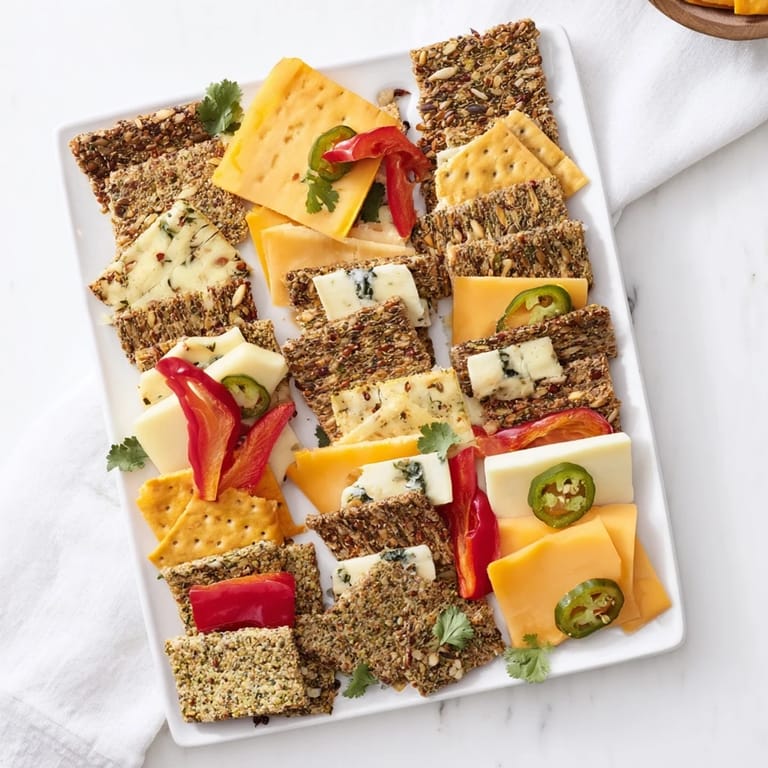
The beauty of this appetizer is that there's no wrong way to layer, as long as you're thinking about balance. Smoky gouda + pepper jack creates a southwestern heat, while cheddar + monterey jack gives you a classic, approachable flavor that works for any crowd. Blue cheese shows up best when you use it sparingly, just one or two stacks for guests who love that sharp, funky taste.
Make It Your Own
This recipe is a starting point, not a rule. I've made versions with thin slices of prosciutto tucked between layers, and others where sun-dried tomatoes replace some of the fresh pepper. The crackers are your canvas—use what you love, what's in your pantry, or what matches your dietary needs.
- Swap crackers freely: rye brings earthiness, seeded adds texture, or go gluten-free if that matters for your table.
- Cured meats like prosciutto or spicy soppressata slide between layers for hidden umami bursts.
- Sun-dried tomatoes or roasted red peppers can stand in for fresh peppers if you want deeper, concentrated flavor.
 Save
Save These Southwest Mesa stacks remind me that appetizers don't need to be complicated to feel special. They're fun to build, prettier than they should be for such a simple concept, and honestly, they taste like you put in way more effort than you actually did.
Recipe Guide
- → What types of cheeses work best for layering?
A mix of sharp and creamy cheeses like cheddar, pepper jack, Monterey Jack, smoked gouda, and optional blue cheese provide great flavor and texture contrast.
- → Can I prepare the stacks ahead of time?
Yes, you can assemble them and refrigerate loosely covered until serving to maintain freshness.
- → How do the garnishes enhance the dish?
Fresh red bell pepper, cilantro, jalapeño slices, and toasted pumpkin seeds add color, texture, and subtle heat that mimic a desert landscape.
- → Are gluten-free crackers a good substitute?
Absolutely, gluten-free crackers can be used to accommodate dietary needs without compromising structure.
- → What beverage pairs well with these stacks?
A crisp Sauvignon Blanc or a dry rosé complements the bold cheese flavors and fresh garnishes beautifully.
- → How to ensure the stacks don’t topple over?
Slice cheeses slightly smaller than the crackers and vary layer heights (3 to 7) for stability and visual appeal.