 Save
Save There's something about a bare stone slab that makes you want to organize chaos into order. I discovered this years ago at a gallery opening where the caterer had arranged cured meats and cheeses on raw slate, and I couldn't stop staring at it—not because it was fancy, but because it felt honest. No garnish nonsense, no apologizing for the ingredients themselves. Just clean lines and bold flavors taking up space they deserved. That night, I understood that sometimes the best presentation is one that gets out of the way.
I made this for my partner's coworkers one winter evening, and someone asked if I'd hired a professional caterer. I remember laughing and saying the only thing I'd managed was not overcrowding the board—turns out that's the whole trick. What started as a nervous appetizer became the thing people talked about after dinner, which tells you something about how we eat: we're as hungry for simplicity as we are for flavor.
Ingredients
- Smoked prosciutto: Paper-thin and salty, it's the backbone that makes everything else taste sharper—buy from a real deli counter if you can.
- Soppressata: Firmer and more peppery than prosciutto, this Italian cured meat adds texture and keeps people reaching back to the board.
- Coppa: Marbled and rich, it brings weight to the arrangement and honestly, it's criminally underrated.
- Mortadella: The most forgiving meat here; its subtle spice and silky texture round out the more aggressive flavors.
- Aged cheddar: Sharp enough to demand attention but not so funky that it overshadows everything else on the board.
- Manchego: Nutty and slightly salty, it bridges the gap between the soft meats and the punchy blue cheese.
- Gruyère: Adds a refined earthiness that makes the whole arrangement feel intentional rather than thrown together.
- Blue cheese: The wild card that makes people pause—use it sparingly unless your guests are blue cheese devotees.
- Seedless red grapes: Their sweetness is crucial; they soften the aggressive salt and spice of the meats and cheeses.
- Cornichons: These tiny pickles cut through richness and reset your palate between bites.
- Whole grain mustard: The textured grains hold onto flavor better than smooth mustard, and they add visual interest to the board.
- Mixed olives: Use good ones if possible—they anchor the arrangement and give people something to reach for between bites of meat and cheese.
- Freshly cracked black pepper: This is where most people skimp, but the aroma matters; it's the first thing guests notice.
Tired of Takeout? 🥡
Get 10 meals you can make faster than delivery arrives. Seriously.
One email. No spam. Unsubscribe anytime.
Instructions
- Get your canvas ready:
- Place the heavy slate or stone board in the center of your workspace—this is furniture now, not just a surface. If you have time and space, chill it in the freezer for ten minutes; cold stone keeps everything fresher longer.
- Line up the meats:
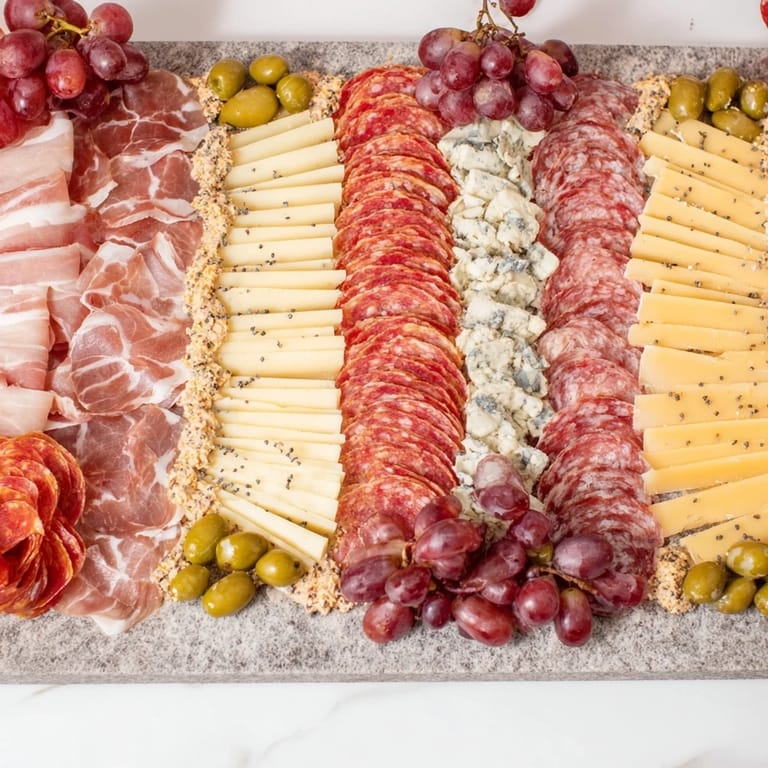
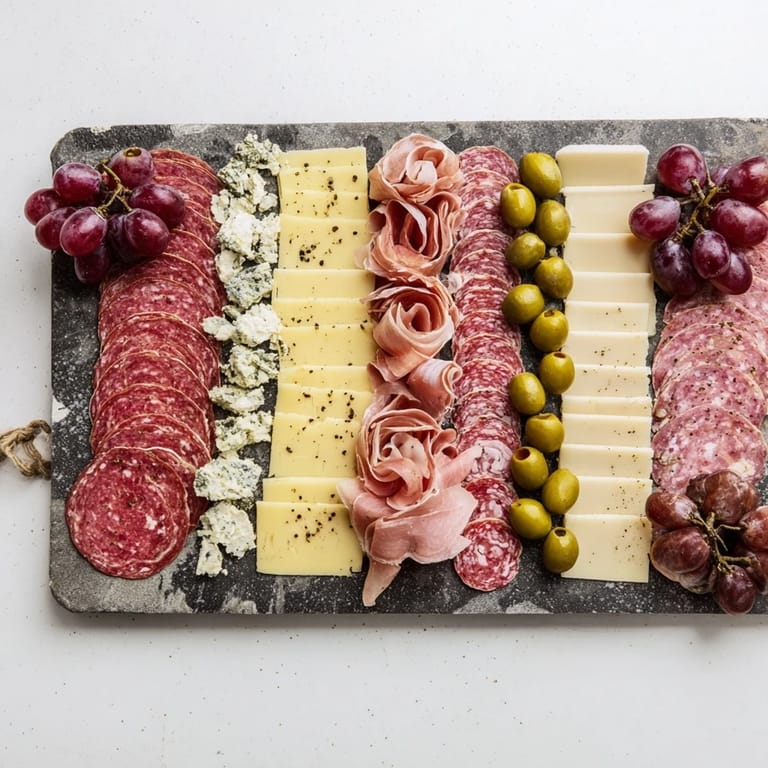
- Arrange each type of cured meat in its own straight line, making sure they're not overlapping and each one stays distinct. You want people to see the differences—the marbling in the coppa, the delicate translucence of the prosciutto, the pepper flecks on the soppressata.
- Mirror with the cheeses:
- On the opposite side or in a parallel arrangement, place the cheese slices in their own lines, keeping each type separated. The contrast between hard geometry and the organic shapes of the cheese matters more than perfect precision.
- Fill the gaps thoughtfully:
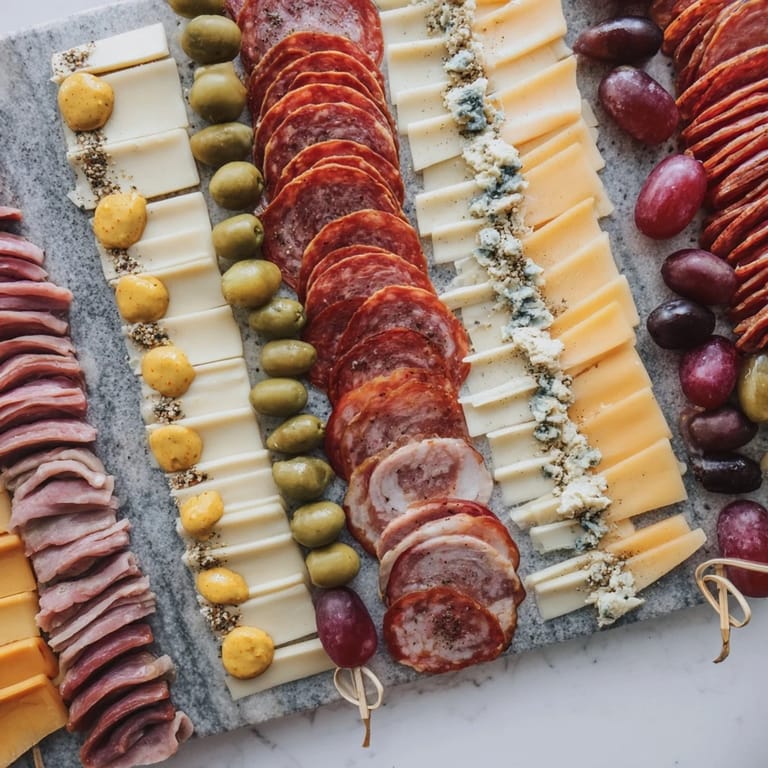
- Tuck small bunches of grapes between the lines, scatter the cornichons and olives in clusters rather than randomly—even your fillers should look intentional. This is where you guide the eye and create little flavor transitions.
- Add the mustard:
- Either dot small dollops along one edge in a line or set it in a small bowl at a corner of the board—either way, it should be accessible but not fighting for attention.
- Finish with pepper:
- This is the final gesture, the thing that brings aroma and a hint of extra spice. Crack pepper directly over the meats and cheeses just before serving, when guests can smell it.
- Serve with presence:
- Set it down and step back—let the board speak for itself, and watch how people engage differently when food looks this composed.
 Save
Save The moment that made this more than just food came when my grandmother, who usually picked at appetizers, sat down with a small plate and stayed there for twenty minutes. She said she liked being able to see what she was eating, and the calm arrangement made her want to slow down. That's when I realized this isn't about impressing people with technique—it's about respecting the ingredients enough to let them be themselves.
Why Slate Matters (And Why You Don't Need to Overthink It)
A heavy, unpolished slate board isn't precious—it's practical. The weight keeps it stable when people are reaching across, the rough surface grips food so it doesn't slide around, and the dark color makes everything pop. You could use marble or granite, but slate has this honest, almost industrial feel that makes the whole arrangement read as intentional. Some people worry about food staining the slate; don't. That patina becomes part of its story.
The Order of Flavors and Why It Matters
People will navigate this board however they want, but if you're thinking about the flavor arc, start with the lighter meats and cheeses, move toward the sharper ones, and use the grapes as a palate reset. The cornichons and olives work anywhere, but the mustard is the punctuation mark—a little dab at the end of a bite, not the beginning. The pepper should make them pause and notice the aroma; it's the detail that transforms this from a snack into an experience.
Variations and What Works
A vegetarian board swaps the meats for marinated artichoke hearts, roasted nuts, and maybe some cured mushrooms or aged tofu if you want protein. You can lean into different cheese profiles—go soft and creamy instead of sharp, or add a smoked cheese for depth. Dried figs, honeycomb, nuts, and whole grain crackers all belong here if you want them, but the best version is the one where every element earns its space. Whatever you add, keep it lined and organized; that's the whole point.
- The board works best with a crisp white wine like Sauvignon Blanc or a bold red like Cabernet Sauvignon—let your guests choose.
- Chill the slate for ten minutes before arranging if you have the fridge space; it keeps everything fresher and makes the presentation feel more deliberate.
- Make this the last thing you arrange before guests arrive so the meats don't dry out and the cheese doesn't sweat.
 Save
Save This board teaches you something useful: sometimes the most striking thing you can do is arrange beautiful ingredients and let them breathe. There's no cooking, no stress, and somehow that feels more generous than a complicated dish.
Recipe Guide
- → What types of meats are used in the platter?
The platter includes smoked prosciutto, soppressata, coppa, and mortadella, providing a variety of flavors and textures.
- → Which cheeses complement this arrangement?
Aged cheddar, Manchego, Gruyère, and blue cheese are selected for their sharpness and visual contrast.
- → How should the foods be arranged for best presentation?
Arrange meats and cheeses in straight, parallel lines on opposite sides of a heavy stone slab, filling spaces with grapes, cornichons, and olives.
- → Can this platter accommodate dietary restrictions?
Yes, it's naturally gluten-free, and a vegetarian version can be made by omitting meats and adding artichoke hearts and nuts.
- → Are there tips for serving this platter?
Chill the stone slab beforehand to keep ingredients fresh and pair with crisp white or bold red wines for enhanced flavor.
- → What tools are recommended for preparation?
A heavy unpolished stone or slate board and a sharp cheese knife help achieve clean, precise arrangements.